7 Best Powder Coating Ovens for Sale?
Choosing the right powder coating oven can shape production quality, energy use, and daily workflow. A reliable unit should cure parts evenly, hold stable temperatures, and fit the available workspace. Yet buying decisions are rarely simple. A low price may hide weak insulation, uneven airflow, or expensive maintenance.
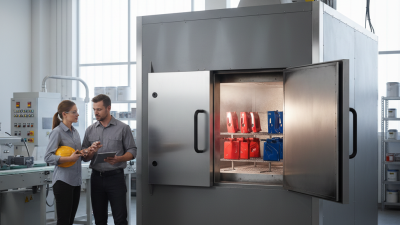
Kevin Biller, a recognized powder coating consultant and industry author, has said, “The oven is the heart of the powder coating system.” That idea deserves attention. A conveyor oven may suit continuous production, while a batch oven can offer flexibility for irregular parts. The best powder coating oven depends on part size, coating chemistry, target output, and available power or fuel. There is no universal winner.
This guide reviews seven ovens currently considered for sale, using practical criteria rather than marketing claims. We examine temperature control, chamber construction, airflow, heating method, safety features, installation needs, and long-term operating costs. Small details matter. A poorly positioned sensor can affect cure consistency. A narrow door can slow loading. An impressive specification may still disappoint on the shop floor.
Some conclusions remain imperfect. Product availability changes. Regional pricing differs. Manufacturer data may not reflect years of real use. Therefore, readers should verify test results, warranty terms, spare-part access, and service response before purchasing. The strongest choice is not always the largest oven. It is the one that cures your actual parts consistently, safely, and economically.
Powder-Coating Oven Fundamentals: The 400°F (204°C) Curing Standard
7 Best Powder Coating Ovens for Sale?
Powder coating ovens are judged by more than cabinet size or advertised temperature. The essential benchmark is a 400°F (204°C) curing standard. This temperature refers to the coated metal, not merely the air inside the oven. A panel can feel hot while its powder remains under-cured. That difference affects adhesion, hardness, gloss, and corrosion resistance.
A reliable oven should provide even airflow and stable heat across the working chamber. Test several locations with calibrated thermocouples before regular production. Record the time needed for thick steel parts to reach 400°F. Thin brackets may reach temperature quickly, while heavy frames can lag by many minutes. Follow the powder manufacturer’s technical data sheet, because some formulas require different time-temperature schedules.
Loading matters too.
Leave space between parts so heated air can move around every surface. Keep doors sealed, inspect insulation, and clean the chamber regularly. A practical mistake is trusting the display thermometer without checking the actual workpiece. I have seen a ten-minute setting produce inconsistent results when the metal was still cold at the center. That lesson is easy to miss.
Choose an oven with controls you can verify, accessible maintenance points, and suitable ventilation. Avoid placing unknown materials inside, since fumes and residues may create serious hazards. A smaller, well-calibrated oven can outperform a larger unit with uneven heating. Perfect consistency is difficult. Careful measurement makes it achievable.
How to Compare the 7 Best Ovens Using NFPA 86 Safety Criteria
When comparing the seven best powder coating ovens for sale, NFPA 86 should guide the inspection. Price and chamber size matter, but safety controls matter more. Review the oven classification, fuel system, and intended operating temperature. Ask for test records, wiring diagrams, and a complete operating manual.
Check whether each oven provides adequate ventilation and a documented pre-purge cycle. The burner should shut down when airflow drops or the flame fails. A high-temperature limit should stop heating before coatings degrade or ignite. Look for guarded access doors, emergency stops, and interlocks that prevent unsafe operation. Explosion relief design also deserves close attention, especially in larger chambers.
Measure the working zone, not only the external cabinet. A small clearance error can affect airflow around a loaded rack. Inspect the exhaust path for practical cleaning access. Request confirmation that controls were tested under realistic load conditions. NFPA 86 requirements can depend on the oven type, fuel, installation, and current adopted edition. Have a qualified safety professional review the design and consult the local authority having jurisdiction. I would not rely on a sales checklist alone. It may omit an uncomfortable detail. During a site visit, record response times, alarm visibility, and shutdown behavior. Then compare all seven ovens using the same evidence, not attractive photographs.
The 7 Best Powder-Coating Ovens by Size, Heating Method, and Capacity
7 Best Powder Coating Ovens for Sale?
The best powder-coating oven depends on part size, heating method, and daily capacity.
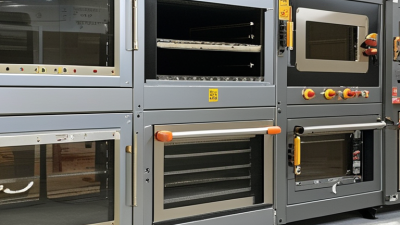
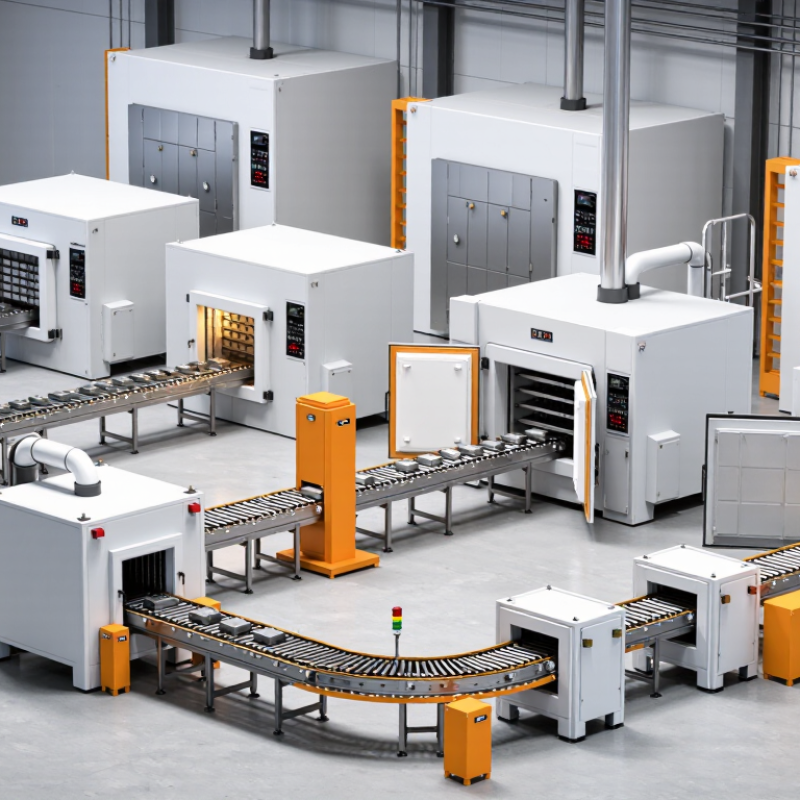
A compact electric batch oven suits brackets, wheels, and small frames. It fits limited workshops and offers steady temperature control.
A medium electric batch oven handles cabinets, gates, and several parts together. It usually needs a stronger power supply and better ventilation planning. Small shops often overlook floor clearance.
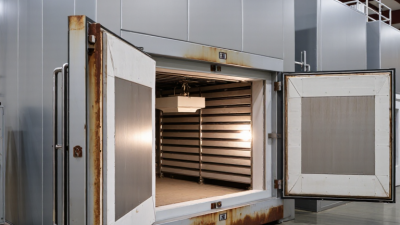
A large gas-fired batch oven suits heavy frames and irregular production schedules. It heats large chambers efficiently, but installation requires approved fuel systems and careful airflow control.
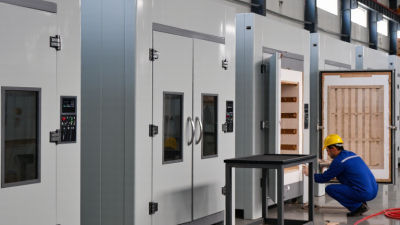
A walk-in oven provides more loading space for long rails, tanks, and fabricated assemblies. Its capacity is impressive. However, loading equipment and door sealing affect real productivity.
A continuous conveyor electric oven supports repeatable production and consistent dwell times. It works well for moderate volumes with similar part dimensions.
A continuous conveyor gas oven offers higher throughput for larger operations. It needs accurate burner control and routine inspection. An infrared hybrid oven can accelerate surface heating on suitable parts, especially thin metal sections. It may not heat complex shapes evenly without additional convection.
In practice, test panels reveal more than specifications. Measure metal temperature, not only chamber temperature. Record warm-up time, cure time, energy use, and rejected parts.
I have seen a technically powerful oven underperform because racks blocked airflow. The “best” choice may be less impressive, but easier to load, maintain, and verify.
Energy Efficiency: Comparing Gas and Electric Ovens at 15–30-Minute Cure Times
7 Best Powder Coating Ovens for Sale?
When cure cycles last 15–30 minutes, energy performance depends on heat-up, insulation, airflow, and loading. Cure time starts when steel reaches target metal temperature, not when the timer starts. This distinction is easy to miss. The U.S. Department of Energy’s Manufacturing Energy and Carbon Footprints report places process heating at roughly 51% of U.S. manufacturing energy use. Oven selection matters.
Gas ovens often deliver strong heat for large chambers and repeated production. However, exhaust losses and burner cycling can waste energy during short runs. Electric ovens convert nearly all supplied electricity into heat at the point of use, according to U.S. Department of Energy guidance. Their carbon impact still depends on regional generation. EPA’s 2022 eGRID data shows wide differences among U.S. grid regions. Compare measured kWh or fuel consumption per batch, not brochure claims. A poorly loaded electric oven may perform worse. That is the uncomfortable part.
Tips: Use thermocouples on dense and thin parts. Record warm-up minutes, cure minutes, kWh, gas volume, and batch weight. Keep racks spaced for airflow. Ask for independent test data at your actual 15–30-minute cycle. Calculate costs with local utility rates. Recheck after seasonal temperature changes. My practical caution: “100% efficient” electric heating does not guarantee the lowest bill. It only describes the heater’s conversion step. Chamber leakage and standby time can quietly dominate.
Installation, Ventilation, and Temperature Uniformity Requirements for Buyers
When comparing the 7 best powder coating ovens for sale, buyers should inspect installation requirements before comparing price or capacity. A level, noncombustible floor supports safe operation and reduces door alignment problems. Leave adequate clearance around panels, burners, controls, and service openings. A qualified electrician should verify voltage, grounding, and disconnect protection. Gas-fired systems require approved connections and leak testing by trained personnel.
Ventilation deserves equal attention. Curing powder can release vapors, especially when parts carry oil, moisture, or excessive coating. The exhaust system should remove contaminated air without disturbing the oven’s heat balance. Fresh replacement air is important. Poor airflow may create cold corners, unstable pressure, or visible smoke near the loading area. Follow the installation manual and applicable fire and building requirements. These details are easy to underestimate.
Temperature uniformity determines coating quality. Ask for documented testing, not only a maximum temperature claim. During commissioning, place calibrated thermocouples near corners, doors, ceiling, and the center of the load. Test an empty oven and a typical production load. A ten-degree difference can affect gloss, adhesion, and curing time. Operators sometimes trust the display too much. That is a mistake. Sensors drift, doors leak, and heavily loaded racks block circulation. Rechecking the temperature map after maintenance is a practical habit, although many shops postpone it longer than they should.
7 Best Powder Coating Ovens for Sale? Installation, Ventilation, and Temperature Uniformity Requirements for Buyers
Buyer reference: Many thermoset powder coatings require the coated metal to reach approximately 180–200°C and remain at the specified metal temperature for about 10–20 minutes. A commonly used purchasing target is temperature uniformity within approximately ±5°C throughout the usable oven workspace, although the coating manufacturer's technical data sheet remains the controlling requirement.
During installation, confirm adequate clearance, electrical or gas capacity, safe access, and heat-resistant ducting. Gas-fired systems require combustion exhaust to be discharged outdoors, while powder overspray and workplace air handling should be designed according to applicable local regulations. Ventilation airflow is site-specific and should be calculated by a qualified installer rather than selected from a universal value.