How to Choose a Powder Coating Oven in 2026?

Choosing a powder coating oven in 2026 requires more than comparing chamber size or advertised temperature ranges. The global powder coatings market continues to expand. Grand View Research estimated its 2023 value at approximately USD 15 billion, with steady growth projected through 2030. MarketsandMarkets also forecasts continued expansion, although its figures differ because of market definitions and research methods. That difference deserves attention. Market forecasts are useful signals, not purchase orders.

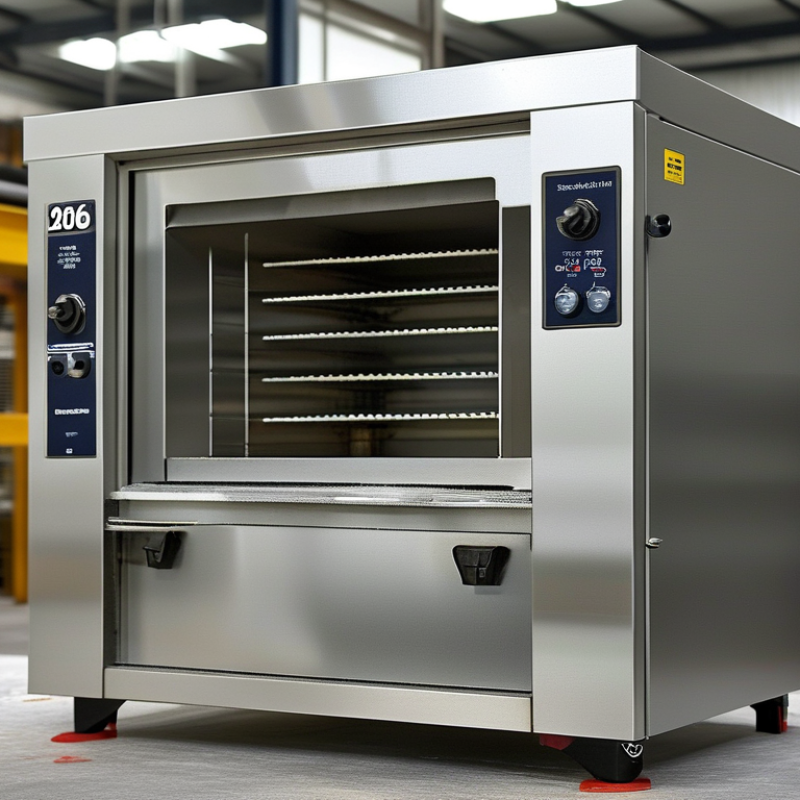
A reliable powder coating oven should match your parts, coating chemistry, production rhythm, and available energy supply. Begin with the workpiece dimensions, including hooks, racks, and clearance around each component. A door opening that looks sufficient on paper may fail when a loaded cart enters. The oven should maintain stable metal temperature, not merely display a high air temperature. Cure schedules from the powder manufacturer remain essential. Small temperature variations can affect adhesion, gloss, impact resistance, and rework rates.

Energy performance matters. The U.S. Department of Energy identifies industrial process heating as a major manufacturing energy user, making insulation, burner control, airflow, and heat recovery practical evaluation points. Gas-fired, electric, and hybrid designs each involve different installation and operating considerations. Compare measured fuel consumption, warm-up time, temperature uniformity, controls, maintenance access, and emissions documentation. Ask suppliers for test records, not only brochures. Real factories are rarely perfect. Product mixes change, operators make mistakes, and ovens age. This guide explains how to select equipment that remains dependable under those conditions, while recognizing that the cheapest oven may become the most expensive choice after downtime, uneven curing, and wasted powder are counted.

How to Choose a Powder Coating Oven in 2026?

Define Your Powder Coating Requirements and Production Goals

How to Choose a Powder Coating Oven in 2026?

Define Your Powder Coating Requirements and Production Goals

Before comparing ovens, define the parts you will actually coat. Record their length, width, height, weight, and metal thickness. Note the coating type, target film thickness, and required curing schedule. A small rack of brackets behaves differently from long frames or heavy castings. Measure twice. Guessing creates expensive limitations.

Your production goal should include parts per hour, batch size, and planned future growth. Check the oven’s usable chamber size, door clearance, loading method, and heat recovery time. Temperature uniformity matters more than a fast display reading. Verify the metal temperature, not only the air temperature. Use calibrated probes across several points inside the chamber. Review the coating supplier’s technical data before setting the cure cycle.

Energy use also deserves practical attention. Poor insulation can turn every shift into wasted heat. Consider ventilation, controls, maintenance access, and operator safety during daily use. Data recording can help prove consistent curing and reveal gradual performance changes. It is easy to underestimate loading delays. A theoretical capacity may look impressive but fail beside a busy production line. Test a representative load, including the heaviest and most crowded arrangement, before approving the final oven design.

Compare Oven Types, Heating Methods, and Airflow Designs

How to Choose a Powder Coating Oven in 2026?

The right oven depends on production volume, part geometry, and curing accuracy. Batch ovens suit mixed orders and irregular parts. Continuous ovens work better for stable, high-volume lines. A small enclosure may look economical, yet slow loading can erase its energy advantage. Powder Coating Institute guidance commonly cites transfer efficiency near 95%, but poor curing can still create costly rejects.

Heating method changes operating behavior. Direct-gas ovens usually heat quickly and suit larger chambers. Indirect-gas systems protect sensitive finishes from combustion by-products. Electric ovens offer clean, precise heat, but electricity costs can be significant. The U.S. Department of Energy identifies process heating as a major manufacturing energy load, so insulation and heat recovery deserve serious attention. Do not size an oven from air temperature alone. Measure the part’s metal temperature with data logging.

Airflow is often overlooked. Recirculating horizontal airflow can heat compact parts evenly, while vertical airflow may improve coverage on tall frames. Poorly balanced airflow creates hot corners and under-cured edges. That mistake is common. It is also preventable. One 2024 industrial energy review found that optimized airflow and controls can reduce heating losses, although savings vary by layout and workload.

Tips: Request a thermal profile using your heaviest and lightest parts. Check temperature uniformity at several chamber positions. Compare gas, electric, and maintenance costs over five years. Leave room for future production, but avoid oversized chambers; empty space still consumes energy. My own preference would be measured flexibility, not the lowest purchase price. That judgment can change after real production trials.

How to Choose a Powder Coating Oven in 2026? – Compare Oven Types, Heating Methods, and Airflow Designs

Typical engineering characteristics for industrial powder coating ovens. Actual performance depends on oven size, workload, insulation, part geometry, curing schedule, and local energy prices.
Evaluation Dimension Electric Batch Oven Gas-Fired Batch Oven Electric Conveyor Oven Gas-Fired Conveyor Oven Infrared-Assisted Oven
Best suited for Low-to-medium volume, varied part sizes, job-shop production Medium-to-high batch volume where natural gas or LPG is available Continuous production with predictable part dimensions and takt time High-throughput production with stable product mix and fuel supply Short heating zones, heat-sensitive substrates, or processes needing rapid surface heating
Typical operating temperature 150–230°C (302–446°F) 150–230°C (302–446°F) 150–230°C (302–446°F) 150–230°C (302–446°F) Depends on coating and substrate; commonly used as a preheat or boost zone
Temperature uniformity Generally very good with correctly sized heaters and balanced airflow Good, but burner tuning and heat-exchanger design are critical Very good when zones are independently controlled Good when combustion, recirculation, and conveyor loading are balanced Potentially uneven on complex shapes unless combined with convection
Warm-up behavior Predictable; usually slower than infrared for large chambers Usually fast because combustion provides high heat input Stable, but the entire tunnel may require preheating before production Fast preheat and strong recovery after door or loading losses Very fast surface response; useful for reducing heating time in selected applications
Energy characteristics Direct electrical heat; no combustion exhaust inside the process chamber Often favorable for high heat loads where fuel costs are lower than electricity Efficient for consistent throughput; idle tunnel losses can be significant High heat density and strong recovery; requires combustion ventilation Can reduce dwell time, but efficiency depends on absorption, reflection, and part geometry
Installation requirements Adequate electrical service, control panel capacity, clearances, and ventilation Fuel supply, combustion-air provisions, exhaust flue, gas controls, and permits Electrical service, conveyor integration, guarding, access doors, and exhaust provisions Fuel infrastructure, flue system, conveyor layout, guarding, and combustion safety systems Emitter controls, shielding, suitable line-of-sight, and additional safeguards for high radiant heat
Maintenance focus Heating elements, contactors or solid-state controls, fans, filters, and door seals Burner, flame safeguard, gas train, heat exchanger, fans, filters, and flue Zone heaters, conveyor chain, bearings, drives, fans, filters, and insulation Burners, gas train, conveyor, heat exchanger, fans, filters, and exhaust system Emitter elements, reflectors, temperature sensors, controls, and protective screens
Main advantages Clean process chamber, precise control, flexible batch scheduling, and simple heat-source layout High heat capacity, fast recovery, and practical for large batch loads Repeatable dwell time, automation capability, and consistent material flow High production rate, rapid recovery, and strong performance for heavy loads Rapid heat transfer, compact heating zones, and possible reduction in oven length
Main limitations High electrical demand may increase operating cost; large chambers can have longer recovery times Combustion maintenance, permitting, exhaust requirements, and possible process contamination if poorly designed Higher initial integration cost and less flexibility for frequently changing part sizes More complex installation and safety controls; fuel combustion requires proper exhaust management Shadowing and overheating risks; usually requires trials for complex or thick parts
Typical capital-cost position Low to medium for small and medium batch systems Medium; installation cost rises with fuel and exhaust infrastructure Medium to high because of conveyor and production-line integration High for complete automated lines, but often justified by high throughput Medium to high depending on emitter arrangement and control complexity

Airflow Design Comparison

Airflow Design How It Works Strengths Potential Issues Recommended Applications
Horizontal Recirculation Fans circulate heated air laterally across the work zone and return it through opposite-side or lower ducts. Good coverage for many rack-loaded parts and effective mixing in rectangular chambers. Can create hot and cold areas if racks block ducts or loading density changes. General-purpose batch ovens and medium-sized fabricated parts.
Vertical Recirculation Air moves upward or downward through vertical supply and return paths around the load. Uses chamber height effectively and can support tall parts or multi-level racks. Uneven loading or poorly positioned shelves may restrict circulation. Tall assemblies, vertical racks, and parts with substantial height variation.
Top-and-Bottom Supply Heated air is introduced from both above and below, with returns positioned to balance the chamber. Improves top-to-bottom temperature balance for dense or layered loads. Requires careful duct balancing and clearance around floor-level openings. Racks, baskets, and loads with large differences in elevation.
Multi-Zone Recirculation Separate temperature-control zones use independent sensors, heaters, dampers, and airflow circuits. Supports different heating stages, better process control, and improved line flexibility. Higher capital cost, more controls, and additional balancing and maintenance points. Automated conveyor lines and products requiring staged heating profiles.
Low-Exhaust Recirculation Most heated air is recirculated while a controlled exhaust stream removes moisture, fumes, or combustion products. Reduces heat loss while maintaining required air quality and pressure control. Exhaust must be sized correctly; excessive exhaust can waste energy and reduce temperature stability. Energy-conscious ovens, clean powder-curing processes, and properly sealed chambers.

2026 Selection Checklist

Decision Factor What to Confirm Before Purchase Why It Matters
Part dimensions and weight Maximum envelope, rack clearance, loading method, and total thermal mass Determines chamber size, heater capacity, airflow pattern, and required dwell time.
Coating cure schedule Required metal temperature, cure time, substrate type, and minimum/maximum allowable temperature The coating must reach its specified metal-temperature profile, not merely the oven air temperature.
Production volume Batches per shift, parts per hour, planned growth, and changeover frequency Batch systems favor flexibility; conveyor systems favor repeatable high throughput.
Available utilities Electrical capacity, gas pressure, fuel type, exhaust route, and local permitting requirements Utility limitations can affect oven size, operating cost, installation time, and safety compliance.
Temperature uniformity target Required tolerance, measurement locations, and temperature-profiling procedure Uniform heat distribution helps prevent under-cured, over-cured, or visually inconsistent finishes.
Safety and compliance Over-temperature protection, emergency stops, guarding, ventilation, burner safeguards, and applicable local codes A compliant design protects personnel, equipment, product quality, and facility operations.
Energy management Insulation thickness, door sealing, recirculation ratio, exhaust control, standby mode, and heat recovery options Reducing idle and exhaust losses can lower lifecycle cost more effectively than focusing only on rated heater power.

Evaluate Oven Size, Temperature Control, and Energy Efficiency

When selecting a powder coating oven in 2026, start with the workpiece, not the catalogue. Measure its length, height, weight, and hanging clearance. Add space for airflow, loading, and future batches. A larger oven feels safer, but it can waste fuel when half empty. A practical design usually keeps parts away from walls and burners, allowing heat to circulate evenly.

Temperature control matters more than a bright digital display. Powder cures according to the metal’s actual temperature, not only the chamber reading. Place data loggers on thick corners, thin edges, and shaded areas during trial runs. Many powders require a specific metal-temperature schedule, so a ten-minute air-temperature assumption may be misleading. Look for stable sensors, adjustable airflow, alarms, and recorded temperature profiles. Recheck calibration regularly. Small errors become rejected batches.

Energy efficiency deserves measured evidence. The U.S. Department of Energy’s Manufacturing Energy and Carbon Footprints report identifies process heating as about 51% of manufacturing energy use. The International Energy Agency’s Energy Efficiency 2023 report also highlights industry as a major source of global final energy demand. Choose insulated panels, sealed doors, variable-speed fans, and heat recovery where practical. Compare energy used per batch, not just burner capacity. A quick estimate can miss idle heating, exhaust losses, and frequent door opening. Ask for test conditions, because advertised efficiency may reflect an unusually full oven.

Check Safety Features, Installation Needs, and Maintenance Access

Choosing a powder coating oven in 2026 requires more than comparing heating capacity. Safety features should guide the inspection. Look for independent temperature controls, emergency stops, door interlocks, and visible alarm indicators. A reliable oven should also manage ventilation and prevent unsafe gas buildup. Ask how the system responds when airflow drops or a sensor fails. These details matter during a busy production shift.

Installation needs can change the entire project cost. Measure ceiling height, door width, floor strength, and clearance around service panels. Confirm the required electrical supply, fuel connection, exhaust route, and heat-resistant surroundings. Leave space for loading carts without forcing workers to twist or reach awkwardly. I once saw a layout that fitted the oven but blocked a maintenance door. The equipment worked, but the room did not.

Maintenance access deserves equal attention. Technicians should reach burners, fans, filters, wiring, and temperature sensors without dismantling half the oven. Removable panels and clear service paths reduce downtime. Request maintenance intervals and inspection records before purchasing. Keep calibration points accessible, especially near the working zone. A small viewing window can reveal uneven airflow or residue buildup. Do not overlook cleaning; powder deposits may affect performance and create avoidable hazards. I still think many buyers focus too heavily on output numbers. That is an easy mistake. A slightly slower oven with safer access may serve the workshop better.

Assess Total Cost, Supplier Support, and Future Scalability

How to Choose a Powder Coating Oven in 2026?

A low purchase price can hide serious operating costs. Compare burner efficiency, insulation quality, airflow control, maintenance access, and expected downtime. The International Energy Agency reported that industry consumed about 37% of global final energy in 2022. Oven efficiency deserves careful attention.

Calculate total cost over ten years, not one invoice. Include installation, ventilation, electricity or gas, spare parts, calibration, labor, and production losses. The U.S. Department of Energy identifies industrial energy management as a major route to reducing operating waste. Ask suppliers for measured fuel consumption, heat-up time, temperature uniformity, and annual service costs. Request test records.

Support is practical, not decorative. Confirm response times, technician coverage, training, remote diagnostics, and spare-part availability. A delayed sensor can stop an entire coating line. It happens. The Powder Coating Institute commonly describes curing around 160–200°C, but actual requirements vary by powder, metal thickness, and conveyor speed. Demand trials using your parts.

Scalability also affects today’s price. Select controls that can record oven temperature, alarm history, and energy use. Leave physical space for longer conveyors, added zones, or higher production volume. Industry market research from Grand View Research projects continued powder-coatings growth through 2030, suggesting capacity planning matters. Still, growth forecasts are not guarantees. A smaller modular oven may outperform an oversized system if demand remains uncertain. Ask how upgrades affect airflow, electrical load, warranty coverage, and worker training before signing.

Open chat
Scan the code
Bendet Sales Assistant
Hi There👋,
Thank you for visiting our website, How can I help you?