





Where to Buy a Used Powder Coating Oven in 2026?
The used powder coating oven market is gaining attention as manufacturers control capital costs and extend equipment life. Grand View Research valued the global powder coatings market at approximately USD 15 billion in 2023. It also expects continued growth through 2030. That trend supports stronger demand for reliable second-hand curing systems. However, market growth does not guarantee equipment quality.
Buyers can search industrial auction platforms, specialized oven dealers, OEM refurbishment programs, and local coating equipment distributors. Experienced maintenance teams usually inspect the oven before discussing price. They check burner condition, insulation, airflow balance, control panels, door seals, and the visible heat pattern inside the chamber. A 20-foot oven may look impressive online. Rust around the floor tells another story. Ask for serial numbers, heating capacity, operating temperature, service records, and recent photographs.
Safety remains non-negotiable. NFPA 86 provides widely recognized guidance for ovens and furnaces, while OSHA emphasizes suitable machine guarding, ventilation, and hazard controls. These references do not replace local inspection requirements. They create a sensible starting point. Reports from MarketsandMarkets also identify industrial demand and energy efficiency as important powder coating market trends. Still, energy claims in used-equipment listings deserve verification. A cheap oven can become an expensive lesson. I would not trust a listing that offers only polished photographs and vague promises.
This guide examines where to buy a used powder coating oven in 2026, how to compare sellers, and which technical questions reduce purchasing risk. Some recommendations may seem cautious. That is intentional. A lower purchase price matters only when the oven cures consistently, operates safely, and supports your production schedule.
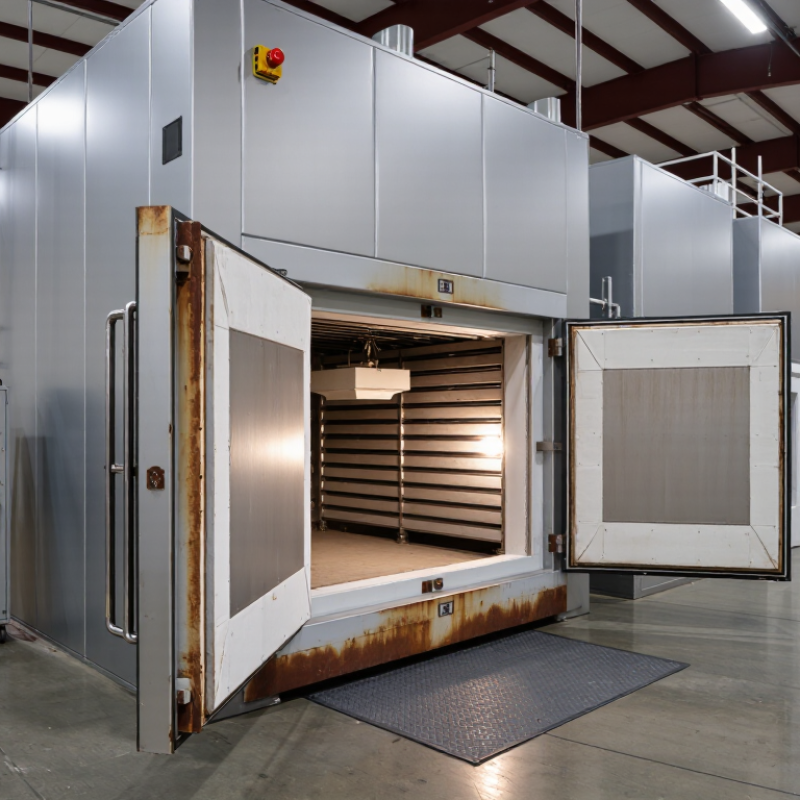
A used powder coating oven may look suitable on paper, yet cure time depends on the part reaching the required metal temperature. Many common powders cure for about 10–20 minutes at 350–400°F, but the exact schedule varies by formulation and coating thickness. Check the powder’s technical data sheet before comparing oven capacity or cycle times. The timer usually starts when the part reaches cure temperature, not when it enters the oven.
That distinction matters. A heavy steel frame may heat much more slowly than a thin bracket, even in the same load. When inspecting a used oven, ask for temperature-uniformity records and test it with a separate probe near the work area.
Look at door seals, airflow, controls, and signs of uneven heating. Small details count. A worn seal or crowded rack can stretch a cycle and leave coating undercured. Estimate your largest parts, daily load, and available warm-up time before buying. I would allow some margin; real production rarely matches a tidy test run.
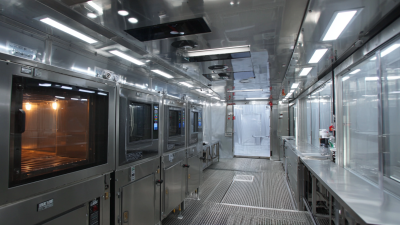
A used powder coating oven can look ready for production and still have uneven heat or tired controls. Compare the seller’s evidence, not just the asking price. Request the interior dimensions, maximum operating temperature, power requirements, and service records. Ask for a recent temperature-uniformity test, if available, and watch a full heating cycle. Look closely at door seals, insulation, fan blades, and burner or heating elements. Small defects matter.
Dealers may offer inspection access, setup support, or a limited warranty, which can reduce uncertainty. Their prices may also include refurbishment, so ask exactly what was replaced. Auctions can be cheaper, but units are often sold as-is and inspection time may be short. Bring a checklist and confirm removal deadlines, loading access, and transport costs before bidding. A bargain can become expensive quickly.
Direct factory resales may provide useful operating history and original documentation. Ask why the oven is being sold, how often it ran, and whether its controls were modified. Request photos of the data plate and wiring cabinet. Then compare those details with your shop’s available space and electrical capacity. Not always simple. Even careful checks leave some uncertainty, especially when records are incomplete. Build room in the budget for installation, repairs, and a qualified technician’s review.
A used oven must fit the largest part, not just the average one. Measure its full length, width, and height, including hooks, racks, and hanging hardware. Measure the usable chamber, too; walls and airflow clearances reduce working space. Measure the parts. Not the carton. A long panel may fit diagonally but block even heat circulation when loaded beside other parts.
Then check throughput against the actual heated length. A 12-foot heating zone moving at 3 feet per minute gives four minutes of residence time. That figure alone does not prove a part will cure. Powder coating cure schedules depend on the part reaching its specified metal temperature, so validate with contact thermocouples during a loaded trial. The Powder Coating Institute’s technical guidance emphasizes verifying cure conditions on the part, rather than relying only on oven-air readings. This check is easy to skip on a used line.
Ask for a temperature profile at your intended line speed, with representative parts and normal loading. Confirm conveyor pitch, gaps between racks, and recovery time after doors open. Oversizing is not automatically safer: the U.S. Department of Energy’s 2017 Bandwidth Study on Energy Use and Potential Energy Saving Opportunities in U.S. Manufacturing reports that process heating accounts for about 36% of manufacturing energy use. A larger chamber may waste heat if your real load is small. Still, the estimate can be imperfect; test before buying.
Example planning scenario: a used oven has 40 ft of usable heated length, and parts travel on a conveyor at a 10 ft pitch. At 4 ft/min, each part spends 10 minutes in the heated zone, with an estimated throughput of 24 parts per hour. Confirm the powder supplier’s cure schedule at part-metal temperature before selecting a line speed. Also verify that the oven’s usable opening (illustrated here as 10 ft L × 4 ft W × 7 ft H) accommodates the largest part (8 ft L × 3 ft W × 6 ft H), with adequate clearance and airflow. Actual capacity depends on the oven, part loading, and process requirements.
Where to Buy a Used Powder Coating Oven in 2026?
A used powder coating oven can look affordable until hidden safety defects appear. Inspect it in person, not only through photographs. Ask for operating records, service reports, wiring diagrams, and previous modifications. Missing documents should lower your confidence. It is not an automatic rejection, but it demands deeper inspection.
NFPA 86 should guide your review, together with local authority requirements. Examine the burner assembly for corrosion, unstable flames, damaged seals, and unusual soot. A qualified technician should verify gas pressure, combustion performance, flame-failure protection, and leak tightness. Never rely on a burner that simply starts. It must shut down safely when conditions change.
Test the control panel while the oven is cold and during a complete heat cycle. Confirm the high-temperature limit, airflow proving switch, purge sequence, emergency stop, and door or access interlocks. Each safety device should produce the intended shutdown response. Check alarm functions and inspect wiring for brittle insulation, loose terminals, or unauthorized bypasses. Look for clean airflow paths and protected exhaust openings.
I have found that older ovens often contain undocumented changes. That creates uncertainty. My checklist is useful, but it is not perfect. Have an experienced combustion or industrial oven professional evaluate the equipment before purchase. Request written findings, repair estimates, and confirmation that the oven can be updated for safe operation. A low purchase price means little if the controls, burner, or safety system requires extensive rebuilding.
Use this checklist to assess used ovens offered by equipment dealers, industrial auctions, or private sellers. It is a screening aid, not a certification: confirm the applicable NFPA 86 edition and local requirements with the authority having jurisdiction (AHJ) and qualified professionals.
| Inspection area | What to check on site | Evidence to request | Buyer’s screening result | NFPA 86 / safety relevance |
|---|---|---|---|---|
| Burner and fuel train | Inspect burner condition, fuel piping, shutoff valves, regulators, gauges, and visible leaks or corrosion. Confirm the oven’s fuel type and supply requirements match the site. | Current maintenance records; burner and fuel-train documentation; inspection by a qualified combustion technician. | Accept only after the fuel system is verified, deficiencies are identified, and repair costs are included in the purchase decision. | Combustion equipment and fuel safety should be assessed against the applicable code, equipment design, and local requirements. |
| Flame safeguard | Verify that flame supervision is present and that the burner shuts down safely when the flame signal is lost, as confirmed through approved testing. | Safeguard model and wiring information; documented functional test by a qualified technician. | Do not rely on a seller’s verbal assurance; require a witnessed or documented test before commissioning. | Flame supervision and safe burner shutdown are central combustion-safety considerations. |
| Pre-ignition purge and airflow | Check that the required purge sequence and airflow-proving devices operate as designed before burner light-off. Inspect fans, dampers, and relevant ductwork. | Control sequence or wiring diagrams; functional test results; maintenance records for fans and airflow switches. | Treat missing, bypassed, or untested purge and airflow interlocks as a commissioning hold point. | Purge and airflow safeguards must be evaluated for the oven’s design and applicable NFPA 86 provisions. |
| Temperature controls and limits | Check the process controller, temperature sensors, independent high-temperature limit, alarms, and shutdown response. Compare displayed readings with a calibrated reference during testing. | Control schematics; sensor and calibration records; documented high-limit test. | Require independent limit protection to be functional and set appropriately for the oven and process before production use. | Temperature control and overtemperature protection should be checked against the applicable design and safety requirements. |
| Emergency stops and interlocks | Test accessible emergency stops and inspect door, fan, burner, and other safety interlocks identified in the control design. Check for jumpers or undocumented bypasses. | Interlock list; electrical drawings; functional-test record; confirmation that circuits have not been bypassed. | Any bypass or unexplained wiring change requires correction and retesting by qualified personnel. | Safety-device operation and control-system integrity are important parts of a code-based review. |
| Ventilation and exhaust | Inspect exhaust fans, ducts, dampers, and discharge arrangements. Determine whether the oven was used with materials or processes that create combustible vapors or other special ventilation needs. | Process-use history; ventilation drawings or measurements; review by a qualified engineer where needed. | Confirm that the proposed coating and cleaning processes are compatible with the oven and its ventilation design. | Hazards depend on the process and materials; verify classification and ventilation requirements with the AHJ and qualified specialists. |
| Electrical system and controls | Inspect the control panel, wiring, grounding, component condition, and supply-voltage requirements. Check for obsolete parts and undocumented modifications. | Electrical schematics; equipment ratings; inspection by a qualified electrician. | Price required electrical repairs and replacement parts; confirm compatibility with the installation site. | Electrical safety and control reliability should be evaluated under applicable electrical and local codes. |
| Chamber, insulation, and doors | Look for damaged insulation, gaps, distorted panels, worn seals, door binding, and signs of overheating or corrosion. | Close-up inspection photographs; repair history; thermal survey during an approved operating test if available. | Estimate repairs and verify that the chamber can maintain the required process temperature uniformly. | Mechanical condition affects safe operation and the oven’s ability to perform as intended. |
| Records and identification | Record the oven’s serial or asset identification, age if known, operating history, prior repairs, and available manuals and schematics. | Equipment file; operating and maintenance logs; previous inspection or commissioning reports. | Missing records are a reason to allow more time and budget for inspection, documentation, and recommissioning. | The applicable NFPA 86 edition and local rules depend on the installation and jurisdiction; confirm requirements before purchase. |
| Location and purchase conditions | Compare loading dimensions, utilities, access for removal, transport needs, installation clearances, and the cost of commissioning at the destination. | Measured oven and doorway dimensions; utility specifications; written removal and transport plan; inspection access before sale. | Prefer a purchase arrangement that allows inspection and clearly defines responsibility for disconnection, loading, and missing components. | A safe installation review is still needed after relocation, even if the oven operated at its previous site. |
Purchase gate: Do not place a used oven into service solely on the basis of a sales demonstration. Have its combustion safeguards, controls, ventilation, and installation reviewed and tested by qualified professionals, and confirm acceptance with the local AHJ.
A used powder coating oven may look affordable until every ownership cost is recorded. Start with the purchase price, but do not stop there. Ask for service records, heating history, and recent temperature test results. Inspect the chamber, insulation, doors, controls, exhaust system, and burner or heating elements. Rust around seams often signals hidden repair work.
Freight can change the decision quickly. Measure the oven, loading area, door height, and transport route before paying a deposit. Request a written shipping quote that includes loading, unloading, crating, and possible storage fees. Installation may require rigging, ventilation work, electrical changes, gas connections, or floor preparation. Use qualified technicians and verify local safety requirements.
Repairs deserve a realistic allowance. Replaceable items may include seals, sensors, fans, filters, relays, and damaged insulation. A professional temperature-uniformity test can reveal uneven curing that wastes powder and labor.
Calculate total ownership cost with this simple formula:
purchase price plus freight, installation, initial repairs, testing, and expected maintenance.
My estimates are never perfect. Used equipment can hide problems. However, photographs, inspection notes, and independent testing reduce unpleasant surprises. Keep a repair reserve for the first year, especially when the seller cannot document maintenance. A lower purchase price is not always the lower operating cost.
Hein Minnie
Cell nr: +27 (0) 82 564 6501
Email: sale@thecirclemachine.com
Hein Minnie Jnr
Cell nr: +27 (0) 84 284 7234
Email: sale@thecirclemachine.com
Address:
10 Apsey Street,
Heidelberg,
Gauteng,
1441
Bendet Engineering Services (PTY) LTD was established in 1987. Our team of engineers and draughtsman are ready to deliver a complete turnkey solution, from the design phase to commissioning. A dedicated team that consists of electrical, mechanical and industrial engineers, we are able to offer a comprehensive service to our clients.