


China Best Powder Coating Equipment for Sale

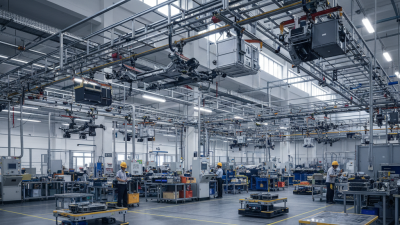
Choosing powder coating equipment for sale in China calls for more than comparing prices or polished product photos. A reliable setup should match the parts you coat, your available floor space, and the finish quality your customers expect. A small workshop may need a compact spray booth and a practical curing oven. A higher-volume line may require conveyors, controlled airflow, and coordinated pretreatment. Details matter. Ask suppliers for equipment specifications, installation requirements, and clear information about after-sales support.

China offers a broad range of powder coating systems, from manual spray units to automated production lines. The best choice depends on measurable needs, not a universal “best” label. Check oven temperature uniformity, booth recovery design, power requirements, and compatibility with your coating materials. Request test results or a sample run when possible. Look closely at welds, controls, and service access; these are easy to overlook in a catalog. A low purchase price can feel attractive, but spare parts, training, and downtime also affect the real cost. Some specifications may still leave questions. That is worth admitting. Compare written quotations, confirm what installation includes, and ask how performance is verified after setup. This guide introduces key equipment types and practical checks for evaluating Chinese suppliers, helping buyers make a more informed decision without assuming every factory or system is the same.
China Best Powder Coating Equipment for Sale

What Powder Coating Equipment Does and How It Works

China Best Powder Coating Equipment for Sale

What Powder Coating Equipment Does and How It Works

Powder coating equipment applies dry resin powder to metal using electrostatic attraction. A spray gun charges the particles as compressed air carries them toward a grounded workpiece. The powder clings to the surface like fine dust on a magnet. This is the working principle.

A practical system usually includes a powder booth, electrostatic gun, powder hopper, compressed-air controls, recovery unit, and curing oven. The booth contains overspray and protects nearby workers from airborne particles. The hopper feeds powder steadily, while adjustable air pressure controls the cloud leaving the gun. Too much air wastes powder. Too little air creates uneven coverage.

The coated part then enters an oven, commonly heated between 160°C and 200°C, depending on the powder formulation. Heat melts the particles, allowing them to flow into a smooth film. After curing, the surface should resist scratches, moisture, and many chemicals. Clean preparation still matters more than many buyers expect. Oil, rust, or trapped moisture can cause pinholes and peeling.

In field use, grounding is easy to underestimate. A weak ground can reduce transfer efficiency and create thin edges. I have also seen operators chase color problems by changing spray settings, when dirty metal caused the defect. Testing a small panel first is wiser. Equipment specifications look precise, but real results depend on airflow, part shape, humidity, and operator habits.

China Best Powder Coating Equipment for Sale - What Powder Coating Equipment Does and How It Works
Equipment or Process Stage What It Does How It Works Typical Details
Surface Pretreatment System Removes oil, dirt, rust, and other contaminants so the coating can adhere properly. Parts are cleaned using methods such as spray washing, immersion, rinsing, and chemical conversion treatment. The specific sequence depends on the metal and coating requirements. Common stages include degreasing, rinsing, surface treatment, and drying. Water quality and chemical control affect finish quality.
Dry-Off Oven Removes moisture from pretreated parts before powder is applied. Heated air circulates around the parts, evaporating residual water from surfaces and recesses. Operating temperature and dwell time are selected for the part material, size, and pretreatment process.
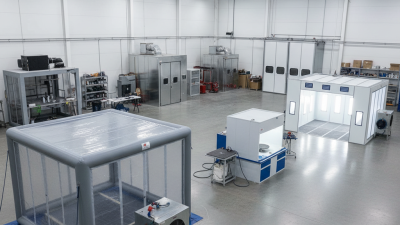
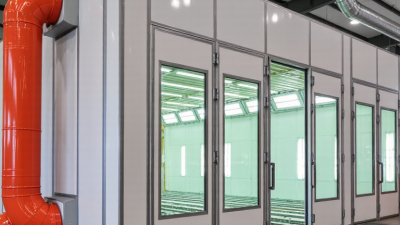
Powder Spray Booth Contains overspray and provides a controlled area for powder application. Airflow draws airborne powder toward filters or a recovery system, helping limit powder escape and maintain a cleaner application area. Booths may be designed for manual or automatic spraying. Booth size and airflow should suit the workpiece and production rate.
Electrostatic Spray Gun and Control Unit Applies an even layer of dry powder to a grounded workpiece. The gun charges powder particles as they leave the nozzle. The grounded part attracts the charged particles, which adhere to its surface before curing. Many electrostatic systems operate at tens of kilovolts; settings vary with the powder, gun, part geometry, and application conditions.
Powder Feed and Air Supply Delivers powder and compressed air to the spray gun at a controlled rate. Air fluidizes powder in a hopper or feed container and carries it through a hose to the gun. Clean, dry air helps prevent feeding problems. Air pressure and powder output are adjusted for the gun and coating task. Air treatment commonly includes filtration and moisture removal.
Powder Recovery and Filtration Collects suitable overspray and helps control airborne particles. Air passes through cartridge filters or a cyclone-and-filter arrangement. Recovered powder may be reused when it remains clean and the system is designed for recovery. Recovered powder should be managed to avoid contamination and changes in the blend of particle sizes.
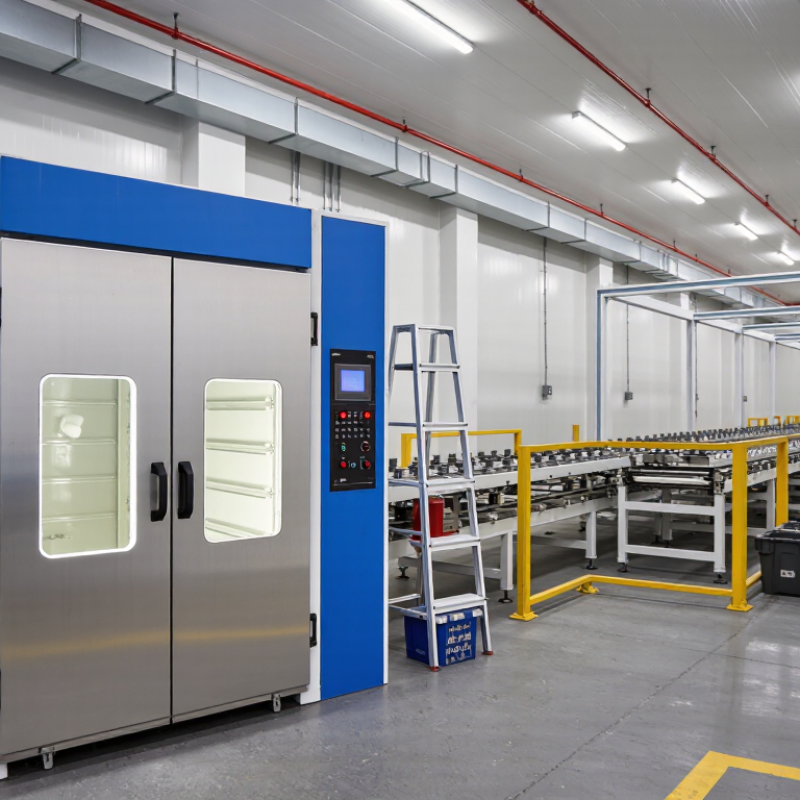
Curing Oven Turns the deposited powder layer into a continuous, durable coating. Heat melts the powder, allowing it to flow and chemically cure. Cure time is generally counted after the part itself reaches the specified temperature. Many powder coatings use metal-part temperatures around 160–200°C, often for roughly 10–20 minutes; always follow the powder supplier’s cure schedule.
Conveyor and Part-Hanging System Moves parts through pretreatment, application, and curing steps at a controlled pace. Parts hang from hooks or fixtures on a manual or powered conveyor. The line speed and oven length determine the available process time. Fixtures should provide stable grounding and minimize contact marks. Conveyor speed depends on the coating process and production layout.
Grounding and Safety Equipment Supports consistent electrostatic application and safer operation. Grounding provides a path for electrical charge to dissipate from the workpiece and equipment. Ventilation, housekeeping, and dust-control measures reduce powder accumulation. Keep hooks and contact points clean, follow equipment instructions, and use appropriate protective equipment and combustible-dust controls.
Typical Process Flow Coordinates the equipment into a complete powder coating line. Parts are pretreated, dried, electrostatically sprayed, and heated in a curing oven; cooled parts are then inspected. Finish quality depends on surface preparation, grounding, powder application, film thickness, and the correct part-temperature cure cycle.

Key Components in a Powder Coating System

China Best Powder Coating Equipment for Sale: Key Components in a Powder Coating System

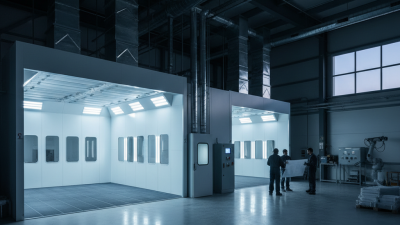
A reliable powder coating system begins with the spray booth. It contains overspray and supports cleaner working conditions. Steel panels, proper lighting, and accessible filters make daily maintenance easier. The booth size must match the workpiece, not only the available floor space. I have seen undersized booths slow production and create unnecessary cleaning work. Small details matter.

The powder coating gun applies charged powder to the grounded workpiece. Stable voltage control and adjustable powder flow help create an even finish. A reciprocating unit can improve coverage on repeated parts, while manual guns suit varied orders. The recovery unit collects unused powder through filters or cyclones. However, recovery settings need careful adjustment. Excessive airflow may disturb coverage and waste material.

The curing oven is the system’s quality checkpoint. It must provide consistent temperature across the chamber, with insulation that limits heat loss. A conveyor controls spacing and curing time in continuous production. Temperature recorders help verify actual part temperature, which differs from air temperature. That difference is often overlooked. Compressed-air equipment also deserves attention. Dry, clean air protects valves and powder delivery components. When comparing powder coating equipment for sale in China, buyers should inspect safety controls, spare-part access, installation guidance, and test results. A lower purchase price can become expensive when calibration or support is weak. Mistakes happen. Better documentation reduces them.

Types of Equipment and Their Industrial Applications

China Best Powder Coating Equipment for Sale
Types of Equipment and Their Industrial Applications

Powder coating lines combine several machines, each suited to a different production need. Pretreatment washers remove oil and dust from metal parts; a clean surface helps coating adhesion. Spray booths suit furniture frames, electrical enclosures, and agricultural components. Cartridge filters capture overspray, while recovery systems can return suitable powder to production. For long beams or repeated parts, automatic guns help maintain consistent coverage. Manual guns remain useful for small batches and awkward corners. One detail is easy to miss: poor grounding can cause uneven deposition.

Curing ovens complete the process by heating coated parts to the powder supplier’s specified time and temperature. Batch ovens fit varied, low-volume work; conveyor ovens support steady, high-volume production, such as appliance panels. Grand View Research’s Powder Coatings Market report valued the global market at US$13.1 billion in 2022, reflecting broad industrial demand. That figure describes the market, not equipment sales, so it should not be treated as a plant-sizing guide.

Tips: Match booth airflow and oven capacity to your largest part and daily throughput. Check temperature uniformity with a data logger before production. Small parts differ. Test a representative part first; a crowded rack or sharp corner may still expose coating gaps.

How to Evaluate Powder Coating Equipment Suppliers in China

China Best Powder Coating Equipment for Sale

How to Evaluate Powder Coating Equipment Suppliers in China

A supplier’s brochure can look impressive, but performance depends on the details behind it. Ask for airflow readings, booth dimensions, recovery efficiency, and a clear equipment layout. These figures help you judge whether the system suits your parts and production volume. Details matter. Request a live demonstration using parts similar in size and shape to yours. Watch how evenly powder covers corners and recessed areas, and ask how operators clean the booth between color changes. A sample panel is useful, but it cannot answer every question.

Check the oven’s temperature uniformity and ask how measurements are recorded across the heating zone. Confirm which controls, filters, and spare parts are included, and request written installation and maintenance guidance. Talk with past customers, ideally those running comparable production lines. A factory visit can reveal practical details, such as workshop organization and testing procedures. Ask for a documented acceptance test before shipment. Not every supplier will provide the same level of evidence, and that is worth noting. Compare service response times, warranty terms, and training support alongside the purchase price. A lower quote may leave important setup work to your team.

Purchase, Installation, and Maintenance Considerations

China Best Powder Coating Equipment for Sale
Purchase, Installation, and Maintenance Considerations

Choosing powder coating equipment starts with the work you actually handle. Compare booth dimensions, conveyor speed, oven capacity, and expected daily output. A small shop may need a flexible manual booth, while steady production often benefits from automated powder recovery. Ask for operating data, installation requirements, and service documentation—not just a price. Check that the oven can maintain an even temperature across your largest parts. A cheap system can become costly if it creates uneven curing or frequent production delays.

Installation needs careful planning. Measure the tallest parts and leave space around the booth for safe access and cleaning. Confirm that electrical supply, ventilation, compressed air, and floor loading match the equipment specifications. Keep the powder room clean and control dust; even a little contamination can spoil a smooth finish. Fit matters. A layout can look ideal on a drawing, then feel cramped when operators move racks through it. Leave more clearance than you think you need.

Build maintenance into the purchase decision. Ask how filters are replaced, how often the reclaim system needs inspection, and whether wear parts are readily available. Clean the gun, hoses, and booth regularly, especially when changing colors. Check oven temperature with a calibrated instrument rather than relying only on the display. Records help. Note cleaning dates, faults, and temperature readings. One imperfect habit is postponing small checks during busy weeks; that can turn a minor airflow issue into inconsistent coating. Keep a simple schedule, and review it when production changes.

China Best Powder Coating Equipment for Sale: Purchase, Installation, and Maintenance Considerations

Typical temperature ranges help guide early planning for powder coating line equipment. Actual settings depend on the coating material, part, and process requirements.

Ranges are indicative, not equipment specifications. Confirm process settings with the coating supplier and validate them for the actual part and production line.

Open chat
Scan the code
Bendet Sales Assistant
Hi There👋,
Thank you for visiting our website, How can I help you?