

China Top 10 Auto Paint Booth Manufacturers? This question deserves more than a simple supplier list. An auto paint booth affects airflow, coating quality, worker protection, energy use, and daily production speed. Steve Pugh, president of Global Finishing Solutions, has described the booth as “the heart of the finishing process.” That practical observation remains useful when comparing Chinese manufacturers.
A serious review should examine design experience, factory controls, certification records, installation support, and spare-parts availability. It should also assess booth structure, filtration, lighting, heating systems, airflow balance, and control-panel reliability. A bright booth is not automatically a good booth. Neither is a low quoted price.
Details matter.
For example, inspectors should check whether filters are easy to replace without damaging seals. They should ask how quickly the supplier responds when a fan motor fails. They should examine welded joints, door alignment, coating thickness, and documented airflow tests. These small details often separate an efficient booth from an expensive maintenance problem.
This ranking cannot treat every manufacturer as identical. Some companies excel in automotive repair shops. Others focus on industrial production lines or export projects. Their strengths may change by region, budget, and application. That makes a fixed top-ten order imperfect, but still useful.
The following overview compares leading Chinese manufacturers through practical, evidence-based criteria. It considers product capability, customization, service quality, compliance awareness, and customer experience. Readers should verify current certifications and factory claims independently. A manufacturer may look impressive online. The real test begins when paint starts moving through the booth.
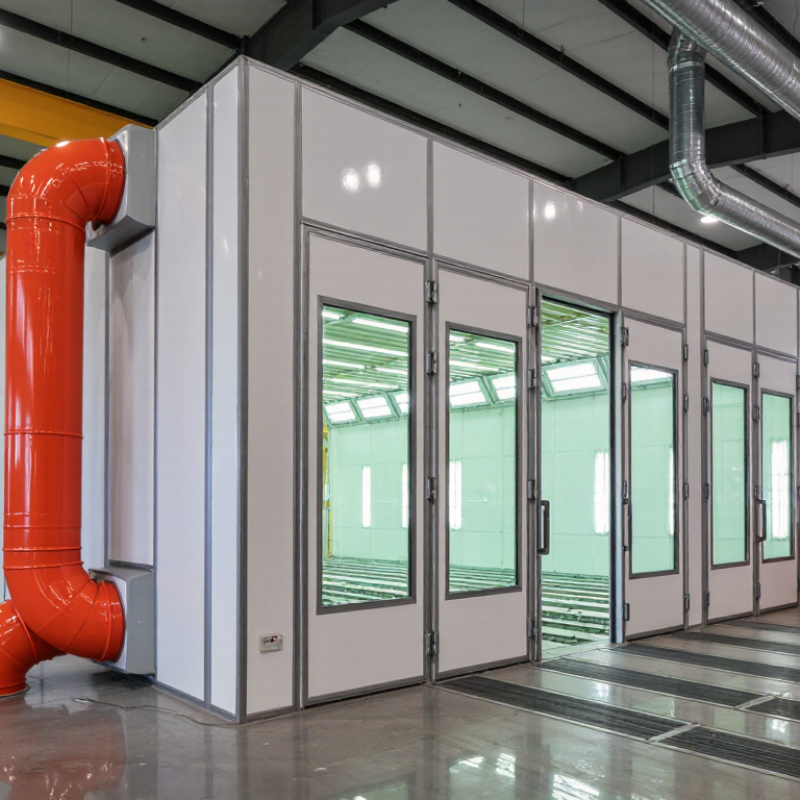
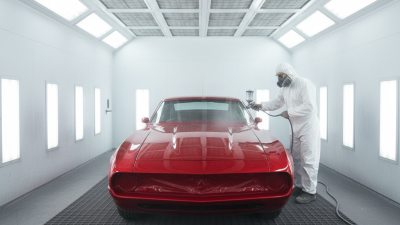
An automotive paint booth is an enclosed, ventilated workspace designed for vehicle refinishing. It controls airflow, temperature, humidity, and airborne particles during spraying and curing. Unlike an open garage, the booth directs clean air across the vehicle and removes contaminated air through filtered exhaust systems. This controlled movement helps protect wet paint from dust, fibers, and uneven drying. Small details matter. A poorly sealed door, blocked filter, or weak exhaust fan can quickly affect the finish.
In daily workshop operation, technicians inspect filters, lighting, air pressure, and ventilation before painting. Bright, balanced lighting reveals runs, dry spray, and color differences on curved panels. Stable temperature supports consistent curing, while excessive humidity may slow drying or dull the surface. Many booths also include a curing cycle that uses controlled heat after spraying. The equipment is not a magic solution. A clean booth can still produce poor results when preparation is careless. Operators must remove grease, clean the panel, and follow coating specifications. One practical inspection is simple: check whether dust collects near the airflow path. If it does, the booth may need maintenance or better sealing. Reliable performance comes from equipment, process discipline, and regular review.
| No. | Paint Booth Configuration | Typical Automotive Application | Typical Internal Size (L × W × H, m) |
Approx. Airflow (m³/h) |
Design Air Speed | Main Filtration Arrangement | Common Heating Method | Key Selection Consideration |
|---|---|---|---|---|---|---|---|---|
| 1 | Downdraft Booth | High-quality full-vehicle refinishing | 7.0 × 4.0 × 2.8 | 32,000–45,000 | About 0.25–0.35 m/s | Ceiling intake filters and floor exhaust filters | Gas, diesel, electric, or indirect-fired air heater | Best finish quality, but requires floor pits or a raised floor |
| 2 | Semi-Downdraft Booth | General collision repair and spot refinishing | 6.8 × 3.8 × 2.7 | 25,000–38,000 | About 0.20–0.30 m/s | Ceiling intake filters with rear or floor exhaust | Indirect-fired or electric heating | Lower installation cost than a full downdraft system |
| 3 | Crossdraft Booth | Small and medium vehicle repair shops | 6.5 × 3.5 × 2.6 | 20,000–32,000 | About 0.30–0.50 m/s | Intake filters at front and exhaust filters at rear | Gas or electric heating | Simple construction and economical installation |
| 4 | Side-Downdraft Booth | Professional refinishing where a full pit is unavailable | 7.0 × 4.0 × 2.8 | 28,000–42,000 | About 0.25–0.40 m/s | Filtered ceiling supply and low-level side exhaust | Indirect-fired or electric heating | Good airflow control without a deep underground exhaust pit |
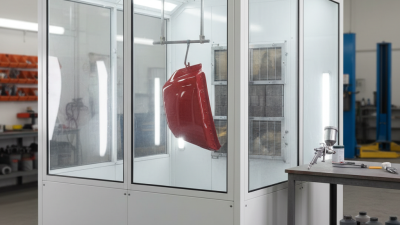
| 5 | Open-Face Spray Booth | Parts, panels, wheels, and localized spraying | 3.0 × 2.5 × 2.4 | 8,000–16,000 | At least 0.50 m/s at the open face | Dry overspray filters in the exhaust wall | Usually no bake cycle; optional heating | Requires effective make-up air and suitable exhaust discharge |
| 6 | Prep and Sanding Booth | Sanding, masking, priming, and surface preparation | 6.0 × 3.5 × 2.6 | 18,000–30,000 | About 0.30–0.50 m/s | Dust prefilters and replaceable exhaust filters | Normally ambient air or low-temperature heating | Dust extraction is more important than bake temperature |
| 7 | Truck and Commercial Vehicle Booth | Buses, trucks, vans, and large vehicle bodies | 14.0 × 5.0 × 5.0 | 70,000–120,000 | About 0.25–0.40 m/s | High-capacity intake and multi-stage exhaust filtration | Gas, diesel, or indirect-fired heating | Building height, heat load, and exhaust routing are critical |
| 8 | Containerized Paint Booth | Temporary, mobile, or modular refinishing operations | 12.0 × 2.4 × 2.6 | 18,000–35,000 | About 0.25–0.45 m/s | Intake prefilters and exhaust pocket filters | Electric or indirect-fired heating | Transportability, local permits, and container insulation |
| 9 | Waterborne Paint Booth | Automotive refinishing using waterborne coatings | 7.0 × 4.0 × 2.8 | 30,000–45,000 | About 0.25–0.40 m/s | Fine intake filters and high-capacity exhaust filters | Heated make-up air with controlled humidity where required | Air movement, humidity, and drying efficiency must be balanced |
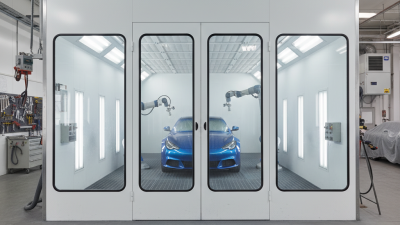
| 10 | Automated Robotic Paint Booth | High-volume industrial vehicle or component coating | 10.0 × 5.0 × 4.0 | 50,000–100,000 | Project-specific controlled airflow | Multi-stage dry or wet separation with final filtration | Indirect-fired, electric, or heat-recovery system | Automation, explosion protection, interlocks, and process integration |
| Technical note: The figures above are typical planning ranges for automotive paint-booth selection, not universal design limits. Final airflow, air speed, heating capacity, filtration grade, exhaust height, fire protection, and electrical classification must be calculated and verified against the applicable local building, fire, environmental, and occupational-safety requirements. | ||||||||
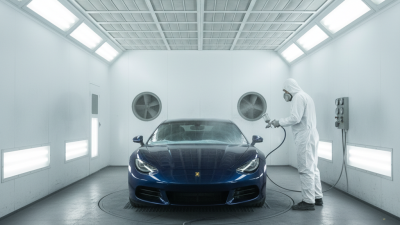
China’s auto paint booth manufacturing industry has changed significantly over the past decade. Earlier workshops often focused on basic steel structures, simple exhaust fans, and manual controls. Today, manufacturers commonly develop enclosed systems with cleaner airflow, stronger filtration, temperature monitoring, and programmable operating panels. The change reflects growing demand from repair centers, vehicle factories, and specialist finishing facilities.
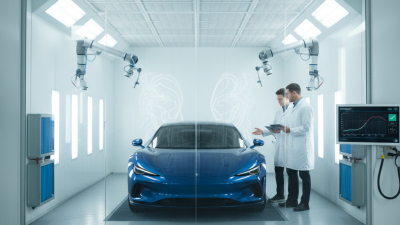
Practical experience has shaped this progress. Engineers now study airflow using digital models, then test spray balance inside full-size booths. Operators may check filter pressure, lighting, curing temperature, and noise levels during routine trials. Small details matter. A poorly sealed door can disturb airflow and waste energy. Modern designs may include heat recovery, variable-speed fans, and insulated panels to reduce operating costs. However, performance still depends on installation quality and regular maintenance.
Chinese suppliers have also become more adaptable. Many can adjust booth dimensions, heating methods, control systems, and filtration layouts for different production environments. Export projects have encouraged closer attention to documentation, electrical safety, fire protection, and local compliance requirements. Yet the industry is not perfect. Some manufacturers still emphasize appearance over long-term testing, while certain buyers compare prices without checking airflow data or replacement-filter access. A reliable evaluation should include factory inspection, performance records, service response, and operator training. The next stage will likely combine lower energy use with more measurable process control. Progress needs evidence, not attractive claims.
Evaluating Chinese paint booth manufacturers requires more than comparing prices. CAAM reported 31.28 million vehicles produced in China during 2024. Sales reached 31.44 million units. This scale demands stable airflow, fast curing, and dependable spare parts. The IEA also reported over 11 million electric cars sold in China during 2024. Therefore, manufacturers should explain how their booths handle changing coating systems and sensitive battery-related processes.
Check measured performance, not only catalog claims. Request airflow test reports, temperature uniformity data, filtration efficiency, and noise readings. Ask whether tests represent the complete booth, including doors, lamps, filters, and exhaust ducts. Energy use deserves attention. The U.S. Department of Energy identifies fans and heating as major industrial energy loads. A booth with variable-speed fans and heat recovery may reduce operating costs, but only when its controls are properly commissioned. ISO 9001 certification can indicate process discipline, yet it does not guarantee coating quality. Local fire, electrical, ventilation, and occupational-safety requirements remain essential.
Tips: Visit a working installation if possible. Inspect filter seals, floor grates, control panels, and maintenance access. Ask for a written warranty, response times, and a spare-parts list. A shiny brochure is not evidence. One practical weakness remains: published energy figures often use different test conditions. Compare identical airflow, temperature, operating hours, and production cycles. Also review conformity documents against applicable standards, rather than trusting certificates without scope details.
China’s Top 10 Auto Paint Booth Manufacturers Compared
China’s top ten auto paint booth manufacturers should be compared by measurable performance, not brochure language. The China Association of Automobile Manufacturers reported 31.28 million vehicles produced in 2024. New-energy vehicles reached 12.89 million units. This expanding repair and manufacturing base increases demand for stable airflow, rapid curing, and lower energy use.
The strongest manufacturers usually offer downdraft or semi-downdraft designs, ceiling filters, heat recovery, and programmable control systems. A useful comparison checks airflow uniformity, filtration efficiency, booth size, installation support, and annual maintenance cost. China’s GB 14444-2006 standard remains an important safety reference for painting operations. However, compliance alone does not prove excellent daily performance. It is only the starting point.
The International Energy Agency reported that China represented more than half of global electric-car sales in 2024. That shift matters because battery vehicles often require careful surface preparation and controlled refinishing. In factory evaluations, I would inspect the floor grate, filter replacement access, lighting shadows, and temperature records. Small details matter.
One weakness remains. Many published specifications use ideal laboratory conditions. They rarely show winter heating costs, dust levels after six months, or actual curing consistency. Buyers should request operating data from comparable workshops. A low purchase price may become expensive through downtime, filter waste, and weak technical support. Numbers matter. Yet field evidence is still incomplete.
Choosing among China’s top auto paint booth manufacturers requires more than comparing prices and attractive catalogs. Start with the booth’s working purpose, vehicle size, paint system, and daily production volume. A supplier should explain airflow, filtration, heating, lighting, and control-panel performance in clear technical terms.
Ask for factory photographs, material specifications, test records, and references from similar workshops. Check whether the supplier can meet your local electrical, fire-safety, ventilation, and environmental requirements. Certification documents should be traceable, not simply printed in a brochure. Details matter. Request a live video inspection or visit the production facility when possible.
Evaluate the engineering team as carefully as the equipment. Experienced technicians should calculate air volume, filter resistance, heat recovery, and installation conditions for your site. They should also provide drawings, commissioning guidance, maintenance schedules, and spare-parts support. A low quotation may exclude ducting, transportation, installation, or operator training. That is risky. One common mistake is trusting polished sales language before checking after-sales response times. Ask who handles faults, how quickly replacement filters ship, and whether remote support is practical. The best supplier may not offer the cheapest booth, but should provide measurable performance, honest limitations, and documentation your technicians can actually use. Some suppliers still present incomplete data. Treat that as a warning, not a minor inconvenience.
A practical supplier-evaluation framework based on measurable purchasing factors. The percentages represent suggested decision weights rather than rankings of individual companies or brands.
How to use this chart: Request documented evidence for each factor, including applicable safety standards, airflow and filtration specifications, energy data, customization drawings, warranty terms, spare-parts availability, and delivery commitments. Compare suppliers using the same checklist before making a final decision.
Hein Minnie
Cell nr: +27 (0) 82 564 6501
Email: sale@thecirclemachine.com
Hein Minnie Jnr
Cell nr: +27 (0) 84 284 7234
Email: sale@thecirclemachine.com
Address:
10 Apsey Street,
Heidelberg,
Gauteng,
1441
Bendet Engineering Services (PTY) LTD was established in 1987. Our team of engineers and draughtsman are ready to deliver a complete turnkey solution, from the design phase to commissioning. A dedicated team that consists of electrical, mechanical and industrial engineers, we are able to offer a comprehensive service to our clients.