2026 Top Paintline Spray Booth Buying Guide for Global Buyers
Buying a paintline spray booth in 2026 requires more than comparing prices and catalog photos. Global buyers must examine airflow, filtration, curing performance, fire protection, energy use, and service support. A booth may look efficient on paper. Real performance often depends on installation quality, operator training, and daily maintenance.
Jeff Jirak, Director of Engineering at Global Finishing Solutions, states, “Consistent airflow is the foundation of consistent finishing.” This practical point deserves attention. Measure airflow at the working height, not only at the fan outlet. Watch how dust moves near corners, conveyors, doors, and loading areas. A clean finish begins with controlled movement of air.
This guide introduces the decisions behind a reliable paintline spray booth investment. It considers automotive, industrial, furniture, and metal-finishing applications. It also compares booth layouts, exhaust designs, filter systems, heating methods, and automation levels. Buyers should request test data, maintenance schedules, spare-parts availability, and documented compliance information from suppliers. Local requirements still matter. A design accepted in one market may need changes elsewhere.
Do not trust impressive specifications alone. Ask what happens after commissioning. Can technicians reach the filters safely? Can the control system show pressure changes clearly? Will replacement parts arrive quickly?
Small details become expensive problems.
Experience also brings uncomfortable lessons. The lowest initial quote may create higher energy and maintenance costs later. Oversized equipment can waste power. Undersized equipment can damage quality and production flow. This 2026 guide helps buyers question assumptions, compare evidence, and select a booth that supports safer, cleaner, and more predictable finishing operations.
Paint Booth Types and Applications: Crossdraft, Downdraft, and Side-Draft Systems
2026 Top Paintline Spray Booth Buying Guide for Global Buyers
Paint Booth Types and Applications: Crossdraft, Downdraft, and Side-Draft Systems
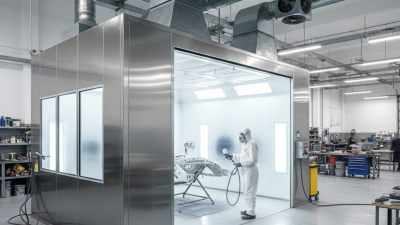
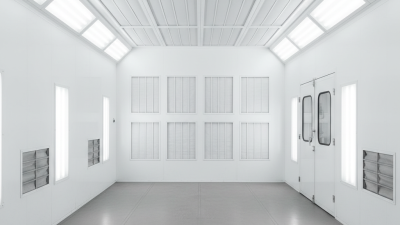
Choosing a spray booth begins with airflow, not appearance. Crossdraft booths move air from the front toward rear exhaust filters. They suit general metal parts, agricultural equipment, and budget-conscious production lines. Installation is usually simpler, but overspray may pass across freshly coated surfaces. That can affect finish consistency.
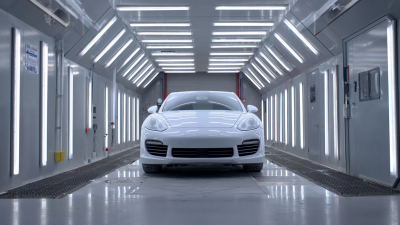
Downdraft booths pull air vertically through the floor or lower extraction channels. This design carries particles away from the painted surface more effectively. It is often preferred for vehicle bodies, high-gloss panels, and demanding refinishing work. However, it requires suitable floor construction, stronger extraction planning, and regular filter inspection. Downdraft systems can also increase installation costs.
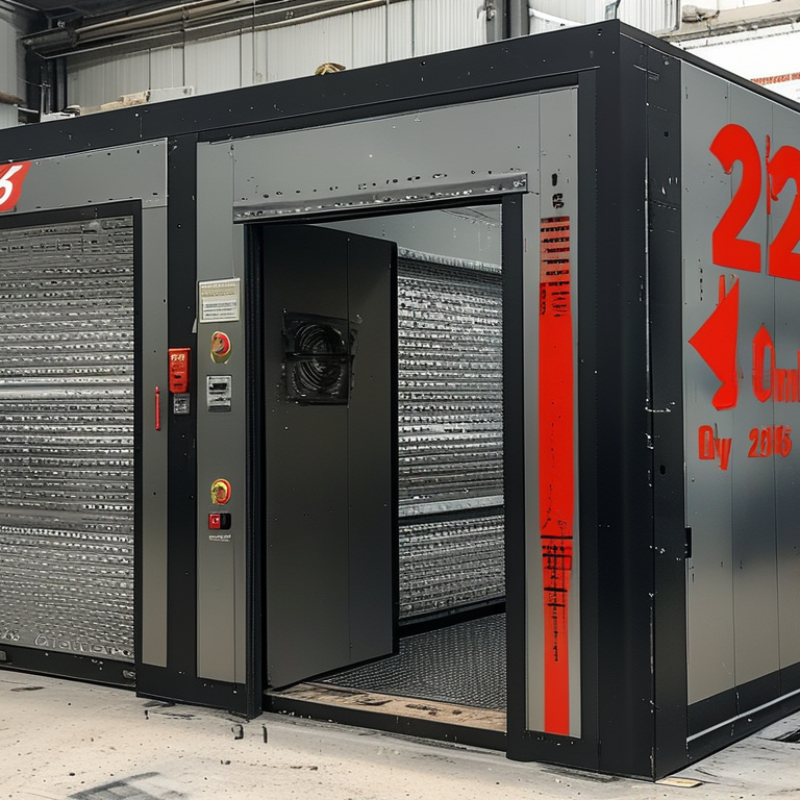
Side-draft booths draw air horizontally through one side wall or both side walls. They provide a practical compromise for workshops with limited floor depth. Large components can enter easily, while airflow remains more controlled than basic crossdraft designs. Check booth dimensions, fan capacity, filter access, lighting, and maintenance clearance.
Ask for measured airflow data, not only catalog claims. A booth may look efficient on paper but perform poorly after filters load with paint dust. Real production conditions are messier. Operators should test transfer efficiency, coating uniformity, and cleaning time before final purchase. Local electrical, ventilation, fire-safety, and workplace requirements also need verification by qualified professionals.
Airflow Design: Meeting OSHA’s 100 fpm Face-Velocity Benchmark
2026 Top Paintline Spray Booth Buying Guide for Global Buyers
Airflow design deserves careful attention when selecting a paintline spray booth. OSHA’s 100 fpm face-velocity benchmark is a useful reference for many spray applications. However, it is not a universal requirement for every country or booth configuration. Buyers should verify local regulations, coating specifications, and worker-protection requirements before approving a design. Measure velocity across the open booth face, not only near the exhaust fan. Uneven airflow can leave slow zones around corners, doors, and conveyor openings. Those areas may allow overspray to escape or settle on freshly finished parts.
Tips: Request a documented airflow test at several points. Check readings with filters clean and partially loaded. Ask for the booth’s static-pressure range, fan curve, and replacement-filter plan. A strong fan alone does not guarantee safe capture. Duct layout matters.
The booth should maintain stable inward airflow without creating turbulence around operators or workpieces. Large parts can block the air path, so their size and hanging position must be included in testing. A perfect-looking average reading can still hide poor capture. That is an easy mistake to miss. Consider adding monitoring for airflow loss, filter loading, and fan performance. These details support maintenance decisions and provide useful evidence during inspections. Since local enforcement practices differ, have a qualified ventilation professional review the final installation.
Safety Compliance: NFPA 33, ATEX, and Explosion-Protected Equipment
When buying a paintline spray booth in 2026, safety compliance should guide the design, not follow it. NFPA 33 provides widely recognized requirements for spray application, ventilation, electrical systems, and fire protection. However, its use does not replace local approval. Confirm requirements with the authority having jurisdiction before ordering equipment.
ATEX is essential for many installations in the European Economic Area. It addresses explosive atmospheres, equipment categories, zoning, and ignition control. Buyers should request documentation for motors, lights, sensors, and control panels. Explosion-protected equipment must match the classified zone, gas or vapor risk, and operating temperature. A certificate alone may not prove suitability.
Inspect the booth in real conditions. Check airflow at the operator position, filter loading, grounding continuity, and emergency-stop access. Keep combustible deposits away from corners and duct joints. Ask how technicians will clean fans and inspect wiring. Small omissions matter. A booth can meet a standard on paper and still perform poorly after installation. We have seen maintenance schedules become unrealistic when filters load faster than expected. That weakness deserves honest review before purchase. Choose suppliers who provide test records, drawings, manuals, training, and responsive technical support. Safety depends on the complete system, including installation and daily behavior.
Filtration and Finish Quality: ISO 14644 Cleanroom Principles Applied
For global buyers, a paintline spray booth should be evaluated through ISO 14644 cleanroom principles. The standard focuses on airborne particle control, not paint booths specifically. That distinction matters. A booth may look clean yet still carry dust into wet coating. I have seen this happen around poorly sealed doors and neglected filter frames.
Airflow must move steadily across the work zone. Turbulence can disturb droplets and create uneven film thickness. Check the airflow pattern with smoke testing during commissioning. Record pressure differences between the booth, preparation area, and surrounding workshop. Stable pressure helps prevent dirty air from entering. It also reduces overspray movement. Small details matter here.
Filtration needs more than a high efficiency rating. Filter loading, gasket condition, access panels, and replacement intervals affect real performance. Ask for airflow data at clean and loaded filter conditions. Measure particle levels before production, then repeat them during routine maintenance. A cleanroom-style monitoring plan supports consistent gloss, color, and surface smoothness. Still, particle control cannot correct poor spray technique or unsuitable curing conditions. That limitation deserves attention. Some buyers focus heavily on specifications and overlook operator training. A few minutes of uncontrolled door opening can weaken an otherwise careful process. Wet paint tells the truth.
Global Buying Metrics: Energy Use, VOC Control, Capacity, and Total Cost
Global buyers should compare paintline spray booths through measured operating data, not catalog airflow alone. OSHA 1910.94(c) uses 100 feet per minute as a reference for many automotive spray-booth applications. That equals about 0.5 meters per second. For a two-square-meter face, airflow reaches roughly 3,600 cubic meters per hour. Every extra air change increases fan and heating demand.
Energy must be priced by season. At 1.5 kilopascals pressure and 65% fan efficiency, that airflow needs approximately 2.3 kW before heating. Add winter makeup air, filters, lights, and curing time. Request kWh per painted unit, not only motor horsepower. VOC control needs equal discipline. EPA AP-42 Chapter 4.2 provides emission-factor methods for surface coating operations. The European Commission’s 2020 Solvents BREF discusses capture and abatement selection. Choose dry filtration, adsorption, or oxidation after measuring solvent loading, humidity, and exhaust concentration. Compliance limits differ by country. Do not treat a generic removal percentage as proof of compliance.
Capacity is more than booth volume. Record hanger spacing, flash-off time, cure cycle, color changes, and daily loading. Then calculate good units per shift. Total cost should include filters, waste handling, calibration, permits, maintenance, and lost production. A cheap booth can become expensive during winter. A first-pass spreadsheet can still miss downtime. Ask for three years of utility and maintenance assumptions. Those assumptions deserve challenge.