








Why choose a Portable Gas Detector? Because hazardous atmospheres can change before workers notice them. A confined-space entry, a leaking pipe, or a maintenance task near a process line can expose people to toxic gases or oxygen deficiency. A portable monitor travels with the worker, giving readings close to the breathing zone and warning of changing conditions. It can help teams make safer decisions. It cannot make a hazardous space safe by itself.
The scale of workplace risk deserves attention. The U.S. Bureau of Labor Statistics recorded 5,283 fatal work injuries in 2023 in its National Census of Fatal Occupational Injuries. That figure covers all workplace causes, not gas exposure alone. NIOSH Fatality Assessment and Control Evaluation investigations also document fatal incidents involving hazardous atmospheres, reinforcing the need for reliable testing. NIOSH Director Dr. John Howard has stated, “The best way to prevent occupational injuries and illnesses is to eliminate hazards at the source.” A detector supports that principle by helping workers identify danger before exposure, but it is not a substitute for hazard control, training, or a tested entry procedure. Small details matter: sensor suitability, calibration, bump testing, and alarm response. A neglected instrument offers false comfort. That part is easy to overlook. Choosing the right Portable Gas Detector means matching its sensors and alarms to the actual worksite risks—and checking that workers know what to do when it sounds.
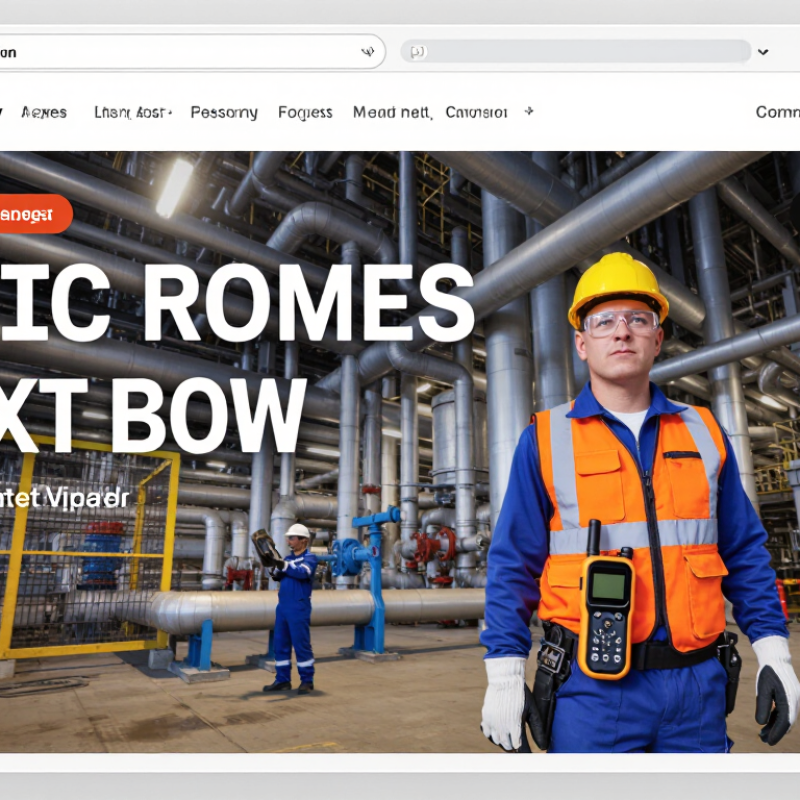
A portable gas detector is a wearable or handheld instrument that checks the surrounding air for selected gases. It may monitor oxygen, toxic substances, or flammable gases, depending on its sensors. A worker might clip one to a jacket before entering a tank room, where air can differ sharply from the doorway.
Most units draw air across sensors by diffusion or with a small pump. Electrochemical sensors measure reactions with specific gases; catalytic and infrared sensors detect flammable gases in different ways. The device converts sensor signals into readings, then sounds or vibrates when preset alarm levels are reached. Not magic. A detector can only assess the air reaching its sensor, and sensor choice matters.
Portable monitoring helps workers notice hazards before symptoms or ignition occur, but readings need context. NIOSH’s 1986 alert, Preventing Occupational Fatalities in Confined Spaces, reported that more than 60% of confined-space deaths involved would-be rescuers. That figure underscores why checking conditions before entry matters. A blocked inlet, an unsuitable sensor, or a unit overdue for calibration can undermine a reading. Bump tests check that alarms respond to gas; calibration checks measurement accuracy. They are related, but not the same. And users should pause when a reading seems inconsistent with the smell, symptoms, or work conditions.
Why Choose a Portable Gas Detector?
Which Gas Hazards Portable Detectors Can Identify
Portable detectors can reveal oxygen changes, flammable gases, and toxic contaminants where workers breathe. Oxygen may fall when another gas displaces it, or rise in oxygen-enriched conditions. OSHA defines oxygen-deficient air as below 19.5% and oxygen-enriched air as above 23.5%. A sudden alarm matters, even when the air looks clear.
Combustible-gas sensors commonly report readings as a percentage of the lower explosive limit. Toxic-gas sensors may monitor hazards such as carbon monoxide or hydrogen sulfide. The NIOSH Pocket Guide lists IDLH values of 1,200 ppm for carbon monoxide and 100 ppm for hydrogen sulfide. IDLH means immediately dangerous to life or health; it is not a safe exposure limit. Some instruments can also detect volatile organic compounds using photoionization sensors, but that reading may not identify the exact chemical.
Sensor choice matters. A detector only measures gases its sensors are designed and configured to detect. It also needs suitable calibration, bump testing, and placement near the likely leak or breathing zone. A monitor is not a substitute for safe entry procedures. And a zero reading can be misleading if the target gas is outside its sensor range. Verify the hazards before relying on a reading.
Why Choose a Portable Gas Detector?
How Portability Supports Safety in Changing Work Environments
Work rarely stays still. A maintenance worker may leave a ventilated workshop, enter a pump room, then inspect a low area where heavier gases can collect. Fixed monitors protect designated zones, but may not cover every temporary task or changing work area. A portable gas detector travels with the worker, helping provide readings closer to the breathing zone. That context can matter when airflow, access, or nearby processes shift during a shift.
Portability supports timely decisions. Workers can check conditions while moving between work areas, and alarms can prompt them to pause, leave, or follow site procedures. But a handheld device is not a substitute for fixed systems, ventilation, or a hazard assessment. Its usefulness depends on selecting suitable sensors, wearing it correctly, and keeping it maintained. Small details matter. A blocked inlet or overdue calibration can undermine confidence in a reading. It is easy to treat a portable detector as simple equipment; that assumption deserves a second look.
Tips: Keep the detector near the breathing zone, check its status before use, and follow the manufacturer’s instructions for testing and calibration. Train workers to recognize alarms and respond calmly.
| Work Environment | How Portability Supports Safety | Typical Monitoring Need | Important Safety Consideration |
|---|---|---|---|
| Confined spaces, such as tanks and utility vaults | A worker can carry a detector while entering, moving through, and exiting the space. | Atmospheric testing may include oxygen, flammable gases or vapors, and relevant toxic gases. | Test the atmosphere as required by the entry procedure. A personal detector does not replace required pre-entry testing or continuous monitoring. |
| Maintenance across multiple work areas | One appropriately configured device can accompany a worker between changing job locations. | Monitor for the gases identified in the site hazard assessment and task-specific procedures. | Confirm the detector is suitable for the target gases and operating conditions before use. |
| Temporary tasks near a possible gas release | Workers can keep the detector close while performing short-duration inspections or repairs. | Personal monitoring can warn the wearer when the selected sensors detect a hazardous condition. | Alarm response, evacuation routes, and communication procedures should be established before work begins. |
| Changing or unfamiliar locations | A carried detector can provide monitoring where fixed detection may not cover a temporary work position. | Detection depends on the installed sensors, sampling method, and the gases present. | No single detector detects every gas. Select sensors based on the hazards identified for the location. |
| Work involving potential oxygen deficiency or enrichment | A portable instrument allows workers to monitor oxygen levels as they move through the work area. | Oxygen measurement can help identify an atmosphere outside the limits set by applicable procedures. | Oxygen readings alone do not establish that an atmosphere is safe; other atmospheric hazards may also be present. |
| Outdoor or dispersed work sites | Workers can carry monitoring equipment between separated tasks without relying solely on a detector at a fixed point. | Monitoring needs vary with the task, site conditions, and identified gas hazards. | Consider environmental conditions, instrument limitations, and the site’s inspection and alarm-response procedures. |
| Routine daily use | A wearable or handheld device keeps monitoring accessible during work rather than limiting it to one location. | Functional checks and calibration help confirm the instrument is operating as intended. | Follow the manufacturer’s instructions and workplace policy for bump testing, calibration, maintenance, and charging. |
Portable gas detectors are commonly used where air can change quickly or become difficult to check safely. In wastewater plants, workers may inspect wet wells, pump stations, and underground chambers. Maintenance teams in factories use them near process lines, tanks, and equipment that may release gases. Construction crews and utility workers also carry detectors around trenches, service vaults, and other enclosed work areas.
The risks are measurable. A NIOSH review of confined-space incidents from 1980 to 1988 recorded 585 deaths across 460 incidents; roughly 60 percent involved would-be rescuers. That finding makes sewer, tank, and vessel work especially important settings for atmospheric checks. Detectors are also used in mining, oil and gas operations, and emergency response, where changing airflow can affect readings. A reading is only a snapshot. Workers need to test before entry and continue monitoring when conditions may shift. The device does not replace ventilation, training, or a planned rescue procedure. And placement matters: a detector clipped far from a worker’s breathing zone may not show what they are actually inhaling. Sources: NIOSH, Worker Deaths in Confined Spaces: A Summary of NIOSH Surveillance and Investigative Findings; OSHA, Permit-Required Confined Spaces.
A portable gas detector is useful only when its sensors match the gases a worker may encounter. Check the site’s risk assessment and process details, rather than choosing a unit by its sensor count. A service area may require oxygen, combustible-gas, or toxic-gas monitoring. That matters. Confirm the measurement range, alarm settings, response time, and whether readings are clear in dim light or through gloves. Temperature, humidity, dust, and water exposure can also affect performance.
Runtime is easy to overlook. A detector that runs out mid-shift is not useful, so compare battery life with shift length and charging access. Look for simple controls, audible, visual, and vibration alarms, plus a display workers can read at a glance. Ask how calibration and function checks are handled, and follow the manufacturer’s instructions for testing and maintenance. Small detail. Comfort matters too: a heavy detector clipped to a belt may be left behind. No model solves every problem. Treat the detector as one layer of protection, alongside training, site procedures, and suitable protective equipment.
What to consider when choosing a portable gas detector
Oxygen thresholds for detector selection
OSHA defines an oxygen-deficient atmosphere as below 19.5% oxygen and an oxygen-enriched atmosphere as above 23.5%. Normal air contains approximately 20.9% oxygen. These benchmarks help explain why a detector may need an oxygen sensor; select additional sensors for the specific gases and hazards present.
Threshold definitions: OSHA 29 CFR 1910.146. Confirm applicable local requirements and detector specifications; these thresholds are not alarm-setting recommendations.
Hein Minnie
Cell nr: +27 (0) 82 564 6501
Email: sale@thecirclemachine.com
Hein Minnie Jnr
Cell nr: +27 (0) 84 284 7234
Email: sale@thecirclemachine.com
Address:
10 Apsey Street,
Heidelberg,
Gauteng,
1441
Bendet Engineering Services (PTY) LTD was established in 1987. Our team of engineers and draughtsman are ready to deliver a complete turnkey solution, from the design phase to commissioning. A dedicated team that consists of electrical, mechanical and industrial engineers, we are able to offer a comprehensive service to our clients.