








Choosing a reliable Turn-Mill Cnc Machine can shape production quality, delivery speed, and long-term operating costs. Global buyers often compare spindle power, turning diameter, milling capacity, live tooling, control systems, and machine footprint. These specifications look straightforward. They are not always easy to compare.
This guide examines ten leading turn-mill CNC machines for international purchasing decisions. Each option is considered through practical manufacturing needs, including complex parts, tight tolerances, repeatable cycle times, and mixed-material production. Real workshop details matter. A rigid machine should remain stable during heavy cutting. A responsive control should reduce setup errors. Clear tooling access can save minutes on every batch.
Supplier experience also deserves close attention. Buyers should review installation support, operator training, spare-parts availability, warranty terms, and regional service coverage. A powerful machine may still disappoint without dependable technical assistance. That point is easy to overlook. It should not be.
The selection does not treat one machine as suitable for every factory. Small aerospace components, hydraulic fittings, medical parts, and automotive shafts require different working envelopes and process strategies. Energy use and floor space also influence the final cost. Published specifications can be useful, but they do not replace a trial cut or verified reference.
No ranking is perfect. Some information may change with configuration, market, or supplier updates. Therefore, this overview focuses on practical comparison rather than exaggerated promises. It gives engineers, distributors, and procurement teams a clearer starting point for evaluating capable machines in a demanding global market.
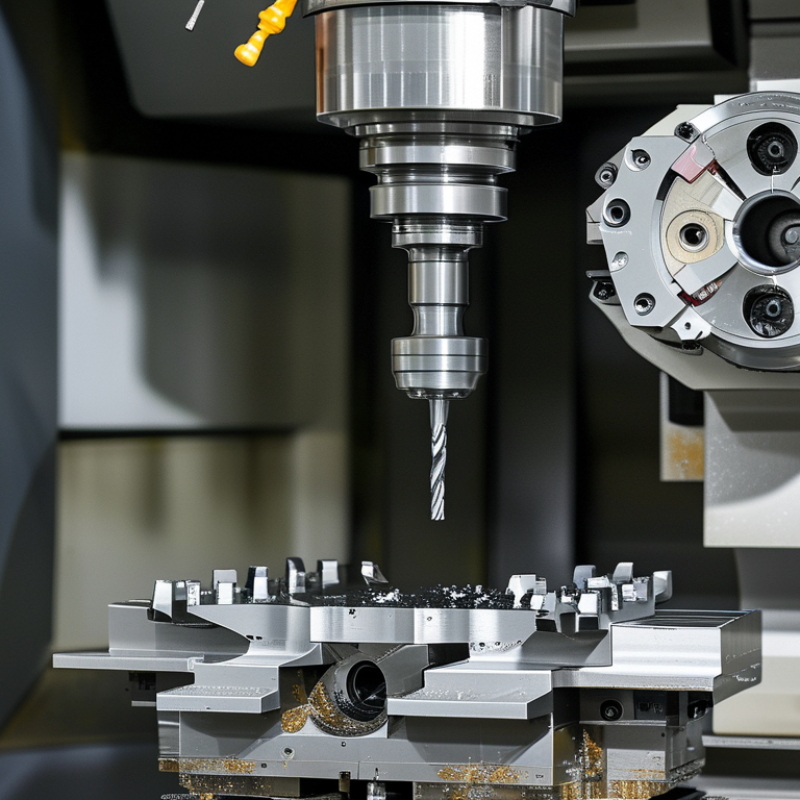
A turn mill CNC machine combines lathe turning with milling operations in one programmable system. The workpiece rotates while cutting tools remove material from its outside diameter, face, grooves, and threads. Live milling tools can then drill holes, cut slots, or machine flats without moving the part. One setup matters. It can reduce alignment errors and handling time.
The machine usually coordinates X, Z, and Y axes, while advanced models may add a B-axis for angled tool access. A CNC controller synchronizes spindle speed, feed rate, tool position, and cutting depth. CAD/CAM software converts the component design into verified toolpaths. In a real shop, probing checks offsets, coolant controls heat, and chip management protects the cutting zone. Poor programming still creates poor parts.
Fortune Business Insights reported that the global CNC machine market reached about USD 83.99 billion in 2023, with continued growth projected through 2032. That expansion reflects demand for flexible, automated production. Yet market growth does not remove practical limits. A turn mill machine needs skilled setup, accurate workholding, and disciplined tool monitoring. I have seen productivity claims ignore fixture changes and inspection time. That gap deserves attention. The best machine is not automatically the best process; cycle time, tolerance stability, maintenance access, and operator training must be measured together.
| Rank | Turn Mill CNC Machine Class | Typical Axis Configuration | Maximum Turning Diameter | Maximum Turning Length | Spindle Speed Range | Milling Spindle Power | Y-Axis Travel | Typical Bar Capacity | Best-Fit Applications |
|---|---|---|---|---|---|---|---|---|---|
| 1 | Compact Slant-Bed Turn Mill | 3 linear axes + C-axis + live tooling | 250–350 mm | 300–500 mm | 4,000–6,000 rpm | 5.5–11 kW | ±40–60 mm | 42–65 mm | Small precision shafts, connectors, fittings, and general subcontract machining |
| 2 | Standard Horizontal Turn Mill | 3 linear axes + C-axis + Y-axis | 400–550 mm | 500–800 mm | 3,000–5,000 rpm | 11–18.5 kW | ±70–100 mm | 65–80 mm | Automotive components, hydraulic parts, couplings, and medium-size turned work |
| 3 | High-Speed Precision Turn Mill | 3 linear axes + C-axis + Y-axis + driven tools | 300–450 mm | 400–700 mm | 5,000–8,000 rpm | 7.5–15 kW | ±50–80 mm | 42–65 mm | Medical components, electronics hardware, precision instruments, and small-batch production |
| 4 | Heavy-Duty Turn Mill | 3 linear axes + C-axis + Y-axis | 600–900 mm | 800–1,500 mm | 1,500–3,500 rpm | 18.5–37 kW | ±100–150 mm | 80–120 mm | Energy equipment, large valves, industrial shafts, and high-strength alloy parts |
| 5 | Twin-Spindle Turn Mill | 3 linear axes + dual C-axes + Y-axis | 350–600 mm | 500–1,000 mm | 3,000–5,000 rpm | 11–22 kW per main spindle | ±70–120 mm | 65–80 mm | Complete machining of front and rear faces, automotive parts, and reduced-setup production |
| 6 | Sub-Spindle Turn Mill with Y-Axis | 3 linear axes + main C-axis + sub-spindle + Y-axis | 300–500 mm | 400–800 mm | 3,500–6,000 rpm | 7.5–18.5 kW | ±60–100 mm | 52–76 mm | Parts requiring back-end machining, turned housings, flanges, and precision assemblies |
| 7 | B-Axis Turn Mill Center | 3 linear axes + C-axis + B-axis + Y-axis | 400–700 mm | 600–1,200 mm | 3,000–6,000 rpm | 11–30 kW | ±100–150 mm | 65–102 mm | Complex angled features, impellers, aerospace parts, and multi-face 5-axis-style machining |
| 8 | Swiss-Type Turn Mill | Up to 7–13 controlled axes with guide bushing | 5–32 mm | 100–400 mm per setup | 6,000–12,000 rpm | 2.2–7.5 kW | ±20–40 mm | 5–32 mm | Long, slender, and miniature components for medical, dental, electronics, and watchmaking industries |
| 9 | Vertical Turn Mill Center | 3 linear axes + C-axis + live tooling; optional Y-axis | 700–1,600 mm | 500–1,200 mm | 800–2,500 rpm | 18.5–45 kW | ±100–200 mm | Not usually bar-fed | Large discs, rings, bearing seats, pump bodies, and heavy workpieces with unstable slenderness |
| 10 | Automatic Bar-Fed Turn Mill | 3 linear axes + C-axis + Y-axis + automatic bar feeder | 250–450 mm | 300–650 mm | 3,500–6,000 rpm | 7.5–15 kW | ±50–90 mm | 42–80 mm | Continuous production of fittings, fasteners, shafts, bushings, and repeat-order components |
Ranking the Top 10 Turn Mill CNC Machines requires more than comparing prices or brochures. A reliable review begins with machining evidence. I examine spindle speed, torque, axis travel, interpolation accuracy, and live-tool performance. Machine rigidity matters when cutting stainless steel or interrupted surfaces. A rigid bed should remain stable beside a running coolant pump. I also check chip evacuation, thermal control, and tool-change repeatability. These details reveal daily production behavior better than impressive specifications.
Operator experience deserves equal weight. Clear controls, quick setup, and accessible maintenance reduce avoidable downtime. I compare cycle-time results using similar materials and realistic cutting conditions. After-sales training, spare-parts access, safety certification, and local service coverage also affect global purchasing decisions. Energy consumption and total ownership cost should enter the ranking. Still, no list is perfect. A machine performing well in one workshop may disappoint another with different operators, tooling, or floor conditions. My assessment should remain open to new test data.
Tips: Request sample machining, not only demonstrations. Measure surface finish and dimensional stability over several hours. Ask for service response times in writing. Check whether the control system supports your existing programs. A lower purchase price can become expensive later. That point is easy to miss.
The top ten turn mill CNC machines differ by work envelope, spindle layout, and automation options. Profile 1 is a compact horizontal model for small shafts, fittings, and repeat production. It saves floor space. Profile 2 uses a twin-spindle design, reducing manual repositioning between operations. Profile 3 adds a Y-axis for off-center drilling, milling, and slotting. Its value depends on accurate live-tool calibration.
Profile 4 targets medical and precision instrument parts, with thermal control and fine positioning. Profile 5 offers a larger chuck and longer turning length for hydraulic components. Profile 6 combines a sub-spindle with bar feeding, supporting unattended batch work. Operators should still inspect finished parts regularly. Profile 7 uses a vertical configuration, which can hold heavy, short workpieces securely. Chip evacuation may require extra attention.
Profile 8 is built for complex aerospace-style components, using multiple tool stations and advanced simulation. Profile 9 emphasizes flexible production, with quick-change tooling and accessible programming controls. Profile 10 is a heavy-duty turn mill machine for hard alloys and large diameters. Its foundation and power supply need careful site evaluation. Buyers should compare spindle torque, axis travel, tool capacity, software support, and service response. A machine may appear capable on paper, yet poor training or weak process documentation can reduce productivity. Real trial cutting remains important.
Global buyers often compare the top 10 turn mill CNC machines by spindle speed, axis travel, and cutting stability. These machines combine turning with live-tool milling, reducing setup changes for complex shafts, fittings, and small housings. In production trials, rigidity usually matters more than headline speed. A stable machine holds size during long cuts. It also controls vibration when tools enter hardened surfaces. That detail is easy to miss.
Performance must be read beside features. A bar feeder supports repeat work, while sub-spindles reduce manual repositioning. Y-axis travel improves off-center drilling and slotting. Automatic tool measurement can lower scrap, but only when operators calibrate it regularly. Chip evacuation, coolant pressure, and work-area access affect daily output. Safety interlocks and documented maintenance procedures support dependable operation. It is not perfect. Every extra axis adds cost and training demands.
Purchase cost includes tooling, installation, programming, energy, and service response. A lower-priced machine may become expensive if repairs delay shipments. High-speed models suit medical components, aerospace fittings, and precision electronics, provided shops can manage demanding tolerances. Heavier turning centers fit larger steel parts and repeated batch work. Compact models often serve job shops with limited floor space. Buyers should request sample cuts, cycle-time data, accuracy reports, and local service terms. Comparing ten machines on one price sheet is misleading. Application decides value.
Selecting a turn mill CNC machine requires more than comparing spindle speed and price. Global buyers should match the machine to actual parts, materials, and production volume. Review the largest workpiece diameter, turning length, bar capacity, and milling envelope. A machine that looks powerful may struggle with long, vibration-sensitive components. Check the spindle’s torque curve, not only its maximum speed. Heavy steel cutting needs steady torque. Small aluminum parts need responsive acceleration.
Inspect the machine’s control system, tool capacity, and live-tool performance. Ask for a sample cycle using your drawings and cutting conditions. The result should show cycle time, surface finish, tool wear, and chip control. Request evidence from similar applications. Marketing claims are not enough. Also examine positioning accuracy and repeatability under continuous operation. A warm machine may behave differently from a cold one. This detail is easy to miss.
Service support can decide whether a machine earns money or waits for a technician. Confirm spare-parts availability, remote diagnostics, training, and local response times. Clarify electrical standards, safety certification, installation duties, and shipping protection before signing. Consider factory acceptance testing with measured results. Compare energy use and maintenance access, including coolant filters and chip conveyors. Leave room for uncertainty. Forecasts are often wrong. A slightly smaller machine with dependable support may outperform a larger machine that lacks practical assistance. Ask difficult questions early. Then test the answers.
Hein Minnie
Cell nr: +27 (0) 82 564 6501
Email: sale@thecirclemachine.com
Hein Minnie Jnr
Cell nr: +27 (0) 84 284 7234
Email: sale@thecirclemachine.com
Address:
10 Apsey Street,
Heidelberg,
Gauteng,
1441
Bendet Engineering Services (PTY) LTD was established in 1987. Our team of engineers and draughtsman are ready to deliver a complete turnkey solution, from the design phase to commissioning. A dedicated team that consists of electrical, mechanical and industrial engineers, we are able to offer a comprehensive service to our clients.