






Choosing among the Top Dewatering Screw Press Manufacturers Worldwide requires more than comparing catalog prices. It demands practical judgment, technical evidence, and attention to operating conditions. A food-processing plant may handle soft organic sludge, while a municipal facility may process abrasive biosolids. The same machine will not perform identically in both environments.
“Sludge dewatering is a site-specific process, not a one-size-fits-all solution,” says Dr. George Tchobanoglous, a widely respected wastewater treatment authority. His principle remains highly relevant when evaluating every Dewatering Screw Press supplier. Manufacturer experience matters, but verified performance matters more. Buyers should examine feed solids, polymer consumption, torque control, screen durability, wash-water use, and cake dryness. They should also request reference projects with comparable sludge characteristics.
Small details reveal engineering quality.
A reliable manufacturer should explain testing methods clearly. It should provide realistic capacity ranges, not impressive claims without operating data. Service response also deserves careful review, especially for facilities running continuously. Spare parts availability can influence long-term costs more than the initial quotation. Some rankings appear authoritative, yet they may reflect marketing visibility rather than field results. That weakness deserves honest consideration.
This overview compares leading manufacturers through a practical lens. It considers design capability, production consistency, customization, automation, energy efficiency, and after-sales support. However, no global list can replace a site trial or independent technical assessment. Conditions change. Expectations can be imperfect. The best choice is usually the supplier that understands the sludge, documents its results, and remains accountable after installation.
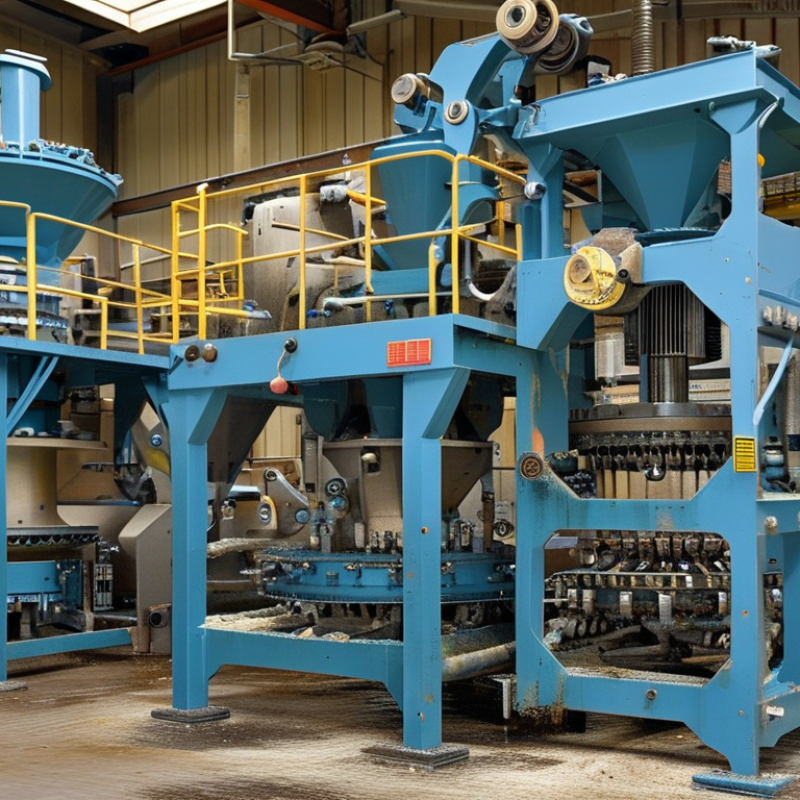
A dewatering screw press is a mechanical device that removes water from sludge. It uses a slowly rotating screw inside a cylindrical screen. Conditioned sludge enters the inlet, while the screw moves solids forward. Pressure gradually increases near the outlet. Water passes through the screen, and a thicker sludge cake leaves the machine.
The process is continuous and usually needs less energy than thermal drying. The U.S. Environmental Protection Agency identifies polymer conditioning as a major factor in mechanical sludge dewatering. The Water Environment Federation’s Manual of Practice No. 8 reports typical mechanically dewatered cakes at roughly 15–30% total solids. Actual results vary with sludge type, temperature, and polymer dosage. Wastewater operators often see lower performance during rainy-season inflows. That detail matters. A machine can be correctly sized yet still produce a wet cake. Screw speed, screen opening, and outlet pressure require regular adjustment. Poor feed mixing can also reduce capture and increase odor concerns.
Tips: Test representative sludge before selecting equipment. Measure feed solids, polymer demand, cake solids, and filtrate clarity. Keep a simple operating log. Small changes often reveal bigger problems. Avoid trusting brochure figures alone; laboratory results may not match daily plant conditions. The EPA and WEF data provide useful benchmarks, but site trials remain more reliable. In practice, screw presses are efficient, compact, and comparatively quiet. They are not magic.
| Evaluation Dimension | Typical Technical Data | What It Means | Common Applications | Important Selection Consideration |
|---|---|---|---|---|
| Operating Principle | Slowly rotating screw shaft with a gradually decreasing screen gap and compression zone | A dewatering screw press separates free water from sludge by conveying and compressing solids through a cylindrical screen. | Municipal wastewater, industrial wastewater, food processing, and agricultural waste treatment | The screw geometry, screen opening, and back-pressure mechanism influence both throughput and cake dryness. |
| Typical Feed Solids Concentration | Approximately 0.5% to 3.0% total suspended solids for many wastewater applications | The machine can often accept relatively dilute sludge, reducing the need for intensive pre-thickening. | Waste activated sludge, primary sludge, dissolved-air-flotation sludge, and mixed sludge | Actual capacity depends on sludge type, viscosity, temperature, and polymer conditioning. |
| Typical Cake Solids Content | Approximately 15% to 35% dry solids; higher values may be possible with suitable feed and conditioning | The discharged cake is significantly easier and less expensive to transport than untreated liquid sludge. | Municipal biosolids, paper-mill sludge, food-processing sludge, and industrial sludges | High-oil, highly gelatinous, or poorly conditioned sludge may produce lower cake dryness. |
| Solids Capture Rate | Commonly about 95% to 99%, depending on polymer dosage and screen configuration | Most suspended solids are retained in the dewatered cake while separated liquid leaves through the screen. | Facilities seeking reduced solids loading in return liquors or filtrate treatment systems | Capture performance should be verified through pilot testing because sludge characteristics vary considerably. |
| Polymer Requirement | Often required for sludge flocculation; dosage may range from roughly 1 to 10 kg of active polymer per tonne of dry solids | Polymer improves floc formation, water release, solids capture, and cake formation. | Biological sludge, chemically conditioned sludge, and mixed municipal sludge | Optimal dosage must be determined by jar testing or on-site trials; excessive polymer can increase operating cost. |
| Rotational Speed | Typically low speed, often around 2 to 10 revolutions per minute | Low-speed operation supports gentle floc handling, low noise, and comparatively low energy consumption. | Installations requiring continuous operation and limited mechanical disturbance | Higher speed can increase capacity but may reduce cake dryness or solids capture for some sludges. |
| Specific Energy Consumption | Often approximately 0.1 to 0.5 kWh per cubic metre of feed, depending on the process and sludge concentration | The equipment generally uses less power than many high-speed centrifuge systems of comparable duty. | Small to medium wastewater plants and decentralized treatment facilities | Energy figures should be compared using the same feed solids concentration and dry-solids throughput. |
| Noise and Vibration | Generally low because of low rotational speed and limited high-speed balancing requirements | Low noise and vibration can simplify installation near occupied buildings. | Urban wastewater plants, food factories, and indoor treatment rooms | Proper anchoring, alignment, and routine inspection are still required. |
| Screen Opening Range | Commonly selected within approximately 0.1 to 0.5 mm, depending on sludge properties | The screen retains flocs while allowing water to pass through the dewatering zone. | Fine-sludge dewatering and applications requiring improved filtrate clarity | Smaller openings may improve capture but can increase clogging risk if conditioning is inadequate. |
| Throughput Measurement | Usually specified by dry-solids capacity, such as kilograms of dry solids per hour, rather than liquid flow alone | Dry-solids loading provides a more meaningful basis for comparing machine capacity. | Equipment sizing, process design, and lifecycle-cost evaluation | Confirm both maximum hydraulic flow and maximum dry-solids loading before selection. |
| Typical Feed Temperature | Often suitable for normal wastewater temperatures, approximately 5°C to 40°C, subject to material and seal limits | Temperature affects viscosity, floc behavior, and the amount of water released from sludge. | Municipal and industrial treatment processes operating under ambient conditions | Hot process streams may require special seals, materials, controls, or cooling arrangements. |
| Maintenance Requirements | Routine inspection of screens, brushes, screw flights, seals, bearings, polymer systems, and spray-cleaning components | Regular maintenance helps maintain capacity, capture rate, and stable cake discharge. | Continuous-duty treatment plants and remote installations | Automatic screen washing and accessible wear components can reduce labor and downtime. |
| Water Consumption for Cleaning | Generally low to moderate; automatic spray bars may operate intermittently during service or cleaning cycles | Intermittent cleaning helps limit screen blinding and maintain liquid permeability. | Facilities with water-reuse systems or restrictions on wash-water consumption | Water quality, pressure, nozzle design, and cleaning frequency affect long-term performance. |
| Installation Footprint | Compact horizontal layout; many systems can be installed indoors with relatively limited headroom | The compact design can reduce civil-work requirements compared with some gravity-thickening and high-speed systems. | Space-constrained plants, containerized systems, and packaged treatment units | Allow sufficient space for cake conveyors, polymer preparation, access, and screen replacement. |
| Automation Features | Common options include variable-speed control, torque monitoring, automatic flushing, polymer control, and overload protection | Automation stabilizes operation and helps protect the screw, drive, and screen assembly. | Unattended plants and facilities requiring remote monitoring | Control-system compatibility and alarm integration should be checked during procurement. |
| Material and Corrosion Protection | Wetted parts commonly use stainless steel or other corrosion-resistant materials; wear zones may require hardened surfaces | Material selection affects service life in chloride-rich, acidic, alkaline, or abrasive sludge environments. | Chemical manufacturing, mining-related wastewater, food processing, and municipal sludge | Specify chemical composition, abrasive content, pH, and chloride exposure before finalizing materials. |
| Best-Fit Plant Scale | Frequently used for small to medium installations, with larger systems available for higher dry-solids loads | The technology is scalable through machine size, parallel units, and operating configuration. | Decentralized plants, municipal facilities, industrial pretreatment, and satellite treatment sites | For large plants, compare parallel screw presses with centrifuges, belt presses, and recessed-chamber filter presses. |
| Key Advantages | Low noise, low speed, compact structure, comparatively low power demand, and continuous operation | These characteristics can reduce installation complexity and routine operating burden. | Sites prioritizing simple operation, limited staffing, and reduced environmental impact | Advantages should be evaluated together with polymer cost, cake disposal requirements, and expected solids loading. |
| Main Limitations | Performance can decline with fibrous, sticky, oily, highly abrasive, or poorly flocculated sludge | Not every sludge type is suitable for screw-press dewatering without pretreatment or conditioning. | Specialized industrial sludges and variable wastewater streams | Conduct representative pilot tests and include seasonal variations in the evaluation. |
| Recommended Procurement Data | Feed flow, dry-solids load, feed concentration, sludge type, target cake dryness, capture target, polymer type, and operating hours | Complete process data allows manufacturers to size the equipment and estimate operating costs accurately. | New installations, replacement projects, capacity expansions, and technology comparisons | Request guaranteed performance values based on a defined feed-sludge analysis and test protocol. |