





China has become a major sourcing hub for Elastic Nonwoven Fabric, serving hygiene, medical, apparel, and filtration markets worldwide. Its manufacturers offer materials with controlled stretch, soft handfeel, and stable recovery. These qualities matter when fabric must follow body movement without losing shape.
The strongest suppliers combine modern production lines with practical manufacturing experience. They monitor basis weight, elongation, tensile strength, air permeability, and roll consistency. A reliable factory should also provide samples, technical data, batch records, and clear quality procedures. Ask about raw material origins. Ask how defects are detected. Small details matter.
Applications can reveal performance more clearly than brochures. In a waistband, poor recovery may create uncomfortable looseness. In a medical support layer, uneven elasticity can affect fit and pressure. In a hygiene product, inconsistent bonding may produce weak edges. Testing should reflect the final use, not only laboratory conditions.
China’s leading manufacturers often support custom widths, colors, laminations, and packaging formats. However, customization can increase lead times and quality risks. No supplier is perfect. Even an experienced factory may need improvement in communication, sampling speed, or documentation. Buyers should compare audited evidence rather than relying on attractive claims.
This guide examines China’s top Elastic Nonwoven Fabric manufacturers through product capability, quality control, innovation, export experience, and customer support. It also considers sustainability, traceability, and compliance with applicable international requirements. The goal is practical. Readers can identify dependable partners and ask better questions before placing large orders.
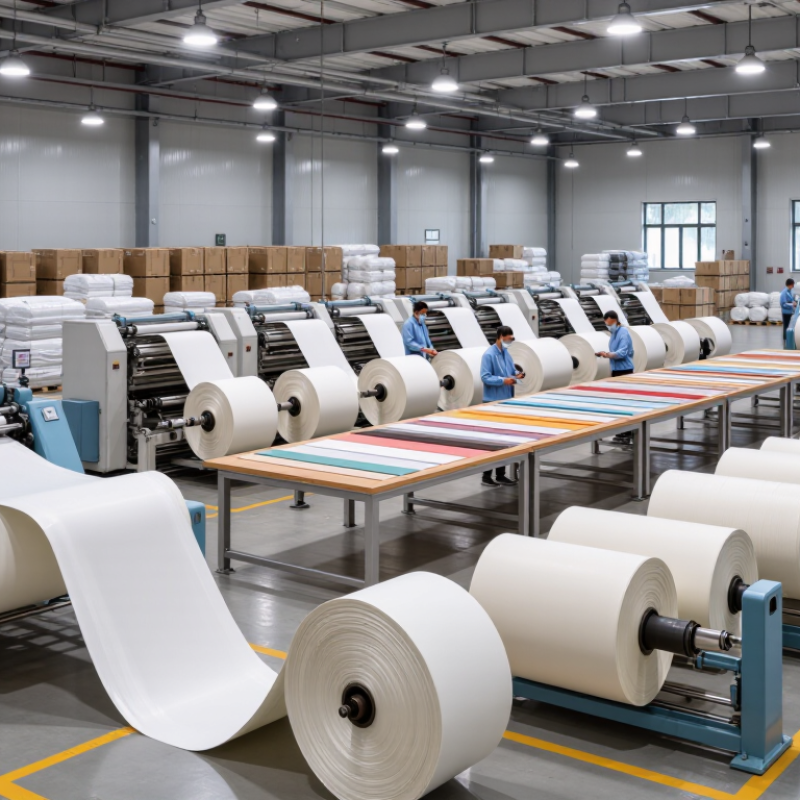
Elastic nonwoven fabric is a fiber web that stretches and returns toward its original shape. Unlike woven material, it does not rely on crossing yarns. Manufacturers create it through spunbond, meltblown, or composite processes. Elastic fibers, bonding methods, and web structure determine its performance.
Key features include flexibility, softness, breathability, and controlled recovery. Some grades stretch in one direction, while others support multidirectional movement. Thickness, basis weight, and pore size also affect comfort and strength.
In practical factory evaluations, buyers should check elongation, recovery rate, seam behavior, and aging resistance. Leading Chinese manufacturers often adjust fiber blends and production settings for different applications.
Still, no fabric performs perfectly. Excessive stretching may cause permanent deformation, especially after heat, pressure, or repeated use. That limitation deserves honest testing.
Tips: Request technical data and physical samples. Test the material under real temperatures and movement. Compare results after repeated stretching, not only on day one. Ask whether testing follows recognized industry methods. Small variations between batches can matter. Good documentation makes supplier communication clearer.
China has become a major production base for elastic nonwoven fabric worldwide. Its strength comes from integrated supply chains, skilled technicians, and large-scale manufacturing capacity. Factories can source polymers, elastic fibers, additives, and packaging materials within efficient regional networks. This shortens production cycles and supports flexible order volumes.
Many Chinese manufacturers now produce elastic nonwovens for hygiene products, medical textiles, sportswear, and protective applications. Their equipment often combines spunbond, meltblown, and elastic film technologies. Engineers monitor stretch recovery, tensile strength, softness, air permeability, and surface uniformity during production. Laboratory testing can include repeated extension, aging, and humidity exposure. Small details matter. A rough edge can affect comfort and converting efficiency.
China’s global role is expanding through process improvements, automation, and more disciplined quality control. Experienced suppliers usually provide technical data, sample rolls, inspection records, and traceable batch information. However, capacity alone does not guarantee dependable performance. Some factories may report impressive specifications without explaining test conditions clearly. Buyers should compare methods, request production samples, and inspect consistency across different lots. Environmental performance also deserves closer attention, especially regarding energy use, fiber selection, and production waste. Progress is visible, but not complete. The industry still needs clearer communication, stronger verification, and more practical cooperation with international customers.
The chart shows China’s annual export value for HS 5603 nonwoven fabrics, using live UN Comtrade data. HS 5603 is a broad customs category that includes elastic and non-elastic nonwoven products, so it is presented as a transparent proxy for China’s position in the global elastic nonwoven supply chain. Values are shown in million US dollars.
Source: UN Comtrade Database, Reporter: China, Trade flow: Exports, Product: HS 5603.
Leading Chinese elastic nonwoven fabric manufacturers are judged by more than production volume. Experienced buyers examine fiber selection, elastic recovery, basis weight, softness, and roll consistency. A capable factory can explain how spunbond or composite structures suit waistbands, medical gowns, and protective apparel. Its engineers should provide sample data, not vague promises. Small details matter.
Leading Chinese elastic nonwoven fabric manufacturers usually operate controlled production lines. Operators monitor web formation, tension, temperature, and winding pressure.
Testing may include tensile strength, elongation, recovery after repeated stretching, air permeability, and hydrostatic pressure where relevant. Request lot records and retain samples. A clean workshop helps, but paperwork alone proves little. On-site observation should match inspection reports.
Reliable Chinese suppliers communicate lead times, minimum order quantities, packing methods, and export documents clearly. They should support recycled-content claims and chemical restrictions with evidence. Independent laboratory verification is useful for sensitive applications. Prices can be attractive. Yet low quotes may hide weaker recovery or uneven edges. Not every manufacturer fits every project. A careful evaluation compares trial rolls, defect rates, response speed, and corrective action. Some factories will still miss a detail. Written specifications and repeat testing remain necessary.
China’s top elastic nonwoven fabric manufacturers typically combine spunbond or meltblown webs with elastic films, fibers, or filaments. Common materials include thermoplastic polyurethane, elastomeric polypropylene, and styrenic block copolymers. Each material changes stretch, softness, recovery, and heat resistance.
Production often begins with controlled polymer extrusion. Airflow then forms a uniform web. Laminating, calendaring, or thermal bonding adds strength. Some factories use ultrasonic bonding for cleaner edges and lower material waste. Tension control matters greatly. Uneven tension can create thin zones, curling, or poor elastic recovery.
Experienced manufacturers test basis weight, thickness, tensile strength, elongation, and permanent deformation. They may also measure air permeability, hydrostatic pressure, odor, and surface defects. ISO 9001-based quality systems can support process control, but certification alone proves little. Reliable suppliers keep batch records, retain samples, and calibrate testing equipment regularly. For medical or hygiene applications, additional chemical and biological evaluations may be required under the destination market’s rules.
In real production, results are not always perfect. High-speed lines can produce small variations between rolls. Humidity and storage time may also change fabric behavior. A strong inspection plan should include sampling from the roll center and edges. Supplier audits, traceable raw materials, and clear acceptance limits reduce avoidable disputes. One overlooked weakness remains: recovery testing after repeated stretching is often less consistent than basic tensile testing.
Choosing among China’s top elastic nonwoven fabric manufacturers requires more than comparing quotations. Define the fabric’s purpose before contacting suppliers. Record target weight, width, stretch direction, elongation, recovery, softness, air permeability, and color tolerance. A waistband may need different recovery than a support layer. Request a technical data sheet and lot-specific test report, not a generic brochure. Ask how measurements were taken.
A practical evaluation begins with samples from current production. Stretch a strip repeatedly, measure its return after one minute, and inspect edge fraying. Check thickness at several points across the roll. Small variations can affect cutting efficiency. Review raw-material traceability, incoming inspection, process controls, and final release records. Visit the facility, or arrange a documented remote audit. Observe storage, humidity control, labeling, and roll protection. Photos help. They do not replace evidence. This is often overlooked.
Selection also depends on dependable communication. Confirm minimum order quantity, sample timing, production capacity, packaging, shipment terms, and complaint handling. Ask for written tolerances and a corrective-action process. Verify relevant quality and environmental certifications directly, checking their scope and validity. Do not treat export experience as proof of consistency. Compare at least three suppliers using the same scorecard. My caution is simple: a perfect sample can hide unstable mass production. Approve a pre-shipment sample and retain a sealed reference piece. Build payment and inspection milestones around measurable results, while allowing reasonable flexibility for honest production limits.
Hein Minnie
Cell nr: +27 (0) 82 564 6501
Email: sale@thecirclemachine.com
Hein Minnie Jnr
Cell nr: +27 (0) 84 284 7234
Email: sale@thecirclemachine.com
Address:
10 Apsey Street,
Heidelberg,
Gauteng,
1441
Bendet Engineering Services (PTY) LTD was established in 1987. Our team of engineers and draughtsman are ready to deliver a complete turnkey solution, from the design phase to commissioning. A dedicated team that consists of electrical, mechanical and industrial engineers, we are able to offer a comprehensive service to our clients.