





Choosing the right screw thread can determine whether a joint stays secure or loosens under vibration. In workshops, I have seen small thread mismatches cause stripped holes, uneven clamping, and wasted assembly time. The details matter.
This guide examines the top 10 Screw Thread types used in manufacturing, construction, automotive work, and maintenance. It explains their profiles, pitch, diameter, strength, and typical applications. Common examples include Metric, Unified National Coarse, Unified National Fine, Whitworth, Acme, and Pipe threads. Each design solves a different engineering problem. Some support fast assembly. Others improve load transfer, sealing, or adjustment.
Thread selection should follow reliable technical references, including ISO, ASME, and manufacturer specifications. A thread gauge, caliper, and clear lighting can prevent many identification errors. Still, real components are not always perfect. Wear, corrosion, paint, and previous repairs can hide the original form. That uncertainty deserves attention.
This overview is practical, but it is not a substitute for checking drawings or certified data. A familiar thread may appear correct and still fail because its pitch differs slightly. That mistake is easy to make. By comparing each type’s shape, measurement method, and working purpose, readers can make more confident decisions. The goal is not to memorize names. It is to understand why each thread exists, where it performs well, and when another option may be safer.
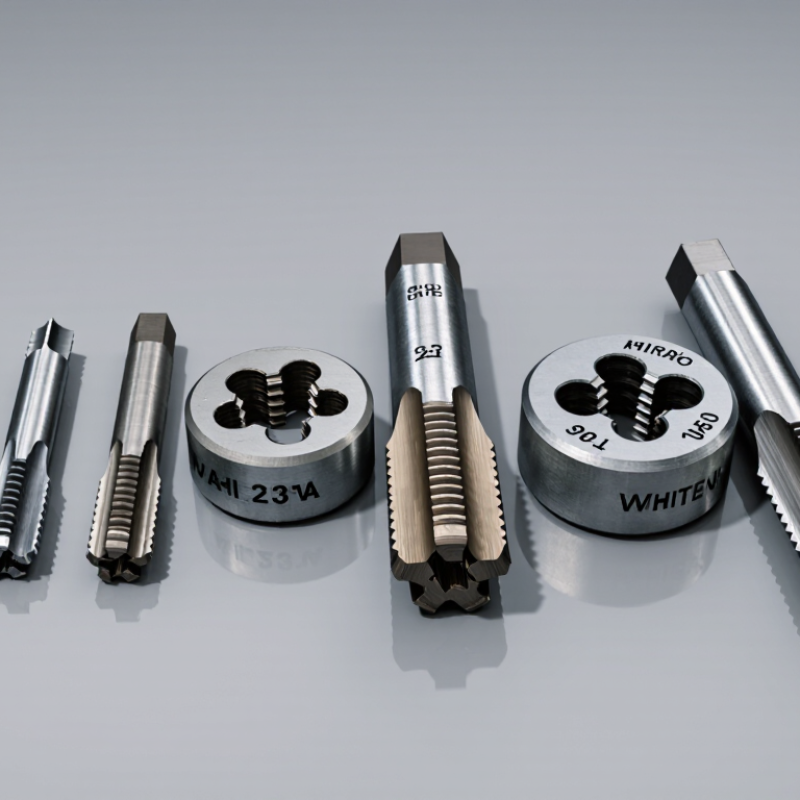
Understanding screw threads starts with classification, not memorization. Threads are identified by profile, pitch, diameter, direction, and intended use. The common ten include metric, unified, pipe, V, square, Acme, buttress, round, machine-screw, and self-tapping threads. However, these categories do not sit on one simple ladder. Metric and unified threads describe measurement systems, while V, square, and Acme describe the thread profile. That difference matters when selecting a replacement fastener.
A V-shaped profile is common for general fastening because its angled flanks create strong clamping action. Square threads transfer motion efficiently, making them suitable for lead screws. Acme threads offer a practical compromise between strength and easier manufacturing. Buttress threads resist force mainly in one direction. Round threads tolerate dirt and repeated handling. Pipe threads may be parallel or tapered, depending on whether sealing or mechanical connection is required. Machine-screw threads fit prepared holes, while self-tapping threads form their own mating path in softer materials.
In a workshop, I check diameter and pitch with calipers and a thread gauge. I also inspect the crest and root under bright light. Small damage can mislead identification. Direction matters too; most threads are right-hand, but not all. Classification can blur in real hardware, especially when a thread combines a metric size with a specialized profile. That is why a visual match alone remains unreliable.
The ten most common screw thread types vary by region and application. A practical industry list includes ISO metric coarse, ISO metric fine, UNC, UNF, NPT, BSPP, BSPT, ACME, trapezoidal, and buttress threads. ISO 68-1 defines the basic profile for metric threads, while ASME B1.1 covers Unified coarse and fine threads. These standards show why pitch, flank angle, and tolerance matter more than appearance.
Metric coarse threads suit general fastening because they assemble quickly and resist minor damage. Metric fine threads provide better adjustment and stronger engagement in thin sections. UNC threads are common for structural fastening, while UNF threads support finer control. NPT uses tapered sealing surfaces, but BSPP normally requires a separate sealing method. BSPT also uses taper. Check the standard.
ACME and trapezoidal threads handle power transmission in leadscrews, lifting equipment, and positioning systems. Buttress threads perform well when force acts mainly in one direction. Engineers often consult ASME B1.20.1 for pipe threads and ISO 2904 for trapezoidal profiles. In workshop inspections, a thread gauge, pitch gauge, and caliper prevent many costly mismatches. Still, a visual match can mislead. Thread angle, pitch, diameter, and sealing design must all agree. Regional usage changes the ranking, so this list is useful, not absolute.
This chart compares the nominal thread-form angle of ten widely used screw thread types. Metric, Unified, and NPT threads generally use a 60° profile, while Whitworth-based threads use 55° and Acme threads use 29°.
Note: Thread-form angle is only one specification. Selection also depends on pitch, diameter, tolerance, sealing method, strength requirements, and whether the thread is parallel or tapered.
What Are the Top 10 Screw Thread Types?
Thread identification starts with profile, diameter, pitch, and the governing standard. Metric coarse threads use millimetres and a 60-degree profile. Metric fine threads keep the same profile but use a smaller pitch. UNC, UNF, and UNEF threads follow ASME inch-based standards with 60-degree flanks. Their pitch decreases from coarse to fine and extra-fine series. Whitworth threads use a rounded 55-degree profile under BS 84, making them visibly different.
Pipe threads require extra care. BSPP uses parallel 55-degree threads, while BSPT uses tapered 55-degree threads under ISO 7-1. NPT uses a 60-degree tapered profile and ASME B1.20.1 dimensions. ACME threads have a 29-degree profile, supporting power transmission and repeated movement. Metric trapezoidal threads use a 30-degree profile under ISO 2904. These dimensions affect strength, sealing, tool selection, and interchangeability. A thread may look correct and still fail.
Tips: Measure the major diameter with calipers, then check pitch with a gauge. Confirm whether the thread is parallel or tapered. Do not rely on diameter alone. I have seen similar-looking fittings produce damaged flanks and poor seals. A clear thread chart helps, but physical verification remains essential. Standards sometimes overlap in appearance, so checking the original drawing or equipment specification is the safer choice.
| No. | Thread Type | Profile and Included Angle | Typical Size and Dimension Example | Pitch or TPI | Primary Standard | Key Dimensional Characteristics | Common Applications |
|---|---|---|---|---|---|---|---|
| 1 | ISO Metric Coarse Thread | Symmetrical V-thread with a 60° included angle. Crest and root geometry are standardized for general-purpose fastening. | M10 × 1.5 Nominal major diameter: 10 mm | Pitch: 1.5 mm | ISO 68-1, ISO 261, ISO 262 | Dimensions are expressed in millimetres. Coarse pitches provide good thread engagement, fast assembly, and improved tolerance of dirt or minor damage. | General machinery, automotive components, structural assemblies, and standard bolts and nuts. |
| 2 | ISO Metric Fine Thread | Symmetrical 60° V-thread with the same basic profile as metric coarse thread but with a smaller pitch. | M10 × 1.0 Nominal major diameter: 10 mm | Pitch: 1.0 mm | ISO 68-1, ISO 261, ISO 262 | Smaller pitch produces a larger minor diameter and a smaller lead per revolution. Fine threads offer more precise adjustment and stronger resistance to loosening in some applications. | Thin-wall parts, precision adjustment, hydraulic fittings, instrumentation, and applications requiring limited axial movement. |
| 3 | Unified National Coarse (UNC) | Symmetrical 60° V-thread with flattened or controlled crest and root forms. | 1/2-13 UNC Nominal major diameter: 0.500 in | 13 threads per inch Pitch: approximately 1.954 mm | ASME B1.1 | Inch-based dimensions. Coarse pitch gives rapid assembly, good stripping resistance, and better performance in softer materials than very fine pitches. | General-purpose inch fasteners, machinery, construction equipment, and maintenance work. |
| 4 | Unified National Fine (UNF) | Symmetrical 60° V-thread with a finer pitch than UNC thread. | 1/2-20 UNF Nominal major diameter: 0.500 in | 20 threads per inch Pitch: approximately 1.270 mm | ASME B1.1 | Fine pitch increases the minor diameter and provides finer axial adjustment. It normally requires more turns for installation than a coarse thread of the same diameter. | Precision assemblies, thin sections, vibration-sensitive equipment, and high-strength bolted joints. |
| 5 | British Standard Whitworth (BSW) | V-thread with a 55° included angle and rounded crest and root. The rounded form distinguishes it from 60° unified and metric threads. | 1/2 BSW Nominal major diameter: 0.500 in | 12 threads per inch Pitch: approximately 2.117 mm | BS 84 historical specification | Inch-based dimensions with a 55° flank angle. BSW uses relatively coarse pitches and is not interchangeable with UNC, UNF, or metric threads. | Legacy machinery, restoration projects, older mechanical equipment, and historical engineering assemblies. |
| 6 | Trapezoidal Power Thread | Symmetrical trapezoidal profile with a 30° included angle. The flanks are designed to transmit axial power and motion. | Tr 20 × 4 Nominal major diameter: 20 mm | Pitch: 4 mm Lead: 4 mm for a single-start thread | ISO 2901, ISO 2902, ISO 2903, ISO 2904 | Compared with a V-thread, the broad flanks and flat crest support higher axial loads and reduce wear. Clearance and tolerance classes are specified separately. | Lead screws, machine tools, linear actuators, lifting mechanisms, and positioning systems. |
| 7 | Acme Thread | Symmetrical trapezoidal profile with a 29° included angle and a flat or controlled crest and root. | 1-5 ACME Nominal major diameter: 1.000 in | 5 threads per inch Pitch: 0.200 in | ASME B1.5 | Inch-based power thread. The 14.5° flank angle on each side provides a practical balance between load capacity, manufacturability, and efficiency. | Machine-tool lead screws, vises, valve actuators, jacks, and linear motion equipment. |
| 8 | Buttress Thread | Asymmetrical saw-tooth profile. A common form uses a nearly perpendicular load flank and a sloping trailing flank; exact angles vary by standard and application. | 40 mm nominal diameter Example pitch: 7 mm | Typical pitch: 7 mm Actual pitch depends on the design standard. | ASME B1.9 and application-specific specifications | Designed to carry very high axial loads predominantly in one direction. The load flank and clearance geometry must be matched between the mating parts. | Presses, screw jacks, injection-moulding equipment, heavy-duty actuators, and closures exposed to high one-directional loads. |
| 9 | NPT Tapered Pipe Thread | 60° tapered V-thread with flattened crests and roots. The thread tapers at 1 in 16, measured on the diameter. | 1/2-14 NPT Nominal pipe size: 1/2 in | 14 threads per inch Taper: 1:16 on diameter | ASME B1.20.1 | Sealing occurs through flank interference and controlled engagement, normally with a suitable thread sealant. The nominal pipe size is not equal to the actual outside diameter. | Compressed-air lines, hydraulic systems, fuel systems, process piping, and general-purpose pipe connections. |
| 10 | BSPT Tapered Pipe Thread | Whitworth-form tapered pipe thread with a 55° included angle, rounded crest and root, and a 1:16 taper. | R 1/2 Nominal pipe size: 1/2 in | 14 threads per inch Taper: 1:16 on diameter | ISO 7-1 and ISO 10226-1 | Uses a 55° profile and is dimensionally different from NPT, even when the nominal pipe size and thread count appear similar. Proper matching of thread form is required for sealing. | Pipe fittings, fluid-handling equipment, pneumatic systems, and installations using ISO-based pipe-thread practice. |
Choosing a screw thread begins with the joint, not the fastener drawer. In workshop repairs, I check diameter, pitch, material, load direction, and exposure to moisture. Metric and Unified threads suit general machine assembly. Fine threads offer better adjustment and stronger tensile engagement, but they can clog more easily. Coarse threads start faster and perform well in softer materials.
For fluid connections, pipe threads need careful attention. Tapered pipe threads can seal through interference, while parallel pipe threads usually need a separate sealing element. Whitworth threads still appear in older equipment, so forcing a modern thread into place is risky. Trapezoidal, Acme, and square threads transfer motion and load in jacks, vises, and lead screws. Buttress threads handle heavy force in one direction. Round threads resist dirt and impact, making them useful for covers and rough service. Worm threads belong to angled power-transmission systems, not ordinary bolts.
Fit matters as much as thread name. I compare the crest shape, pitch, diameter, and intended tolerance before installation. A thread gauge helps, but lighting and worn edges can mislead. Do not rely on appearance alone. A matching thread should turn smoothly by hand for several rotations. It should not need a wrench to begin. That simple check catches many costly mistakes. I have also seen a correct pitch fail because the mating material was too weak. The chart was right; the application was not.
What Are the Top 10 Screw Thread Types?
Choosing the Right Screw Thread for Performance and Compatibility
Screw threads determine how fasteners grip, carry loads, and resist loosening. The common types include wood, machine, sheet-metal, self-tapping, drywall, pipe, metric, Unified, trapezoidal, and buttress threads. Each design suits a different material or motion. Wood threads use deep, spaced grooves for timber. Machine threads provide accurate engagement in nuts and tapped holes. Sheet-metal and self-tapping threads form their own path in thin materials. Drywall threads hold brittle boards with reduced surface damage. Pipe threads support fluid connections, while trapezoidal and buttress threads handle repeated movement or heavy axial loads.
Compatibility requires more than matching diameter. Check pitch, thread angle, length, material, and engagement depth. A metric screw will not reliably fit a Unified threaded hole, even when both appear similar. Fine threads can improve adjustment and clamping, but coarse threads usually tolerate dirt and softer materials better. In workshops, I check a sample screw against a gauge before installation. Guessing has caused costly rework. It remains an easy mistake.
Tips: Confirm the thread standard with a gauge or drawing. Test engagement by hand before using tools. Choose corrosion-resistant material for moisture, but verify strength under real loads. Avoid forcing a mismatched fastener. A damaged thread may look acceptable while losing holding power. Temperature, vibration, and installation torque also deserve attention. I sometimes prioritize speed, then reconsider after seeing uneven clamping. That judgment is not always right.
Hein Minnie
Cell nr: +27 (0) 82 564 6501
Email: sale@thecirclemachine.com
Hein Minnie Jnr
Cell nr: +27 (0) 84 284 7234
Email: sale@thecirclemachine.com
Address:
10 Apsey Street,
Heidelberg,
Gauteng,
1441
Bendet Engineering Services (PTY) LTD was established in 1987. Our team of engineers and draughtsman are ready to deliver a complete turnkey solution, from the design phase to commissioning. A dedicated team that consists of electrical, mechanical and industrial engineers, we are able to offer a comprehensive service to our clients.