




China Top 10 Mechanical Flange Manufacturers?

China Top 10 Mechanical Flange Manufacturers?

China has become a major source of Mechanical Flange products for oil, gas, chemical, power, shipbuilding, and water projects. This introduction presents ten manufacturers worth evaluating, rather than declaring one permanent winner. A polished website proves little. Factory evidence matters more.

The selection considers forging capacity, machining accuracy, material traceability, pressure testing, export experience, and compliance with ASME B16.5, ASME B16.47, EN 1092-1, and related specifications. Buyers should also examine production records, heat numbers, dimensional reports, coating methods, and independent inspection options. Small details often expose large risks.

John H. Bickford, a respected bolting engineer and author, stated, “The torque-tension relationship is not a constant.” This warning is highly relevant to Mechanical Flange assembly. Uneven bolt loading can distort sealing surfaces, even when the flange appears visually correct. Experienced manufacturers should therefore support customers with gasket guidance, bolt-torque recommendations, and practical installation advice.

The coming sections compare ten Chinese suppliers through a buyer’s lens. Their strengths may differ. One may offer excellent custom forging, while another provides faster stock delivery or stronger overseas support. Some claims may change with time. Verification remains essential.

Look beyond price.

A reliable factory should explain its steel grades, testing process, tolerances, and corrective actions clearly. It should also answer difficult questions without hiding behind general certificates. This list is useful, but imperfect. Market positions shift, and supplier performance depends on project requirements, inspection depth, and communication quality.
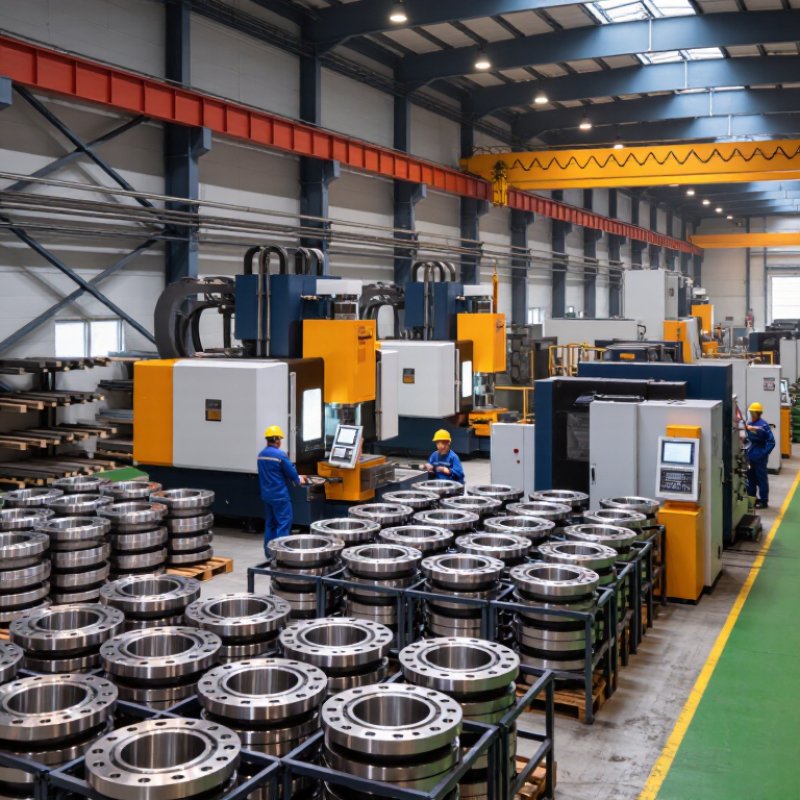
China Top 10 Mechanical Flange Manufacturers?

What Are Mechanical Flanges and Where Are They Used?

Mechanical flanges are flat, ring-shaped components that connect pipes, valves, pumps, shafts, or machine housings. They usually contain drilled bolt holes and a central opening. When tightened correctly, bolts hold the parts together while a gasket helps prevent leakage. Some mechanical flanges also transfer torque between rotating shafts, especially in motors, gearboxes, and drive systems.

Their applications are broad. In water treatment plants, flanges connect large pipes and allow sections to be removed during maintenance. In chemical processing, they join vessels and valves where controlled disassembly matters. Heavy machinery uses flanged couplings to align shafts and transmit power. Offshore equipment, compressors, hydraulic systems, and industrial pumps also depend on them.

The correct material may be carbon steel, stainless steel, alloy steel, or engineered plastic, depending on pressure, temperature, corrosion, and load.

Small details matter. Technicians should check the flange rating, face condition, gasket type, bolt grade, and alignment before installation. Uneven tightening can distort the joint and create a slow leak. It may look secure. It may not be.

Clean sealing surfaces and use a calibrated torque wrench whenever possible.

In practice, flange selection is sometimes treated as a simple size-matching task. That approach needs reconsideration. Vibration, thermal expansion, fluid chemistry, and repeated maintenance can change the joint’s performance over time. Regular inspection remains essential, especially around bolts, welds, and gasket edges.

How Were the Top 10 Chinese Manufacturers Selected?

Selecting China’s top 10 mechanical flange manufacturers required more than comparing production volume. The assessment examined factory experience, engineering capability, quality systems, and delivery performance. Public records were reviewed alongside technical documents and customer feedback. Factory experience mattered. Companies with long-term flange production usually showed stronger process control and clearer material knowledge. We checked whether manufacturers could provide heat numbers, inspection reports, and traceability records for each batch. These details help buyers connect finished flanges with specific steel materials and production stages.

The review also considered dimensional accuracy, pressure testing, surface treatment, packaging, and export support. Manufacturing samples were compared against drawings, applicable standards, and stated tolerances. Evidence mattered. A supplier’s equipment list alone could not prove reliable production. We looked for practical signs, such as calibrated measuring tools, controlled welding procedures, and documented final inspections. Delivery history and communication quality were included because technical errors often begin before production. Some records were incomplete. In those cases, the evaluation used cautious judgment rather than unsupported claims. The selection was not based on advertising language or the lowest quotation. It focused on verifiable capability, consistent documentation, and the manufacturer’s ability to handle real project requirements. Supplier rankings can still change when new audit results, production data, or customer experiences become available.

Who Are China’s Top 10 Mechanical Flange Manufacturers?

Who Are China’s Top 10 Mechanical Flange Manufacturers?

China’s top ten mechanical flange manufacturers should be judged by evidence, not advertising claims. A practical shortlist should include factories with ISO 9001 systems, traceable heat numbers, and stable dimensional control. Production experience matters, especially for large-diameter flanges used in pipelines, pressure vessels, and power projects.

Relevant standards include ASME B16.5, ASME B16.47, EN 1092-1, and DIN specifications. These standards control pressure ratings, bolt patterns, facing types, and tolerances. The ISO Survey 2023 reported more than one million ISO 9001 certificates worldwide, showing certification’s importance. However, certification alone proves little. Buyers should review inspection records, material certificates, ultrasonic testing, and third-party reports. A 2024 industrial manufacturing outlook from Deloitte also highlighted supply-chain visibility and quality resilience as major purchasing concerns. This applies directly to flange sourcing. Ten suppliers may look similar on paper, but their heat-treatment records can differ sharply.

Tips: Request three recent inspection dossiers. Check markings against mill certificates. Confirm whether testing is performed in-house or outsourced. Ask for sample photos showing bevels, bores, and raised faces. A small mismatch can delay installation.

One weakness in many supplier rankings is limited public data. Export volume does not always equal engineering quality. A better evaluation compares delivery history, rejection rates, machining capacity, and technical response time. Buyers should also verify factory addresses and audit production areas personally when possible. That step is often overlooked.

China Top 10 Mechanical Flange Manufacturers

Neutral product-dimension benchmark based on ASME B16.5 Class 150 weld-neck flange standards

The chart compares the outside diameters of ten nominal pipe sizes commonly supplied for mechanical flange applications. Values are standardized reference dimensions in millimeters from ASME B16.5 Class 150 weld-neck flange specifications and do not represent individual company performance or market share.

How Do These Manufacturers Compare in Quality, Capacity, and Services?

China Top 10 Mechanical Flange Manufacturers

Comparing China’s leading mechanical flange manufacturers requires more than checking price lists. Quality begins with controlled forging, accurate CNC machining, and reliable material traceability. Ask for mill certificates, dimensional reports, and pressure-test records. A serious factory should explain its inspection process clearly. Independent audits can add confidence, especially for critical pipeline projects. No ranking is perfect.

Capacity also shapes real performance. Larger manufacturers may operate multiple forging lines, heat-treatment furnaces, and automated warehouses. This supports stable output during urgent orders. However, factory size does not guarantee consistent quality. Review monthly capacity, equipment age, production schedules, and sample lead times. A smaller specialist may provide better engineering attention, although its delivery window could be less flexible. That trade-off deserves honest discussion.

Tips: Compare at least three suppliers using the same drawing and material grade. Check tolerances, surface finish, packaging, and export documentation. Service quality matters after production. Look for responsive engineers, clear order updates, spare-part support, and practical handling of complaints. Request a video inspection when visiting is impossible. Some suppliers promise fast delivery, but their standard products may not fit your installation. Confirm every detail in writing. Expect occasional communication gaps, and build a reasonable inspection buffer.

What Should Buyers Consider Before Choosing a Manufacturer?

A top-ten list of Chinese mechanical flange manufacturers is only a starting filter. Buyers should verify the manufacturer behind the ranking. China produced about 1,019 million tonnes of crude steel in 2023, according to World Steel Association’s World Steel in Figures 2024. That capacity supports strong supply, but it does not prove flange consistency. Ask for material certificates, heat numbers, dimensional records, and pressure-test results for the exact order.

Technical control matters more than polished catalogs. Confirm the required standard, pressure class, face finish, wall thickness, and operating temperature. ASME B16.5 or EN standards should match the project specification. For carbon steel and stainless steel flanges, request EN 10204 3.1 certificates when traceability is essential. The ISO Survey 2023 reports more than one million ISO 9001 certificates worldwide. Certification helps, but an active quality system still needs evidence from production records and audits.

Tips: Request two recent inspection files, not a sample certificate. Check whether heat numbers remain visible after machining. Compare tolerances with the drawing, not only the quotation. Visit the workshop if order value is high. A factory may pass a document review and still miss packaging details, such as sealed faces or rust protection. Buyers should also test communication speed, corrective-action records, and realistic lead times. Cheap pricing can hide rework, delays, or weak traceability.

China Top 10 Mechanical Flange Manufacturers? - What Should Buyers Consider Before Choosing a Manufacturer?

A practical buyer evaluation matrix based on product standards, quality controls, manufacturing capability, and supply reliability.

No. Evaluation Dimension Relevant Technical Facts Evidence Buyers Should Request Why It Matters
1 Applicable flange standards Common systems include ASME B16.5 for many pipe flanges, EN 1092-1 for European dimensions, and GB/T 9119 for Chinese standard plate flanges. Request the exact standard, pressure class or PN rating, facing type, dimensional drawings, and revision level. Correct standards are essential for interchangeability, bolting compatibility, and safe installation.
2 Material traceability Typical materials may include carbon steel, stainless steel, and alloy steel, selected according to pressure, temperature, corrosion, and service medium. Ask for heat numbers, material test certificates, chemical composition, mechanical properties, and a traceability procedure. Traceability verifies that the supplied metal matches the approved specification and production batch.
3 Forging and manufacturing route Forged products are formed from heated material and then machined; the manufacturing route should be suitable for the required size, pressure rating, and material grade. Confirm forging method, reduction ratio where specified, heat-treatment process, machining capacity, and process records. A controlled process helps reduce defects and maintain consistent strength and geometry.
4 Dimensional accuracy Important dimensions include outside diameter, bore, bolt-circle diameter, bolt-hole size, thickness, flange facing, and alignment. Request inspection reports, calibrated measurement records, dimensional tolerances, and sample inspection photographs. Dimensional errors can cause bolt-hole mismatch, leakage, installation delays, or excessive piping stress.
5 Pressure and temperature suitability Allowable pressure depends on the flange standard, material group, temperature, pressure class or PN designation, and service conditions. Provide the pressure-temperature rating table and confirm the operating and design conditions in writing. A nominal pressure label alone does not prove suitability at every operating temperature.
6 Flange facing and surface finish Raised face, flat face, ring-type joint, and other facing arrangements require compatible gaskets, bolting, and pipe-end configurations. Verify facing type, serration or finish requirements, flatness, protection method, and compatibility with the selected gasket. The wrong facing or surface condition can prevent reliable gasket sealing.
7 Testing and inspection capability Depending on the application, inspections may include visual examination, dimensional inspection, hardness testing, ultrasonic testing, magnetic-particle testing, or liquid-penetrant testing. Confirm the inspection plan, acceptance criteria, equipment calibration, inspector qualifications, and third-party inspection options. Documented inspection provides objective evidence that the batch meets the purchase specification.
8 Quality management system A documented quality system should control purchasing, production, inspection, nonconformities, corrective actions, and record retention. Request a current quality-management certificate, scope of certification, audit records, and sample quality-control procedures. A certificate is useful only when its scope and operational controls match the products being purchased.
9 Surface protection and packaging Flanges may require rust prevention, protective covers for machined faces, separation between parts, and packaging suitable for sea or land transport. Confirm coating or oil requirements, flange-face protection, marking, packing method, and export documentation. Proper protection reduces corrosion, impact damage, and identification problems during transportation and storage.
10 Delivery reliability and after-sales support Lead time depends on material availability, forging and machining capacity, quantity, inspection requirements, and export logistics. Ask for a production schedule, approved drawings, milestone updates, warranty terms, replacement policy, and communication procedure. Reliable coordination is important because flange delays can hold up piping fabrication, testing, and project commissioning.
Buyer checklist: Compare manufacturers using the same drawing, material grade, standard, inspection plan, packaging specification, delivery term, and documentation requirements before comparing prices.
Open chat
Scan the code
Bendet Sales Assistant
Hi There👋,
Thank you for visiting our website, How can I help you?