10 Solar Light Tower Buying Tips for Global Buyers
Buying a Solar Light Tower for an international project is rarely as simple as comparing advertised wattage. Specifications can look impressive while hiding weak batteries, narrow light coverage, or slow charging performance. A tower rated for ten hours may deliver less after cloudy days, cold temperatures, or heavy evening use. Real conditions matter.
This guide presents ten practical buying tips for global buyers. It examines lighting output, battery capacity, solar panel efficiency, mast height, mobility, weather protection, and maintenance access. It also considers shipping dimensions, replacement parts, warranty terms, and supplier communication. These details can affect installation time and long-term operating costs. Ask for test reports, product drawings, clear warranty conditions, and performance data from realistic environments. A bright lamp is not automatically a reliable investment.
Small details matter. Check the wheel design before moving the unit across gravel. Confirm whether the controller is protected from rain and dust. Review charging results under limited sunlight, not only in ideal weather. Supplier claims should be compared with independent testing whenever possible. Even experienced buyers miss details. I have seen projects focus on lamp brightness, then struggle with battery replacement and remote-site servicing. That mistake is easy to repeat. A perfect checklist does not exist, because climate, terrain, work schedules, and local support differ. Use these tips as a practical framework, then question every assumption before placing an order.
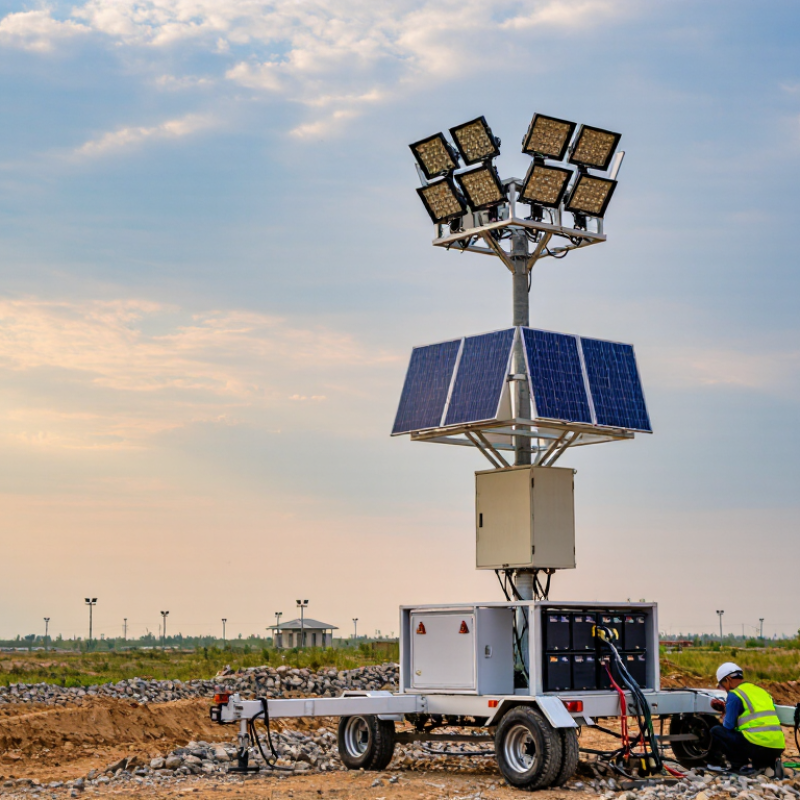
Define Project Needs and Solar Light Tower Applications
Define the project before comparing any solar light tower. Identify the work area, operating hours, and required lighting level. A remote road project needs different coverage from a small emergency yard. Measure the site carefully. Measure twice.
Check the ground conditions, weather, and seasonal sunlight. Dust, heavy rain, snow, and strong wind can affect performance. Record the darkest working hours, not only average daylight. A tower with a large battery may still fail after several cloudy days. This detail is often missed. It deserves honest attention.
Match the tower’s application to its light distribution. Narrow beams suit access roads and security lines. Wide beams work better for construction zones, loading areas, and temporary outdoor events. Confirm the mast height, adjustment range, transport method, and setup time. Operators should manage routine positioning without special tools. Ask for tested data on battery capacity, charging time, operating duration, and protection ratings. Independent inspection records are more useful than vague performance claims. Also consider noise limits, storage space, and local electrical or workplace requirements. A lower-cost unit can become expensive if workers reposition it repeatedly or replace damaged parts. Leave room for error in the plan. Real sites rarely match the drawing.
Define Project Needs: Solar Light Tower Applications
Typical average illuminance targets help global buyers compare project requirements before selecting a solar light tower. These values are practical planning benchmarks; local safety regulations and site calculations should always be verified.
Higher illuminance is generally required for detailed work, loading operations, and active construction zones. Emergency staging and public access areas may require lower levels, but uniform coverage, glare control, operating hours, and battery capacity remain essential.
Compare Power Output, Lighting Coverage, and Battery Capacity
For global buyers, power output should never be judged by watts alone. The U.S. Department of Energy’s Solid-State Lighting research reports laboratory LED efficacy above 200 lumens per watt, but complete fixtures deliver less after optics, drivers, and heat losses. Ask for tested lumens, not theoretical wattage. A 100-watt tower may produce weaker usable light than an efficient 60-watt model. More watts, sometimes, mean glare.
Lighting coverage depends on mounting height, beam angle, pole spacing, and required lux levels. EN 13201 road-lighting guidance separates lighting classes by road use and illuminance, so one “coverage area” cannot suit every project. Request an LM-79 photometric report and a site simulation. Check the dark zones between poles. A wide beam may illuminate a parking area, while a narrow beam better serves a pathway. Marketing diagrams often look too perfect.
Battery capacity needs a real energy calculation. A 120-watt load running ten hours consumes 1.2 kilowatt-hours nightly. Three cloudy nights, 80% usable battery depth, and system losses require roughly 4.5 kilowatt-hours of nominal storage. NREL’s PVWatts guidance also shows that solar production varies by location, season, tilt, and weather. A recurring field mistake is sizing batteries from amp-hours only. Voltage matters: watt-hours equal volts multiplied by amp-hours. The uncomfortable part is that oversized batteries add weight, cost, and replacement risk. Safety margin is necessary, but guesswork is not.
Evaluate Durability, Safety Standards, and Weather Resistance
Global buyers assessing a solar light tower should inspect the frame, mast, battery enclosure, and wheels, not just the lighting output. In field projects, loose hinges and thin welds often reveal weakness before the lamp fails. Look for corrosion-resistant steel or protected aluminum, sealed cable entries, and service panels that open without special tools. Ask for load-testing records and expected battery cycles. A tower that survives one demonstration may still disappoint after months of vibration.
Tip: Request clear safety documentation. Confirm conformity with recognized electrical, machinery, and battery safety standards required in the destination market. Test reports should identify the exact model, not a similar product. Check emergency stops, grounding points, overload protection, and mast-locking systems. Weather resistance needs evidence too. An IP rating helps, but it does not explain everything. Ask how seals perform after repeated heat, rain, dust, and freezing conditions. Wind stability calculations should match the deployed height and local exposure.
Tip: Examine a working unit outdoors. Inspect water pooling around connectors after rain, condensation inside lenses, and battery temperature during charging. Verify charging performance under cloudy conditions, because real weather is rarely perfect. Specifications can be incomplete. Ask whether replacement parts remain available and whether technicians receive repair guidance. I would also request a written warranty covering corrosion and water ingress. Some buyers overlook noise, leveling time, and wheel durability. Those details seem minor until crews move the tower every night.
Check Mobility, Installation Requirements, and Maintenance Support
For global buyers, mobility should be judged in real working conditions, not only by catalog photographs. Check the tower’s total weight, wheel size, ground clearance, and lifting points. A unit that moves easily on concrete may struggle on gravel, mud, or uneven construction sites. Weight matters. Confirm whether one worker can reposition it safely or whether a vehicle is required. Foldable frames and compact transport dimensions can also reduce shipping and storage costs.
Installation requirements deserve careful inspection before purchase. Ask for the foundation method, mast deployment space, anchoring details, and recommended wind limits. Solar panels need clear sunlight, while the lamps must cover roads, work zones, or emergency areas without excessive glare. Battery charging may change during cloudy seasons, so review operating hours under realistic weather data. Local electrical and workplace requirements still apply, even when the tower uses low-voltage components. Measure the site first. It prevents expensive surprises.
Maintenance support often separates reliable equipment from frustrating equipment. Request service manuals, spare-parts availability, battery replacement guidance, and documented response times. Remote troubleshooting is useful, but technicians may need regional access for damaged masts or controllers. Keep records. Log charging performance, lamp output, battery temperature, and unusual noises during inspections. In my field experience, buyers sometimes focus heavily on brightness and overlook cleaning access. That was a mistake. Dust on panels, loose fasteners, and damaged cables can quietly reduce performance. A clear maintenance schedule and trained local operators make the tower more dependable across different climates.
Assess Global Pricing, Logistics, Warranty, and Supplier Reliability
10 Solar Light Tower Buying Tips for Global Buyers
Global pricing begins with the landed cost, not the factory quotation.
Tip 1: Compare equipment, freight, insurance, duties, and local handling fees.
Tip 2: Request pricing for identical battery capacity, panel output, mast height, and lighting coverage. A cheaper quote may hide weaker components.
Tip 3: Check payment stages and currency risks before signing. Keep records.
Logistics can decide whether a project starts on time.
Tip 4: Confirm production lead time, port options, packing dimensions, and container loading plans.
Tip 5: Ask for shipping documents and battery transport details early.
Tip 6: Choose suppliers that provide remote setup guidance and spare parts. A missing connector can delay installation for days.
In my experience, clear drawings prevent expensive confusion, but drawings are sometimes outdated. Verify them against the final unit.
Warranty quality shows supplier reliability.
Tip 7: Read coverage for panels, batteries, controllers, lamps, and structural parts separately.
Tip 8: Confirm warranty duration, response time, labor coverage, and replacement procedures.
Tip 9: Request service records, factory inspection evidence, and references from comparable markets.
Tip 10: Test communication before ordering by asking technical questions. Slow, vague replies usually become slower after payment.
An independent pre-shipment inspection adds confidence, although it cannot replace long-term supplier performance. Assess repair access, spare-part pricing, and software support before choosing the lowest offer.