






Operating a Wafer Roll Machine requires both skill and precision. According to a report by the Global Machinery Association, the demand for wafer roll machines is projected to grow by 15% annually. This growth indicates a vibrant market, driven by the rising popularity of snacks and desserts globally. Industry expert John Smith asserts, "Mastering wafer roll production demands attention to detail and proper equipment usage."
Attention to the machine's settings is crucial. Minor adjustments can significantly affect the final product's quality. For instance, inconsistent temperatures can lead to uneven rolls. Different recipes may require specific techniques, and not every operator grasps these nuances. This can result in waste and higher costs.
Furthermore, safety is a vital aspect of operating these machines. Neglecting safety protocols can lead to accidents and machinery damage. Companies must ensure operators are well-trained in both operation and maintenance. Investing in regular training can mitigate risks while enhancing productivity. The journey of mastering the Wafer Roll Machine is continuous. It involves learning from mistakes and striving for improvement.
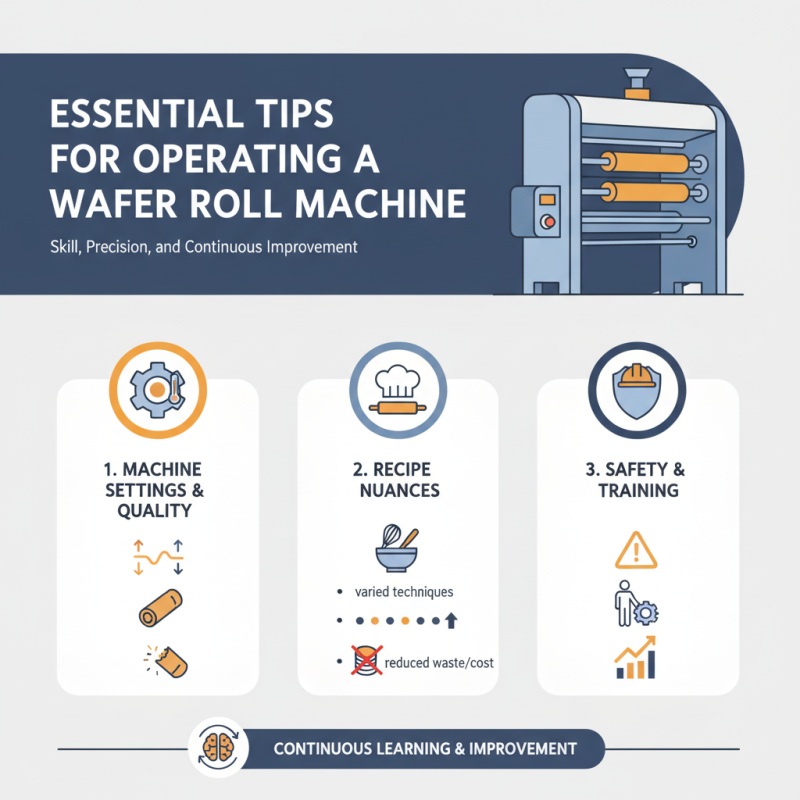
Operating a wafer roll machine requires attention and skill. Here are some essential tips to enhance your experience.
Start by checking the machine settings. Make sure the temperature is appropriate. Too high or too low can ruin the texture. It’s critical to maintain a consistent heat level. This affects the rolling process. If the temperature varies, you might end up with uneven wafers. Pay close attention to calibration. Small errors can lead to big issues.
Next, focus on the batter consistency. Aim for a smooth, pourable mix. If it’s too thick, the machine may struggle. It can lead to clogs. If it’s too runny, the wafers will fall apart. Consistency in the batter ensures a quality product. Remember, practice makes perfect. Expect some trial and error.
Cleaning the machine is another vital aspect. After each use, make sure to clean components thoroughly. This keeps the flavors intact and prevents cross-contamination. Neglecting this step can result in undesirable outcomes. Be aware, even the best practices can sometimes lead to mistakes. Accepting this reality is part of the learning curve.
Wafer roll machines consist of several key components. The heating system plays a vital role. It ensures that the batter reaches the right consistency for rolling. This part must be regularly checked. A malfunction can ruin the entire batch. Control panels also matter. They allow operators to adjust temperature and time. Simple errors in settings can lead to disasters.
Another essential element is the rolling mechanism. It shapes the batter into rolls. This section acts like a sculptor. If the tension is too high, it may tear the wafer. If it's too low, the result is uneven shapes. Operators need to calibrate this carefully. Regular maintenance can help. Sometimes, parts wear down faster than expected. It’s important to inspect them regularly.
Lastly, the cooling system cannot be overlooked. It allows the rolls to set properly. Fast cooling can create crispier wafers. However, if not done right, it can cause condensation. This can ruin the texture. Operators should monitor this step closely. They need to ensure proper airflow around the rolls. Using the machine efficiently requires ongoing attention to these details. Mistakes will happen, and they can be costly. Learning from these will enhance skill over time.
| Component | Functionality | Maintenance Tips | Common Issues |
|---|---|---|---|
| Heating Element | Heats the batter to create crisp wafer layers. | Regularly check for damage and ensure even heating. | Uneven baking, causing inconsistencies in wafer texture. |
| Roller System | Shapes and rolls the wafer after baking. | Lubricate regularly and check alignment. | Wafers may not roll correctly, leading to breaks. |
| Conveyor System | Transports the wafers through the machine. | Keep conveyor clean and free of obstructions. | Wafers may get stuck or jam during transport. |
| Temperature Control | Regulates the cooking temperature for ideal results. | Calibrate regularly for accurate readings. | Over or undercooked wafers due to incorrect settings. |
| Control Panel | User interface for machine operation settings. | Ensure buttons and displays are functioning properly. | Difficulty in adjusting settings or operating the machine. |
Operating a wafer roll machine requires a keen understanding of key parameters. Temperature plays a crucial role in the quality of the wafers. Research shows that maintaining an optimal baking temperature between 180°C and 210°C can result in a significant reduction in defects. A temperature variation of just a few degrees can lead to inconsistent results. Operators must monitor temperature closely to avoid these variations.
Another important factor is the dough thickness. Industry reports suggest that an ideal thickness of 0.5 mm to 1 mm provides the best balance between crispness and flexibility. Thicker wafers may not roll properly, leading to waste. Moreover, adjusting the speed of the machine is vital. A speed of 3-5 meters per minute often yields the best results. However, it's a trial-and-error process. Too fast may lead to breakage, while too slow may compromise efficiency.
Effective maintenance cannot be overlooked. Regular cleaning of the machine prevents residue buildup. A dirty machine can significantly affect product quality and cause additional downtime. Operators should create a maintenance schedule. Failing to do so might lead to unexpected breakdowns, thus impacting production speed. Reflecting on these aspects can drive improvements in both wafer quality and efficiency.
Maintenance of wafer roll machines is crucial for optimal performance. Regular checks can prevent costly downtime. According to a report from the International Society for Manufacturing Engineers, proper maintenance can boost equipment lifespan by up to 30%.
Daily inspections should include cleaning the machine and checking for wear. Lubricate moving parts according to the manufacturer's guidelines. Failing to do so may lead to increased friction and premature components failure. Using the wrong lubricant can also cause issues.
Ensure the machine is calibrated correctly. Calibration affects product quality. Regular calibration can reduce waste by 15%, as noted in the Engineering Equipment Association's data. Documenting maintenance and repair activities can help identify patterns. This can reveal problems that require deeper attention.
Wafer roll production presents several common issues that operators often face. One major concern is inconsistent thickness of the wafer. According to industry reports, uneven thickness can lead to poor texture and taste. Operators should regularly calibrate the machine for consistent output. Small adjustments can significantly improve the end product quality.
Another issue is the formation of air bubbles. These bubbles are a major defect in wafer rolls, affecting both appearance and crunchiness. Operators should monitor the mixing process closely. A uniform blend of ingredients minimizes the risk of bubbles forming during the baking phase.
Tip: Implement routine maintenance checks. A well-maintained machine runs smoother and reduces downtime. Look out for any wear or damage to components. This can prevent minor issues from escalating into larger production delays. Operators must remain vigilant for signs of machine strain. It's necessary to review operational logs and production data frequently to identify patterns.
Operating a Wafer Roll Machine efficiently requires a solid understanding of its components and functionality. Familiarity with key operational parameters is essential for optimizing wafer quality and enhancing production speed. By focusing on precise temperature control, roller pressure, and timing, operators can achieve the desired texture and flavor in wafers.
Proper maintenance practices play a crucial role in extending the lifespan of the Wafer Roll Machine. Regular cleaning, lubrication, and timely inspections can prevent common issues that often arise during production. Additionally, implementing effective troubleshooting techniques can help address problems swiftly. Lastly, adhering to safety protocols is vital to ensure the safe operation of the equipment, protecting both the operator and the machinery. Through these practices, users can maximize efficiency and product quality in their wafer production processes.
Hein Minnie
Cell nr: +27 (0) 82 564 6501
Email: sale@thecirclemachine.com
Hein Minnie Jnr
Cell nr: +27 (0) 84 284 7234
Email: sale@thecirclemachine.com
Address:
10 Apsey Street,
Heidelberg,
Gauteng,
1441
Bendet Engineering Services (PTY) LTD was established in 1987. Our team of engineers and draughtsman are ready to deliver a complete turnkey solution, from the design phase to commissioning. A dedicated team that consists of electrical, mechanical and industrial engineers, we are able to offer a comprehensive service to our clients.