How to Choose the Right Spray Booth Filters?

Choosing the right spray booth filters is not a minor purchasing decision. It affects finish quality, airflow, maintenance cost, and worker protection. A filter that looks clean may already be overloaded with paint particles. That hidden resistance can reduce capture performance and increase fan energy.

The U.S. Environmental Protection Agency’s AP-42 guidance links coating emissions with application methods, transfer efficiency, and capture systems. OSHA 29 CFR 1910.94(c) also addresses ventilation, airflow, and filter maintenance in spray-finishing operations. For many open-face booths, OSHA identifies 100 feet per minute as a reference airflow requirement. These figures are useful, but they are not a universal filter specification. Booth design matters.

Industrial filtration specialist Thomas J. Staudt explains, “A filter works only when airflow, loading, and maintenance are controlled together.” That principle deserves attention. Choosing only by price is a common mistake. A dense filter may capture more overspray initially, yet restrict airflow sooner. A coarse pre-filter may protect the final stage, but it cannot replace proper exhaust filtration. The wrong combination can leave paint dust on a freshly coated panel, like fine powder on wet glass.

This guide examines filter efficiency, pressure drop, capture capacity, media type, and replacement intervals. It also considers real workshop conditions, including solvent-heavy coatings, temperature changes, and uneven loading. Some manufacturer claims remain difficult to compare. Independent testing should guide the final decision.

How to Choose the Right Spray Booth Filters?

Understanding Spray Booth Filter Types and Their Applications

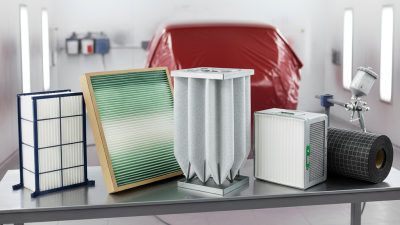
Choosing the right spray booth filter starts with understanding filter types and their applications. Fiberglass paint-arrestor pads suit light-to-medium overspray from general coating work. They are economical and easy to replace. Polyester filters offer stronger loading capacity for heavier paint particles. Pleated intake filters protect the booth from dust, while activated-carbon filters target vapors rather than visible overspray. They should not be treated as interchangeable.

EPA AP-42 Section 4.2 reports transfer efficiencies commonly ranging from about 20% to 65%, depending on the spray method. Lower efficiency creates more airborne overspray and faster filter loading. Therefore, a high-loading polyester stage may perform better than a cheap pad in continuous production. It is not always the lowest-cost option. OSHA 1910.94(c) also emphasizes adequate booth airflow, often around 100 feet per minute for open-face booths. Excessive filter resistance can reduce that airflow.

Check pressure drop, coating chemistry, particle size, and replacement intervals before purchasing. A filter that looks clean may already restrict airflow internally. Conversely, replacing filters too early wastes material and operating money. NFPA 33 guidance also links booth design, ventilation, and combustible residue control, so filtration cannot be selected in isolation. A practical mistake is choosing only by thickness. Real performance depends on airflow, loading pattern, humidity, and maintenance discipline. A filter chart helps, but a walk-through is still necessary.

Assessing Airflow, Paint Load, and Filtration Requirements

Choosing spray booth filters starts with airflow, not the filter box. A booth should capture overspray steadily without pulling paint away from the work surface. Watch the spray pattern near the operator’s hands. If mist drifts backward, airflow may be weak or uneven. If the gun feels difficult to control, airflow may be excessive. Use a calibrated pressure gauge and record readings during normal production. A single reading can mislead.

Paint load determines how quickly filters become restricted. Heavy coatings, metallic particles, and frequent color changes can block media sooner than expected. Inspect the filter face after several shifts, not only when airflow drops noticeably. A gray, sticky surface usually indicates loading. Do not rely on appearance alone. Compare pressure readings with the filter’s clean and replacement limits. In my experience, maintenance schedules often fail because they assume identical workloads every day. Real production is rarely so consistent.

Tips: Match filter efficiency to the coating and booth design. Use staged filtration when overspray is heavy. Keep spare filters sealed and dry. Check for gaps around the frame, because air will follow the easiest path. Replace damaged media immediately. Never select finer filtration without confirming fan capacity; added resistance can reduce capture performance. Review the setup after changing coating volume, spray equipment, or operating hours. Small process changes can expose weak assumptions.

Matching Filter Materials to Coating and Booth Conditions

How to Choose the Right Spray Booth Filters?

Matching filter material to the coating is more important than choosing the cheapest option. Dry paint overspray usually needs a layered media filter that captures fine particles without restricting airflow too quickly. Water-based coatings may require moisture-resistant material, especially when booth humidity stays high. Solvent-based coatings demand compatible filter media and careful ventilation planning. Always check the coating’s technical data before installation.

Booth conditions also change filter performance. A busy booth fills filters faster than a small repair area. High airflow can improve capture, but it may increase pressure loss when the filter loads. Watch the pressure gauge, visible dust, and changes in spray pattern. A sticky filter surface can signal poor material compatibility or excessive coating buildup. That detail is easy to miss. Experienced technicians inspect filters during routine cleaning, not only after airflow becomes weak.

Tips: Record coating type, booth temperature, humidity, and filter life. Compare these notes after each replacement. Use a pre-filter when heavy overspray is expected. Keep spare filters sealed and dry. Replace filters according to measured performance, not appearance alone. This approach is practical, but not perfect. Some coatings behave differently in changing seasons, so test results should guide final decisions. Follow the filter and coating supplier’s technical instructions, and confirm that the booth maintains stable airflow throughout operation.

Evaluating Filter Efficiency, Pressure Drop, and Service Life

Choosing the right spray booth filter requires more than comparing efficiency percentages. A filter that captures fine particles may create excessive resistance. That resistance increases fan demand and can reduce airflow across the booth. In practice, stable airflow matters because uneven movement can leave overspray on surfaces or affect coating quality. Measure it regularly.

Pressure drop is the clearest working indicator. Install a differential pressure gauge across the filter bank. Record the reading when filters are new, then compare it during production. A rising pressure drop usually means the media is loading with particles. However, a low reading can also signal poor sealing, damaged media, or an undersized filter system. The first reading may mislead. Check the installation.

Service life depends on particle loading, coating type, humidity, and operating hours. Two filters with identical efficiency ratings may last very different lengths of time. Select filters using verified test data, but confirm performance under actual booth conditions. Replace them when pressure reaches the manufacturer’s recommended limit, airflow becomes unstable, or visible bypass appears. Waiting for a filter to look dirty is unreliable. Clean-looking media can still restrict airflow internally. Keep a simple log of pressure readings, replacement dates, and booth performance. That record supports better purchasing decisions and reveals seasonal changes. There is no perfect estimate. Good maintenance improves the estimate.

Establishing a Safe Filter Replacement and Maintenance Plan

How to Choose the Right Spray Booth Filters?

Establishing a Safe Filter Replacement and Maintenance Plan

A safe replacement plan begins with the coating process, booth design, and filter type. Check the filter’s capture rating, airflow resistance, dimensions, and approved operating limits. Use compatible prefilters and final filters when the system requires multiple stages. Do not guess. Overspray buildup can reduce airflow, cloud the work area, and strain the exhaust system. Install a pressure gauge, or use the existing gauge, to record readings during normal production. Record the clean-filter reading, then define a replacement point before airflow becomes unsafe.

Inspect filters at the start of each shift, especially after heavy spraying or color changes. Look for sagging media, torn edges, wet patches, and gaps around the frame. A filter may look usable while its seal is failing. Replace it when pressure reaches the documented limit, airflow falls, or damage appears. Stop the booth safely, isolate energy sources, and wear the required protective equipment. Never shake or blow contaminated filters with compressed air. That can spread fine particles through the room.

A useful log lists the date, filter section, pressure reading, coating type, and technician. Keep it near the booth. Trend the readings weekly; sudden changes can reveal blocked ducts, fan problems, or incorrect installation. Check gaskets, clamps, screens, and exhaust paths during every filter change. Disposal rules vary, so classify used media according to the coating and local requirements. One weakness deserves attention: replacement schedules often rely on calendar dates alone. Production volume changes, and a fixed monthly reminder may be too early or too late. Review the plan after spills, process changes, or repeated airflow alarms.

How to Choose the Right Spray Booth Filters? - Establishing a Safe Filter Replacement and Maintenance Plan

Filter Location or Type Primary Function Typical Construction Suitable Application Key Selection Criteria Replacement or Cleaning Trigger Recommended Inspection Frequency Safety and Maintenance Notes Priority
Intake Air Prefilter Removes larger airborne particles before air enters the spray booth. Disposable synthetic or polyester panel media. General-purpose spray booths and make-up air systems. Match the filter dimensions, airflow rating, resistance limit, and required dust-holding capacity to the air-handling unit. Replace when visibly loaded, damaged, wet, or when the measured pressure drop reaches the equipment manufacturer's limit. Inspect weekly during active production; inspect more often in dusty environments. Do not wash disposable media. Confirm that the filter frame seals correctly to prevent bypass airflow. High
Final Intake Filter Provides finer particle removal to protect the coating process and improve finish quality. Pleated synthetic or fiberglass media in a rigid frame. Finishing operations where surface cleanliness and uniform airflow are important. Select an efficiency level compatible with the booth design; excessive resistance can reduce airflow and affect capture performance. Replace at the pressure-drop limit, after media damage, or when coating defects indicate inadequate air cleanliness. Inspect monthly and record pressure drop at least monthly. Use a differential-pressure gauge or manometer where practical. Keep replacement filters sealed until installation. High
Exhaust Overspray Arrestor Captures paint and coating overspray before it reaches the exhaust duct and fan. Fiberglass, polyester, or multi-layer synthetic paint-arrestor media. Wet-paint spray booths using liquid coatings. Choose media rated for the coating type, expected overspray loading, airflow volume, and booth configuration. Replace when pressure drop rises, the media is saturated, airflow becomes uneven, or overspray begins to pass through. Inspect at least daily during heavy spraying; inspect every shift for high-production operations. Never allow overspray buildup to become a fire hazard. Follow applicable fire-prevention requirements and dispose of contaminated media appropriately. High
Exhaust Pocket or Bag Filter Provides additional particulate capture and helps protect downstream exhaust equipment. Flexible synthetic pockets or supported bag assemblies. Systems requiring higher dust-holding capacity than flat panel filters. Verify airflow direction, pocket dimensions, support arrangement, temperature compatibility, and coating compatibility. Replace when damaged, deformed, heavily loaded, or when pressure drop reaches the established limit. Inspect weekly; check seams and mounting points during every scheduled service. Ensure bags cannot collapse into the airflow path. Do not operate with torn or incorrectly fitted bags. High
Dry Powder Overspray Filter Separates powder particles from booth exhaust air and supports powder recovery or controlled disposal. Cartridge or panel media designed for powder collection. Powder-coating booths and enclosed powder application areas. Consider particle size, airflow, cartridge surface area, grounding, pulse-cleaning compatibility, and required collection efficiency. Clean or replace according to pressure drop, cleaning-cycle performance, visible damage, or reduced airflow. Inspect daily during operation; review pressure readings each shift. Control dust accumulation and ignition sources. Use only cleaning methods approved for the specific filter and powder system. High
Activated Carbon Filter Adsorbs selected gaseous contaminants and odors that are not removed by particulate filters. Granular or bonded activated carbon in a tray, panel, or deep-bed assembly. Applications where vapor control is specifically required by the process or risk assessment. Confirm that the carbon type, bed depth, contaminant concentration, humidity, and contact time are suitable for the vapor. Replace based on breakthrough monitoring, odor detection supported by testing, service-life calculations, or the supplier's validated limit. Inspect monthly; test performance at a frequency determined by the contaminant risk. Carbon filters are not a substitute for source capture or fresh-air ventilation. Treat spent carbon as potentially contaminated waste. Medium
HEPA or High-Efficiency Final Filter Captures very fine particles when the booth process and ventilation design require high-efficiency filtration. Mini-pleat or deep-pleat fiber media in a sealed frame. Specialized finishing, clean-process, or controlled-emission applications. Verify the required efficiency test method, airflow capacity, terminal-frame compatibility, gasket condition, and allowable pressure drop. Replace after failed integrity testing, media damage, seal failure, or pressure drop exceeding the approved limit. Check pressure drop monthly; perform integrity testing according to the risk assessment and applicable regulations. Install carefully to avoid media damage. A high-efficiency filter must not be used if the fan cannot maintain the required airflow. Medium
Filter Housing Gasket and Seal Prevents unfiltered air from bypassing the installed filter. Elastomeric gasket, foam seal, gel seal, or mechanical clamping arrangement. All filter stages and exhaust housings. Choose a seal material compatible with temperature, solvents, coating vapors, and cleaning procedures. Replace when compressed, cracked, hardened, contaminated, or unable to maintain a continuous seal. Inspect at every filter change and during quarterly preventive maintenance. Clean contact surfaces before installation. Do not force a filter into place if the frame or housing is distorted. High
Pressure-Drop Monitoring Device Indicates filter loading and supports condition-based replacement rather than calendar-only replacement. Differential-pressure gauge, manometer, or electronic sensor. Any booth where airflow stability and predictable maintenance are important. Use a measurement range appropriate for the filter bank and position sensing points before and after the filter. Service or recalibrate if readings are unstable, blocked, damaged, or inconsistent with observed airflow. Verify operation monthly and record readings during each inspection. Establish a baseline pressure drop with a clean filter and document the approved changeout limit for each filter stage. Routine
Filter Changeout Record Documents filter condition, operating hours, pressure readings, and maintenance actions. Digital log, inspection checklist, or controlled maintenance form. All spray booth operations. Record filter location, filter specification, installation date, pressure drop, reason for replacement, and technician details. Update at every inspection, cleaning, replacement, alarm event, or airflow investigation. Review monthly and during safety audits. Use records to identify abnormal loading, optimize replacement intervals, verify training, and demonstrate maintenance control. Routine
Planning principle: Set replacement limits using the filter manufacturer's rated pressure-drop data, the spray booth design requirements, applicable workplace regulations, and actual airflow measurements. A filter should not be replaced solely by appearance, and a visibly clean filter should not remain in service if it is damaged, bypassing air, or causing inadequate booth performance.
Open chat
Scan the code
Bendet Sales Assistant
Hi There👋,
Thank you for visiting our website, How can I help you?