








Choosing a Package Drop Tester requires more than comparing prices, maximum loads, or polished product photographs. The right machine should reproduce the impacts your shipment may experience during handling, storage, and delivery. Dr. Walter Soroka, a respected packaging engineer and author, offers a practical reminder: “A package test is valuable only when its conditions are controlled and repeatable.” That principle should guide every purchase decision.
Start with your real package profile. Measure its weight, dimensions, center of gravity, and outer materials. A small carton with glass bottles needs different protection from a large corrugated box filled with lightweight electronics. Check whether the tester supports the required drop height, impact surface, release method, and sample orientation. ASTM D5276 and ISTA procedures may also influence your equipment selection. Look for a rigid frame, accurate height adjustment, reliable safety controls, and a release system that does not push the package downward. Even minor launch interference can distort results.
Calibration records matter. Ask about load capacity, maintenance access, replacement parts, and technical training. A machine that produces impressive drops but poor repeatability can waste samples and confuse design decisions. That mistake is easy to make. Consider the testing environment, too. A narrow laboratory may need a compact vertical unit, while a busy facility may require faster reset times and clearer digital records.
No Package Drop Tester is perfect for every application. I would not choose equipment from specifications alone. Watch a demonstration, inspect the landing plate, and test your own packages when possible. The best choice is the tester that creates trustworthy evidence, not merely dramatic impacts.
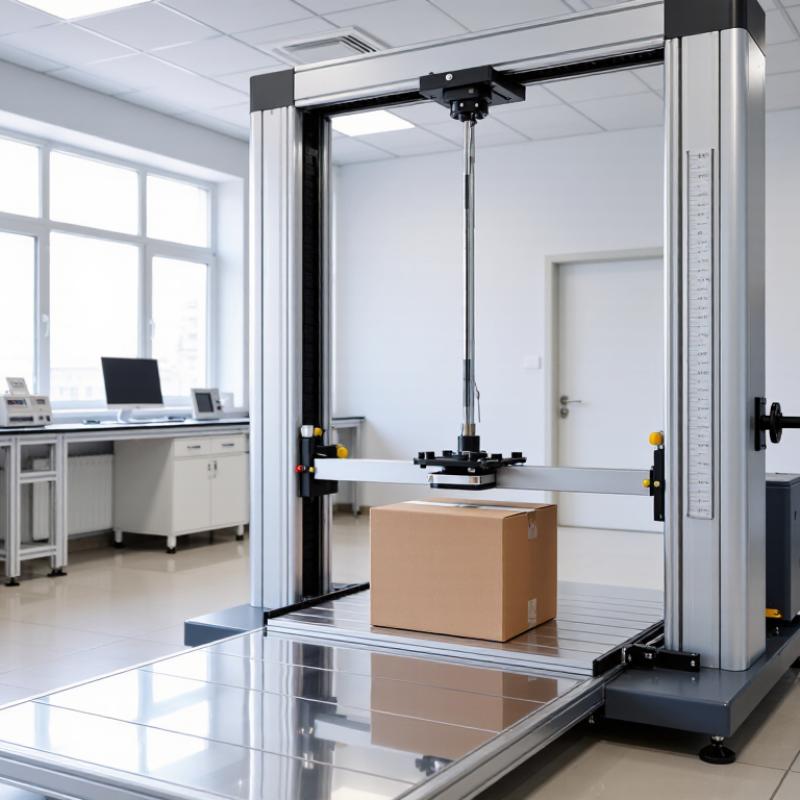
How to Choose a Package Drop Tester?
Define the Test Goal: Free-Fall, Edge, Corner, or Face Impact
When choosing a package drop tester, define the impact you need to reproduce. Free-fall testing evaluates uncontrolled drops during handling, loading, or delivery. The package lands naturally, so the release mechanism must avoid pushing or rotating it. Small release errors can change the impact result.
Edge, corner, and face impacts require controlled positioning before release. An edge impact places the carton’s seam or panel boundary against the target. A corner impact concentrates force into a small area, often exposing weak internal protection. Face impact testing checks broad panel strength and product movement inside the package. Select a tester with stable fixtures, adjustable drop height, and repeatable orientation control.
Consider package weight, dimensions, and the highest expected drop height. A heavy container needs a rigid structure and a reliable lifting system. The impact surface should remain level and resist vibration. Use calibrated height measurements and record every test condition. Photographs can reveal crushed corners, split seams, or shifted cushioning after impact. One practical mistake is testing only the preferred orientation. Real handling is less polite. Include several orientations when the distribution path is uncertain.
Testing should follow a recognized procedure suitable for the package type and shipping risk. However, a standard method cannot replace engineering judgment. If results look inconsistent, inspect the release mechanism, packaging moisture, product placement, and operator setup before changing the package design.
Use the required impact orientation, package characteristics, test method, and measurement needs to select the appropriate drop-testing configuration.
| Test Goal | Impact Definition | Recommended Tester Configuration | Key Package and Test Parameters | Applicable Test References | What to Inspect or Measure | Selection Guidance |
|---|---|---|---|---|---|---|
| Free-Fall Evaluate general shipping durability | The packaged product is released from a specified height and allowed to fall freely onto a rigid, level impact surface. The package may be tested in several predetermined orientations. | Vertical free-fall drop tester with an adjustable release height, rigid impact table, secure specimen release mechanism, and sufficient clearance for the package to rotate or deform safely. |
| ASTM D5276, Standard Test Method for Drop Test of Loaded Containers by Free Fall; ISO 2248, Packaging — Complete, filled transport packages — Vertical impact test by dropping. | Product function, package rupture, seal failure, cushioning damage, panel deformation, loose components, and any change that could affect transport protection. | Choose this configuration when the test plan specifies a true free fall and multiple package orientations. The release device should not guide the package after release or add significant contact before impact. |
| Face Impact Test a broad panel surface | One defined package face, such as the top, bottom, front, rear, or side panel, strikes the impact surface first. | Free-fall tester with orientation control, or a face-drop fixture that supports accurate positioning without restricting the intended impact. |
| ASTM D5276 and ISO 2248 can be used when the procedure requires a face-first drop. The exact height and number of drops must be taken from the selected protocol or customer specification. | Crushed panels, product-to-package contact, broken internal supports, loss of compression strength, leakage, and visible damage to the tested face. | Select this option when the package faces have different structural functions or when the bottom and top panels require separate verification. |
| Edge Impact Stress a package edge | A designated package edge is positioned to contact the impact surface first. The edge is normally defined by the intersection of two package faces. | Free-fall tester with an edge-positioning fixture or adjustable edge support that can be removed or cleared immediately before release. |
| ASTM D5276 may be applied when edge drops are included in the test sequence. ISTA procedures may also define specific edge orientations and sequences for particular distribution environments. | Corner-post buckling, seam opening, edge crush, frame distortion, internal cushioning displacement, and damage transmitted toward the product. | Choose an edge-control fixture when repeatable edge-first contact is more important than unrestricted random rotation after release. |
| Corner Impact Challenge concentrated load paths | A designated package corner makes first contact with the impact surface. This produces a concentrated impact and can load several package panels simultaneously. | Corner-drop positioning fixture with adjustable supports, a repeatable release system, and a rigid impact table. The fixture should be removed from the impact path before contact. |
| ASTM D5276 and applicable ISTA procedures may include corner drops. The chosen standard or project specification determines the exact height, sequence, and acceptance criteria. | Corner crushing, vertical product movement, internal block failure, puncture, closure opening, product breakage, and loss of package stability. | Select this setup for concentrated-load evaluation, especially for rectangular cases with vulnerable corners, vertical supports, or molded cushioning features. |
| Repeated Drops Assess cumulative damage | The same package is dropped multiple times according to a defined orientation sequence to represent repeated handling impacts. | Programmable or manually sequenced free-fall tester with a drop counter, height scale, orientation documentation, and rapid reset capability. |
| ASTM D5276 and distribution simulation procedures may specify repeated drops. Use the complete procedure rather than selecting a height or sequence independently. | Progressive crushing, fatigue of closures, loosening of internal components, cumulative product damage, and changes in package stiffness. | Choose a tester with reliable height repeatability and a clear method for documenting orientation and package condition throughout the sequence. |
| Impact Energy Compare severity between test setups | Estimate the gravitational potential energy converted during a drop. For an idealized free fall, the impact energy is calculated as E = mgh. | Drop tester with accurate mass and height records. Optional accelerometers or force sensors can provide additional impact data, but they do not replace the specified drop method. |
| Use the calculation as an engineering comparison only. ASTM and ISO package drop methods define test conditions and acceptance requirements that may not be based solely on calculated energy. | Impact severity, acceleration pulse, force transmission, cushioning response, package deformation, and product shock response. | Select instrumentation when the objective includes shock characterization or cushioning comparison. For pass/fail package qualification, first prioritize compliance with the required drop standard. |
| Large or Heavy Package Handle difficult specimens safely | Test a package whose mass, dimensions, or center of gravity makes manual positioning unsafe or makes a standard small-package tester unsuitable. | High-capacity drop tester with a load-rated impact table, large working area, guarded operating zone, mechanical or powered lifting, and a release system designed for the specimen size. |
| ASTM D5276, ISO 2248, or the applicable customer and distribution test procedure, provided that the selected equipment meets the specimen capacity and safety requirements. | Structural package damage, product function, fixture stability, operator safety, and repeatability of release and impact orientation. | Choose equipment based on the complete loaded package, not the empty container. Include product, cushioning, pallet or accessories when they are part of the test specimen. |