How to Choose the Right Granite for Global Projects?
Choosing the right granite for a global project involves more than selecting an attractive color. The stone must perform across climates, transport routes, construction methods, and maintenance expectations. A slab that looks perfect under showroom lighting may react differently beside a humid coastline or a freezing airport entrance.
Experienced project teams examine the quarry, not only the sample. They review geological consistency, water absorption, flexural strength, slip resistance, and available block sizes. They also confirm finishing methods, batch variation, packaging standards, and replacement capacity. These details matter when a project spans several countries. A pale granite may reveal iron staining after repeated exposure to moisture. A polished surface may lose practicality in a busy public walkway. Small decisions become expensive later.
No choice is flawless. That deserves attention. Even reliable suppliers can face quarry changes, shipping delays, or color differences between batches. A responsible specification therefore includes physical samples, independent laboratory testing, approved alternatives, and clear inspection procedures. It also considers local building requirements and the installer’s experience with the selected granite. Reliable decisions come from evidence, not impressive photography.
This guide explains how to compare granite by performance, appearance, supply security, and lifecycle value. It focuses on practical questions that architects, contractors, importers, and owners can verify before approval. The goal is not to identify one universally perfect stone. It is to choose granite that remains suitable when real conditions become less predictable.
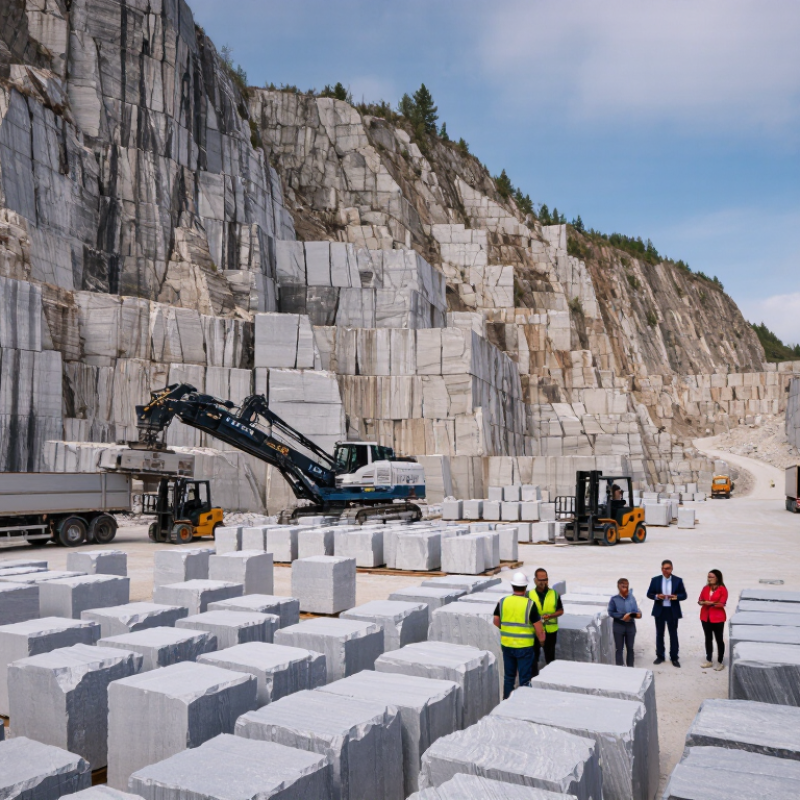
Define Project Loads and Climate: Granite Density of 2.63–2.75 g/cm³
How to Choose the Right Granite for Global Projects?
Define Project Loads and Climate: Granite Density of 2.63–2.75 g/cm³
Granite density usually ranges from 2.63 to 2.75 g/cm³. This figure affects handling, structural calculations, and transport planning. A heavier slab can increase dead loads on floors, façades, and supporting frames. Project teams should review wind pressure, snow loads, seismic movement, and expected public traffic. Climate matters too. Freeze-thaw cycles can expose small weaknesses. Coastal air may accelerate staining around metal fixings. Hot climates can increase thermal movement between stone and adjacent materials.
A density value alone cannot confirm performance. It should be checked with water absorption, flexural strength, compressive strength, and petrographic testing. In practice, I would not approve a quarry sample without reviewing test conditions and sample direction. That may sound cautious. It prevents costly assumptions. Color, grain, and visible veins also deserve attention, because natural variation can affect replacement matching years later. A technically strong stone may still disappoint if its finish becomes slippery or uneven outdoors.
Tips: Compare the stone’s density with the engineer’s load model. Request test reports from recent production, not only showroom pieces. Inspect full-size samples in wet and dry conditions. Ask how the granite behaved after repeated freeze-thaw or heat cycles. Keep a reserve quantity for future repairs. Small oversights become expensive.
Compare Durability Using Mohs 6–7 Hardness and ASTM C97 Testing
How to Choose the Right Granite for Global Projects?
Granite usually measures 6–7 on the Mohs hardness scale, indicating strong resistance to scratching. However, hardness alone does not confirm long-term performance. Mineral composition, grain size, microcracks, and finishing methods can change how a slab behaves. I have seen visually similar stones perform differently after repeated handling and installation.
ASTM C97 testing provides more useful evidence for project decisions. It measures water absorption and bulk specific gravity under controlled laboratory conditions. Lower absorption often indicates fewer pathways for moisture penetration. This matters in exterior façades, wet areas, and regions with freezing temperatures. Request results from representative samples, not only polished showroom pieces. A single test may still mislead if the quarry contains natural variation. That limitation deserves attention.
Tips: Compare Mohs hardness with ASTM C97 results. Ask for recent reports from the intended quarry block. Check absorption against the project’s climate and exposure. Inspect edges, corners, and cutouts for hidden cracks. Specify finish samples before approving large quantities. Keep records of batch numbers and test dates. Admittedly, choosing granite from limited data is imperfect. Field conditions can reveal weaknesses that laboratory testing cannot fully predict.
Verify Strength with ASTM C170 Results for Each Granite Selection
How to Choose the Right Granite for Global Projects?
Granite selection should begin with verified ASTM C170 results, not appearance alone. ASTM C170 measures the compressive strength of dimension stone under controlled laboratory conditions. Ask for the full report, including specimen size, conditioning method, test date, and reported units. Megapascals must not be confused with pounds per square inch. A small reporting error can affect an entire specification.
Compare results from the same quarry block or production period whenever possible. Granite strength may vary with mineral composition, microcracks, weathering, and extraction direction. A high average value can still mislead if the samples are too few.
Review the minimum result, not only the average. Check whether the laboratory follows recognized procedures and identifies its testing equipment.
For façades, paving, stairs, or heavy interior surfaces, combine ASTM C170 data with water absorption, abrasion, slip, and freeze-thaw testing when relevant.
Tips: Request several recent ASTM C170 reports. Confirm dry and wet conditions. Use conservative design values. Examine visible veins and filled fissures before approval. Ask for traceable sample identification. Do not treat one impressive number as universal. Laboratory strength is useful, but installation quality still matters. We sometimes overlook that final weakness begins at an unsupported edge, not inside the stone.
Match Thickness, Finish, and Dimensions with ASTM C615 Requirements
Choosing granite for a global project starts with ASTM C615/C615M, not with a color chart. The standard sets key performance benchmarks: maximum water absorption of 0.40%, minimum density of 2,560 kg/m³, minimum compressive strength of 131 MPa, and minimum modulus of rupture of 8.27 MPa. Request accredited laboratory reports for the exact quarry lot. A polished sample alone proves little.
Thickness requires engineering judgment. ASTM C615 does not prescribe one universal slab thickness or panel size. Engineers should match thickness with span, anchors, wind loads, seismic conditions, and installation method. A thin façade panel may perform well with tested reinforcement and anchors, but a thicker piece can still fail if its stone fabric contains open veins. Check the project drawings against ASTM C1242 guidance for dimension-stone anchorage and cladding design.
Finish changes performance. Polished surfaces show scratches and uneven wear quickly in entrances, while flamed or textured finishes can improve slip resistance but may increase cleaning demands. Confirm slip testing under the local project standard. Dimensions also need tighter control than many buyers expect. Measure several pieces from each shipment, including thickness, squareness, bow, and edge condition. The 2023 Dimension Stone Design Manual stresses coordinated tolerances, yet site teams sometimes accept quarry dimensions without checking installation joints. That shortcut is easy to regret. Re-test when the source, finish, or cutting process changes. Geological variation is real.♀♀♀♀♀♀
How to Choose the Right Granite for Global Projects? - Match Thickness, Finish, and Dimensions with ASTM C615 Requirements
| Selection Dimension | ASTM C615/C615M Reference or Project Control | Granite Profile A
Interior wall and floor | Granite Profile B
Exterior façade and paving | Granite Profile C
Heavy-traffic exterior | Selection Result |
| Nominal thickness | Set by structural design, span, anchorage, handling, and local building requirements. ASTM C615 does not establish one universal thickness for every application. | 20 mm
Thin interior panels | 30 mm
Exterior cladding and moderate paving | 40 mm
Higher impact and traffic resistance | Confirm by engineering design |
| Typical finished module | Coordinate with façade grid, slab layout, joint width, lifting limits, and shipping restrictions. Dimensions are project-specific. | 600 × 600 mm
Small, easy-to-handle modules | 900 × 600 mm
Balanced panel size | 600 × 400 mm
Paving module for handling and replacement | Approve shop drawings |
| Surface finish | Finish must be defined in the project specification and sample approval. Surface texture affects slip, appearance, maintenance, and weathering. | Polished
Low-porosity appearance; generally for interior use | Flamed
Textured surface for exterior applications | Bush-hammered
Rougher texture for high-traffic areas | Suitable when specified |
| Water absorption by weight | Maximum 0.40% under ASTM C615/C615M for granite dimension stone. | 0.18% | 0.24% | 0.12% | Pass |
| Bulk specific gravity | Minimum 2.56 under ASTM C615/C615M. | 2.67 | 2.65 | 2.70 | Pass |
| Compressive strength, dry | Minimum 19,000 psi (approximately 131 MPa) under ASTM C615/C615M. | 24,800 psi
171 MPa | 22,600 psi
156 MPa | 27,400 psi
189 MPa | Pass |
| Modulus of rupture, dry | Minimum 1,500 psi (approximately 10.3 MPa) under ASTM C615/C615M. | 1,850 psi
12.8 MPa | 1,620 psi
11.2 MPa | 2,150 psi
14.8 MPa | Pass |
| Expected application | Use the selected thickness, finish, and fixing method together with structural calculations and local code requirements. | Interior walls, low-impact floors, reception areas | Ventilated façades, steps, terraces, moderate pedestrian zones | External paving, stairs, transport hubs, heavy pedestrian zones | Application-dependent |
Technical note: The granite test values shown are representative screening values for unbranded material profiles, not a substitute for project-specific laboratory reports. Confirm quarry lot consistency, wet-condition performance, slip resistance, freeze-thaw suitability, dimensional tolerances, anchorage design, and local code compliance before approval. ASTM C615/C615M establishes material performance requirements; thickness, module dimensions, finish, jointing, and fixing details must be defined by the project specification and engineering design.
Audit Suppliers Against EN 1469, ISO 9001, and Global Quality Controls
How to Choose the Right Granite for Global Projects?
Granite selection should begin with supplier verification, not color matching. EN 1469 requires natural stone products to meet declared performance characteristics, including dimensions, appearance, and technical properties. Ask suppliers for recent test reports, not recycled documents. Check water absorption, apparent density, flexural strength, and resistance to freeze-thaw cycles. Testing should represent the actual quarry batch.
ISO 9001 certification shows that a supplier operates a quality management system. It does not guarantee that every slab is suitable for your project. The ISO Survey 2022 recorded more than 1.2 million ISO 9001 certificates worldwide, showing broad adoption but not equal technical competence. Audit the certificate scope, issuing body, corrective-action records, and inspection procedures. A certificate is only a starting point.
Global quality control also requires traceability. Each container should link to a quarry, block number, production date, inspection record, and packing list. The Natural Stone Institute’s technical guidance emphasizes testing and documented fabrication controls because stones from one deposit can still vary visibly and mechanically. Small cracks may appear after polishing. Shade differences can emerge under site lighting. That is where specifications become uncomfortable. They may be correct on paper, yet incomplete in practice. Independent pre-shipment inspection, retained samples, and clear acceptance limits reduce disputes across borders. Don’t trust a perfect file. Verify the stone.