







Choosing the right Pool Accessories is not merely a matter of color, comfort, or convenience. Each item affects safety, water quality, maintenance time, and the daily swimming experience. A poolside decision can have practical consequences.
The World Health Organization reports approximately 236,000 drowning deaths worldwide each year. The U.S. Centers for Disease Control and Prevention records about 4,000 unintentional drowning deaths annually in the United States. These figures highlight why barriers, approved covers, alarms, and clear safety equipment deserve careful attention. Accessories cannot replace supervision or professional safety practices. However, they can support a safer pool environment when selected and used correctly.
Water care also requires informed choices. The Pool & Hot Tub Alliance emphasizes regular testing, circulation, filtration, and responsible maintenance across residential pools and spas. A reliable test kit, durable skimmer, efficient brush, and correctly sized vacuum may reduce guesswork. Small details matter. A poorly fitting cover can collect rainwater. A weak brush may leave algae in corners. An attractive light may lack suitable weather protection.
Many buyers still choose accessories by appearance alone. That approach is understandable, but incomplete. Product claims should be checked against manufacturer instructions, recognized safety standards, warranty terms, and independent testing where available. Personal experience matters too. A family with young children needs different priorities from a lap swimmer or a resort operator. The best choice balances safety, compatibility, durability, maintenance effort, and budget. It may not be the most expensive option. It may also require reconsideration after one season of real use.
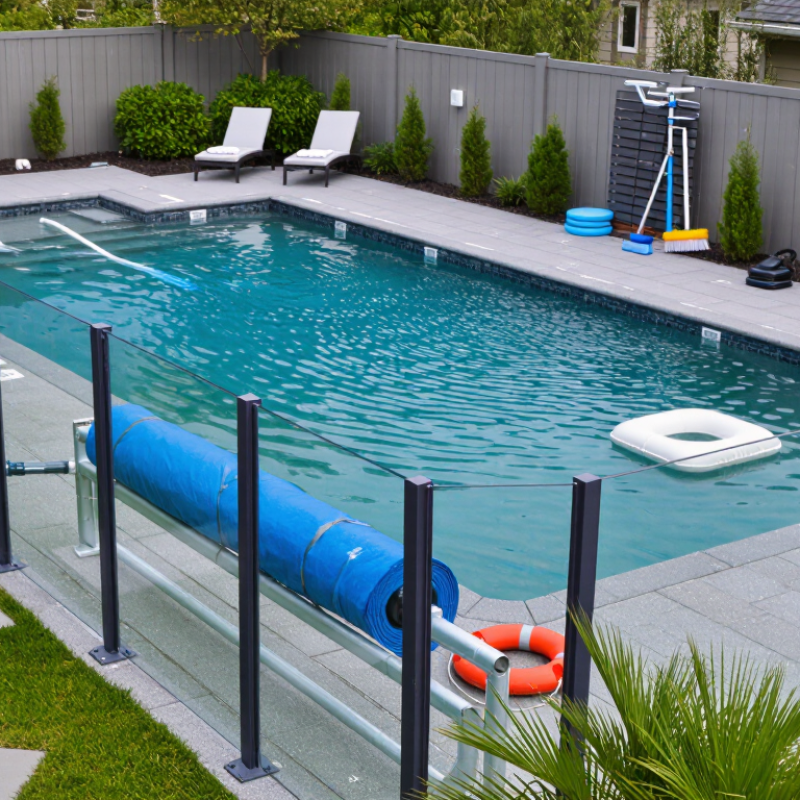
Choosing pool accessories starts with your pool’s actual needs, not a crowded shopping list. Observe how people use it during a normal week. Children may need clear depth markers and stable entry support. Frequent swimmers may value a surface skimmer, water-testing tools, and comfortable storage. A small plunge pool needs compact equipment. Large pools demand longer reach and stronger circulation support. Measure deck width, storage space, and water volume before buying. I once underestimated storage space; a bulky cleaner quickly became a trip hazard. That mistake still influences my recommendations.
Maintenance requirements should guide every choice. If leaves fall daily, choose tools that simplify skimming and basket cleaning. If evaporation is noticeable, consider a fitted cover and monitor water levels regularly. Test water with reliable equipment, then adjust treatment according to its instructions. Never guess based only on appearance. Clear water can still have unbalanced chemistry. Check each accessory for material quality, safe handling, and compatibility with your pool surface. Manufacturer instructions matter, even for simple tools. Inspect poles, cords, and fasteners often. Small damage can become expensive.
Tips: Walk around the pool with a tape measure. Record deck clearance, storage height, and the distance to outlets. Choose fewer useful accessories rather than many neglected ones. Leave room for improvement. Your routine may change after a month of real use.
| Pool Need | Recommended Accessory | Suitable Pool Type | Space Consideration | Maintenance Effort | Typical Use Frequency | Key Selection Criteria |
|---|---|---|---|---|---|---|
| Removing surface debris | Leaf skimmer with telescopic pole | All pool types | Requires only a small storage area; pole length should match pool width | Low; rinse the net after use and inspect the frame | Several times per week during the swimming season | Fine-mesh net, corrosion-resistant pole, secure locking mechanism |
| Cleaning the pool floor | Manual vacuum head and hose | Pools with compatible filtration systems | Needs hose storage and enough deck space for setup | Moderate; clean the vacuum head and backwash or rinse the filter as required | Weekly or when visible dirt accumulates | Hose length, connection compatibility, brush quality, and pool shape |
| Reducing manual cleaning time | Automatic or robotic pool cleaner | Most permanent pools; verify surface and shape compatibility | Requires a dry, protected storage location and nearby power for some models | Low to moderate; empty debris canisters and clean filters regularly | One to three cycles per week, depending on debris levels | Pool dimensions, wall-climbing ability, filter capacity, cable or hose management |
| Brushing walls and steps | Pool brush | Concrete, tile, vinyl, and fiberglass pools with the correct brush type | Compact and easy to store | Low; rinse bristles and allow the brush to dry | Weekly, or more often in areas with algae growth | Soft bristles for vinyl and fiberglass; stronger bristles for durable masonry surfaces |
| Monitoring water balance | Water test strips or liquid test kit | All pools | Needs a cool, dry storage location away from direct sunlight and chemicals | Low; replace expired reagents and keep the container sealed | At least weekly and after heavy rain or unusually high use | Ability to measure pH, sanitizer level, and total alkalinity; clear instructions |
| Improving swimmer safety | Non-slip steps, handrail, and safety equipment | Pools used by children, older adults, or people with limited mobility | Must not obstruct walkways; allow clear access around entry points | Moderate; inspect fixings, surfaces, and rescue equipment regularly | Continuous need; inspect before each swimming session | Stable installation, non-slip surfaces, visible placement, and suitability for users |
| Protecting the pool when not in use | Pool cover | Most residential pools; select according to pool shape and local conditions | Needs a cover reel or dedicated storage space near the pool | Moderate; remove debris, dry when appropriate, and check for damage | Whenever the pool is unused; especially useful during off-season periods | Correct dimensions, material durability, ease of handling, drainage, and safety design |
| Keeping water comfortable | Solar cover or thermal blanket | Outdoor pools exposed to sunlight and nighttime temperature changes | A reel is recommended for larger pools to prevent folding and deck obstruction | Low to moderate; rinse periodically and protect from prolonged direct exposure when stored | Daily or overnight when the pool is not being used | Pool dimensions, bubble or insulation design, UV resistance, and handling method |
| Organizing small pool areas | Wall-mounted storage rack or compact accessory caddy | Small residential pools and pools with limited deck space | Uses vertical space; keep equipment away from electrical outlets and chemicals | Low; rinse and dry stored tools to reduce corrosion and odor | After every maintenance session | Load capacity, drainage, corrosion resistance, mounting method, and accessibility |
| Reducing evaporation and chemical loss | Fitted cover or automatic cover system | Pools in hot, dry, or windy climates | Automatic systems require equipment clearance; manual covers need reel space | Moderate; inspect tracks, fabric, fasteners, and drainage areas | Whenever the pool is closed | Fit accuracy, wind resistance, operating effort, safety features, and repairability |
| Enhancing relaxation and convenience | Floating drink holder or removable pool lounger | Pools used mainly for leisure and recreation | Avoid oversized items in narrow pools; provide a dry storage area | Low; rinse with fresh water and inspect seams or valves | As needed | Buoyancy, stability, material quality, weight capacity, and ease of cleaning |
Selection priorities should generally follow this order: safety, pool compatibility, available storage space, maintenance effort, and user convenience.