




Why Choose Overhead Conveyor Systems for Your Business Needs?

In today's competitive manufacturing landscape, efficiency is key. Overhead conveyor systems offer innovative solutions to enhance operational workflows. According to a report by the Material Handling Industry of America, overhead conveyor systems can improve productivity by up to 50%. This significant boost is vital for businesses aiming to maximize their output and minimize downtime.

Utilizing overhead conveyors allows companies to optimize space and streamline processes. By suspending products above the floor, businesses can free up valuable ground space for other essential activities. Moreover, research indicates that these systems reduce labor costs by as much as 30%. The ability to automate movement of goods increases precision and reduces human error.

While the benefits are evident, selecting the right system involves careful consideration. Some businesses may find the initial investment daunting. Yet, when evaluated over time, the return on investment tends to outweigh the initial expenditures. As industries continue to evolve, understanding the role of overhead conveyor systems becomes crucial for future success.
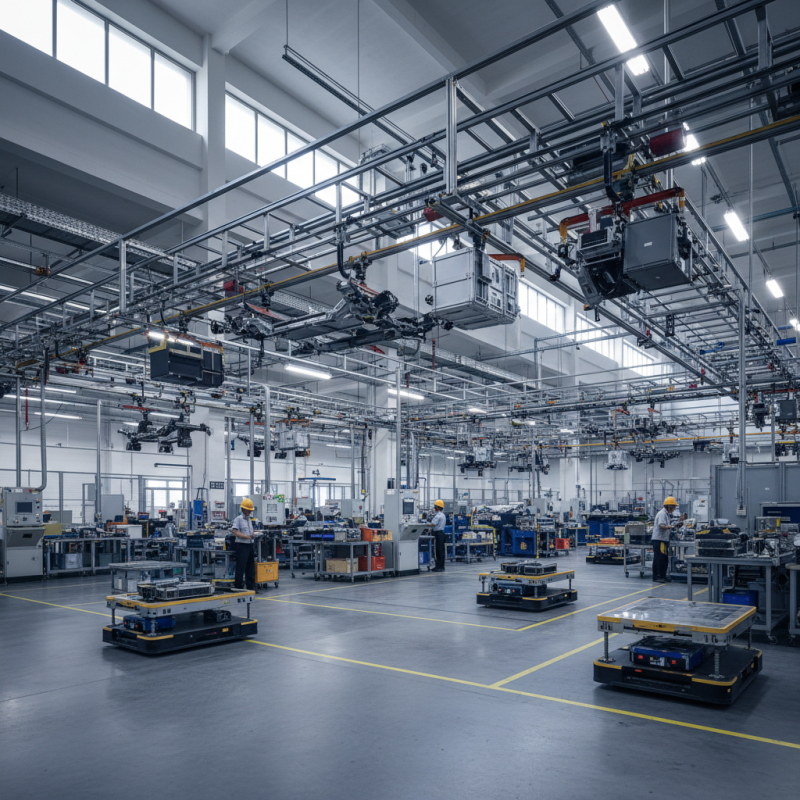
Why Choose Overhead Conveyor Systems for Your Business Needs?

Advantages of Overhead Conveyor Systems in Industrial Settings

Overhead conveyor systems have gained traction in various industrial settings due to their unique advantages. These systems save floor space by utilizing the overhead area for transporting goods. This vertical transport effectively reduces clutter and improves operational efficiency. Additionally, they can be customized to fit specific layouts, making them versatile for diverse industries.

One significant benefit is the seamless movement of products. Overhead conveyors are capable of moving items smoothly around obstacles. This feature minimizes the risk of damage during transport. Workers can also maneuver easily beneath the conveyors, enhancing workplace safety. Moreover, these systems can handle heavy loads, offering durability for continuous operations.

However, implementing overhead conveyors requires careful planning. It’s crucial to analyze the workflow and space availability. Unforeseen challenges may arise, such as maintenance issues or compatibility with existing systems. Adjusting to a new system can also take time for staff. Proper training and support are necessary for a smooth transition. The initial costs may seem high, but the long-term benefits often justify the investment.

Why Choose Overhead Conveyor Systems for Your Business Needs?

Feature Description Advantages
Space Efficiency Utilizes overhead space for material handling. Increased floor space availability for other operations.
Flexibility Customizable paths and configurations. Can adapt to changing business needs.
Increased Safety Minimizes material handling at ground level. Reduces risk of accidents and injuries.
Improved Productivity Automated systems reduce labor requirements. Increases throughput and efficiency.
Durability Designed for heavy-duty use and long life. Lower maintenance costs over time.

Key Features of Overhead Conveyor Systems for Efficient Workflow

Overhead conveyor systems offer notable benefits for various industries. These systems are designed to optimize workflow by utilizing vertical space. This feature allows businesses to maximize their floor area, which is crucial in facilities with limited square footage. A report from the Conveyor Equipment Manufacturers Association highlights that companies using overhead systems can increase productivity by up to 50%.

The key features of overhead conveyor systems include flexibility and scalability. Businesses can adapt the system to fit different layouts and product types. This adaptability is vital as it allows for efficient handling of various items, from lightweight packages to heavy components. In fact, a study by Material Handling Industry indicates that modular overhead systems can reduce labor costs by approximately 30%.

However, not all businesses may benefit from overhead systems without careful consideration. The initial installation cost can be high. Additionally, maintaining these systems requires skilled personnel and routine checks. While overhead conveyors can streamline processes, the ongoing operational challenges must be managed effectively. Balancing efficiency with reliability will determine the success of implementing this technology.

Applications of Overhead Conveyors in Various Industries

Why Choose Overhead Conveyor Systems for Your Business Needs?

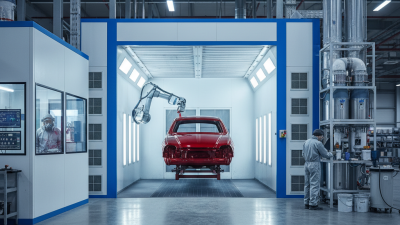
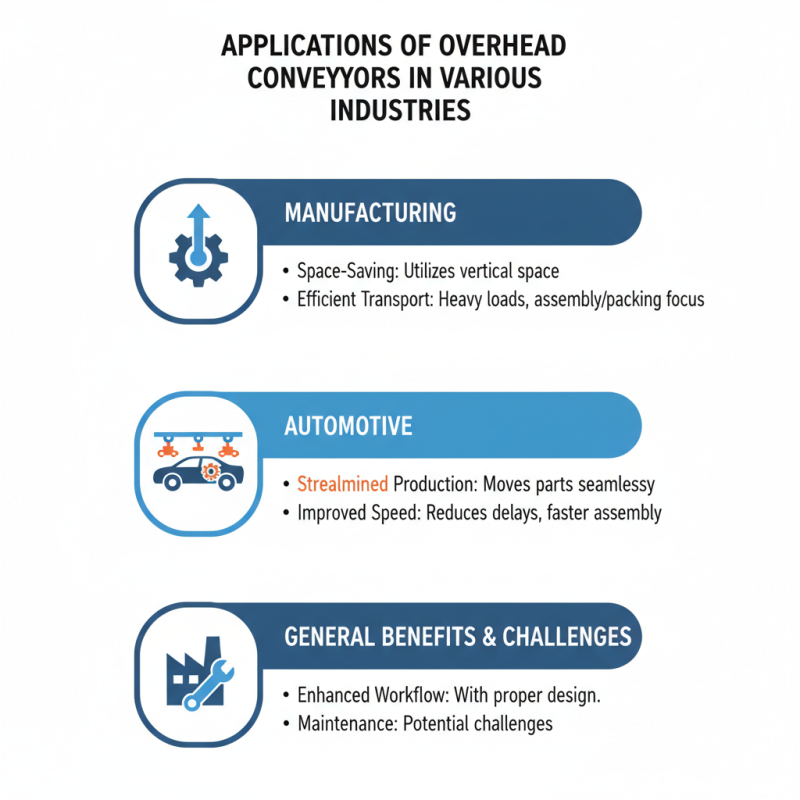
Overhead conveyor systems are essential across various industries. For manufacturers, these systems save space by utilizing vertical space. They efficiently transport heavy loads, allowing workers to focus on assembly or packing. In the automotive sector, overhead conveyors streamline production lines. They move parts seamlessly, reducing delays and improving assembly speed. Proper design can enhance workflow, but challenges can arise in maintenance.

In the food industry, overhead conveyors help maintain hygiene standards. They keep products off the ground, minimizing contamination risks. However, they need to be regularly cleaned and inspected. The pharmaceutical industry benefits from their ability to transport sensitive materials without damaging them. Careful management is needed to ensure compliance with strict regulations.

Though effective, implementing overhead conveyors requires thoughtful planning. Analyzing workflow and layout is crucial, yet it can be complex. Addressing these factors can lead to smoother operations. Acknowledging potential pitfalls, like wear and tear, is vital for maintenance plans. Understanding these challenges enhances the effectiveness of overhead conveyor systems in any business.

Cost-Effectiveness of Overhead Conveyor Systems for Businesses

Overhead conveyor systems offer a unique approach to optimizing workflow. They utilize vertical space, reducing ground clutter. This design efficiency can lead to significant cost savings for businesses. When products move overhead, the floor remains clear for other operations. This can enhance productivity and minimize the risk of accidents.

Many businesses find overhead conveyors to be a cost-effective solution. Maintenance costs are usually lower compared to traditional systems. With fewer moving parts, the likelihood of mechanical failure decreases. This reliability means less downtime, allowing companies to stay competitive. Companies also save on labor costs. Employees can focus on value-added tasks instead of manual transport.

Investing in overhead conveyor systems may require upfront costs, but these can be offset by long-term savings. It's crucial to analyze whether the benefits align with specific business goals. Each system may have its challenges that need addressing. Balancing the initial investment with potential returns is essential for a successful implementation.

Cost-Effectiveness of Overhead Conveyor Systems

This chart illustrates the cost-effectiveness of overhead conveyor systems compared to traditional conveyor systems. The data shows the average annual operational costs for both systems over a five-year period.

Factors to Consider When Choosing Overhead Conveyor Systems

Choosing the right overhead conveyor system requires thoughtful consideration. Understand the specific needs of your facility. A report by the Material Handling Industry (MHI) indicates that more than 70% of businesses report improved efficiency after adopting conveyor systems. Thus, analyzing your operational flow is crucial.

Capacity is a key factor. Evaluate the weight and size of the items you plan to move. Systems differ in load capacity. Some handle lightweight products, while others cater to heavy loads. According to the Conveyor Equipment Manufacturers Association (CEMA), the maximum load capacity for many systems ranges from 250 to 5,000 pounds. This variance can significantly affect your choice.

Additionally, consider the layout of your workspace. Overhead systems can save floor space, allowing for more efficiency. However, improper installation can lead to disruptions. Regular maintenance is essential to avoid operational downtime. Inspecting components often helps prevent costly repairs. Many users overlook this, potentially leading to unnecessary challenges. Keep in mind that the installation process requires skilled expertise. Don't compromise on safety and performance.

Open chat
Scan the code
Bendet Sales Assistant
Hi There👋,
Thank you for visiting our website, How can I help you?