








How to Choose NBPT Fertilizer Suppliers in 2026?

Choosing a reliable Nbpt Fertilizer supplier in 2026 requires more than comparing prices on a spreadsheet. Farmers and distributors need consistent NBPT concentration, stable granulation, accurate labeling, and dependable delivery. A supplier may promise premium quality, yet the real test appears in a sealed sample, a current certificate of analysis, and a batch that performs under field conditions. Look for documented manufacturing controls, traceable raw materials, and clear storage guidance. Small details matter. A damp bag can change the buying decision.

Experienced buyers should request independent test results, safety data sheets, production dates, and representative samples from each shortlisted company. Ask how the supplier checks purity, moisture, particle size, and compatibility with urea or compound fertilizers. The answer should be specific, not promotional. Verify whether the supplier understands your climate, application equipment, packaging needs, and delivery schedule. A technically strong partner can explain results in plain language and admit limitations. That honesty is valuable.

Price still matters, but the lowest quotation may hide inconsistent batches, weak after-sales support, or expensive delays. Compare total value across quality, logistics, technical service, payment terms, and complaint handling. Check references from agricultural customers where possible, and review performance over more than one shipment. Requirements can differ by country, crop, and fertilizer registration rules, so confirm current compliance before signing. No checklist is perfect. Reassess suppliers after field trials, because a promising first impression can still be wrong. This guide outlines practical questions for choosing a trustworthy Nbpt Fertilizer supplier in 2026.
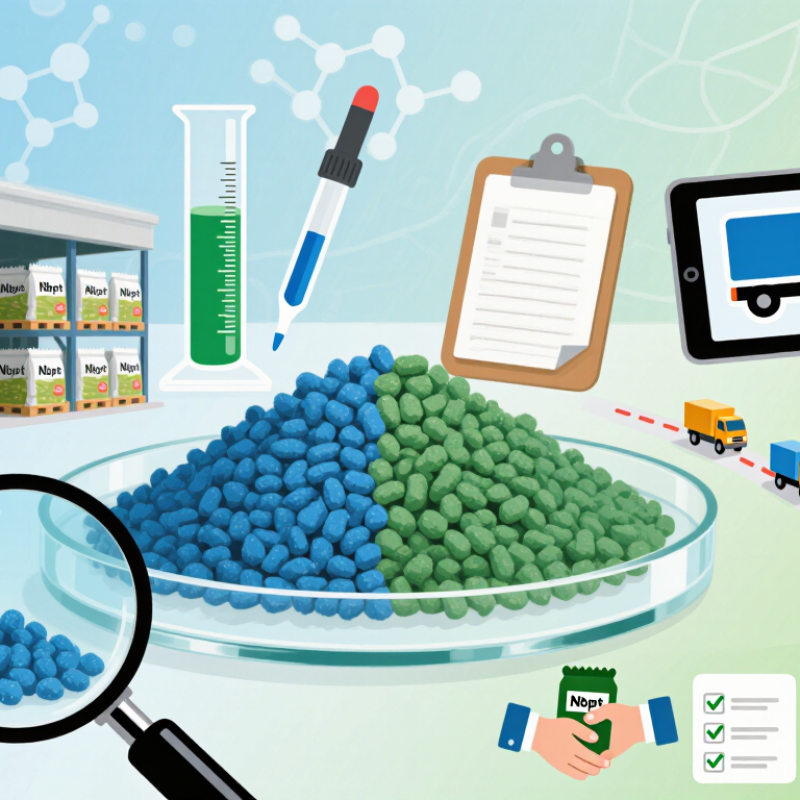
How to Choose NBPT Fertilizer Suppliers in 2026?

Define NBPT Grades, Uses, and Quality Requirements

How to Choose NBPT Fertilizer Suppliers in 2026?

NBPT, or N-(n-butyl) thiophosphoric triamide, is a urease inhibitor used with urea fertilizers. It slows nitrogen loss after application. This helps maintain nitrogen availability near the root zone. However, NBPT is not a universal product. Suppliers may offer different grades, concentrations, particle sizes, and formulations. Ask whether the material is designed for urea coating, granular blending, or liquid fertilizer production. These uses require different handling properties.

A reliable supplier should provide a clear certificate of analysis for every batch. Check NBPT assay, moisture, particle size, appearance, and storage stability. Impurities matter because they can affect coating uniformity and fertilizer performance. Request test methods, production dates, lot numbers, and shelf-life data. A product that looks acceptable may still perform poorly after extended heat exposure. Small samples can reveal caking, uneven mixing, or unpleasant processing odors. Test before purchasing in bulk.

Experience matters during supplier evaluation. Ask for practical guidance on dosage, mixing time, packaging, and transport conditions. The supplier should explain how temperature and humidity affect the product. They should also respond with technical evidence, not only sales claims. I would compare at least three batches before making a long-term decision. That step feels slow. It can prevent expensive field failures. One overlooked issue is compatibility with other additives, especially in liquid systems. Independent laboratory testing adds confidence when supplier documents appear incomplete.

Verify Supplier Certifications, Testing, and Production Capabilities

Choosing an NBPT fertilizer supplier in 2026 requires more than comparing prices. Ask for current certification records, not incomplete scanned certificates. A credible supplier should explain its quality system, factory address, audit scope, and certificate validity. Check whether the certification covers the actual production site. It sounds obvious. It is often missed. Request product registration documents where required by the destination market. Also confirm environmental, worker-safety, and transport procedures.

Testing should be practical and repeatable. Ask for a recent certificate of analysis showing NBPT content, moisture, particle size, and relevant impurities. Compare the testing methods with recognized laboratory procedures. Independent testing of sealed samples can reveal differences between a sales sample and a shipment. Keep samples from every lot for later comparison. A supplier that resists batch traceability deserves careful review. One clean report is not proof of consistent quality. Request results from several production dates, because quality can change during maintenance or raw-material changes.

Production capability needs evidence, not confident promises. Review reactor or blending capacity, drying equipment, packaging lines, warehouse conditions, and backup utilities. Ask how many lots can be produced monthly without skipping quality checks. Visit the site if possible, and observe sampling rather than touring offices. Delivery history matters too. Check lead times, rejection rates, corrective-action records, and contingency plans. My own mistake would be trusting impressive capacity figures without matching them to documented output. A smaller facility may be more reliable, but only when its controls remain visible and verifiable.

Compare Product Purity, Pricing, Packaging, and Supply Stability

Choosing NBPT fertilizer suppliers in 2026 requires more than comparing quoted prices. Product purity should lead the review, because impurities can affect fertilizer performance and handling. Request a recent certificate of analysis showing NBPT content, moisture, particle size, and test methods. Ask whether an independent laboratory can verify one retained sample. A clean sample matters. My first comparison missed moisture data, and that weakened the purchasing decision.

Pricing should be measured per usable kilogram, not per bag. Include testing, freight, insurance, storage, and possible rework costs. A lower offer may hide inconsistent concentration or excessive dust. Compare at least three written quotations with the same specification and delivery terms. Keep the assumptions visible. Packaging deserves a physical check. For bulk orders, inspect liner seals, pallet strength, labels, and protection from humidity. Ask for photos and a sample shipment before approving a large contract.

Supply stability depends on production capacity, raw-material access, quality controls, and communication. Review shipment records, lead times, safety stock, and backup plans for port or factory delays. A supplier should explain batch traceability and complaint handling without vague promises. Request a small trial order, then compare arrival condition, laboratory results, and application behavior. Do not overvalue polished documents. Real performance can disagree. Use clear acceptance criteria and record every deviation before expanding the order.

How to use this framework: The chart assigns practical procurement weights to the four key comparison areas. Product purity is prioritized because it directly affects inhibitor performance, while pricing should be compared on a consistent USD-per-metric-ton basis. Packaging and supply stability help reduce handling losses, storage risks, and production interruptions.
Reference benchmarks commonly used for NBPT purchasing include approximately 97–99% purity for high-grade material, 25 kg bags or 500–1,000 kg jumbo bags, and typical lead times of about 15–45 days. Actual pricing depends on purity, order volume, freight, payment terms, and contract timing.

Assess Technical Support, Compliance, and Communication Standards

How to Choose NBPT Fertilizer Suppliers in 2026?

Choosing an NBPT fertilizer supplier requires more than comparing prices. Technical support should begin with clear product specifications, batch test results, and practical application guidance. Ask how the supplier handles storage, blending, temperature exposure, and compatibility with common fertilizers. A reliable technical team can explain dosage limits without hiding uncertainties. Field experience matters.

Compliance evidence should be easy to verify. Request current safety data sheets, certificates of analysis, traceability records, and documented quality procedures. Check whether production sites follow recognized management systems and whether shipment documents match local import requirements. Regulations differ by market. Do not accept vague claims. Independent laboratory testing can reveal inconsistencies between a sample and its paperwork.

Communication standards often expose future problems. Test the supplier with specific questions before signing an agreement. Measure response time, technical accuracy, language clarity, and willingness to escalate difficult issues. Written answers are valuable when handling complaints or delayed deliveries. Keep records.

Perfect communication is rare.

I have seen suppliers provide polished documents but weak field support. That gap deserves attention. A small trial order can test packaging, labeling, response speed, and batch consistency. Still, one successful shipment proves little. Review performance over several deliveries, and ask for corrective action when details are missed. A dependable supplier should welcome careful questions, not treat them as distrust.

Select the Supplier Through Samples, Audits, and Contract Review

How to Choose NBPT Fertilizer Suppliers in 2026?

Selecting an NBPT fertilizer supplier should begin with physical samples, not polished sales presentations. Ask for multiple batches, sealed and labeled with production dates. Test NBPT content, moisture, particle size, and appearance through an independent laboratory. Compare performance after storage at 25°C and high humidity. Check whether granules remain free flowing after blending with urea. Small details matter. Request the certificate of analysis for each sample. A single excellent sample proves very little.

An on-site or remote audit should examine the whole quality system. Review raw material records, batch numbering, calibration logs, retained samples, and deviation reports. Walk through packaging and storage areas. Look for clean floors, controlled humidity, and clear segregation between lots. Ask operators how rejected material is handled. Their answers may reveal more than a presentation. Verify technical staff can explain test methods and acceptance limits. Do not skip worker safety and environmental controls. They affect continuity, even when product quality looks acceptable.

Contract review turns technical promises into measurable obligations. Specify assay, moisture, particle-size range, packaging weight, shelf life, and sampling procedures. Define pre-shipment inspection, approved testing laboratories, delivery windows, and remedies for nonconforming goods. Require written notice before changes to raw materials, process, or packaging. Include traceability from shipment back to batch records. Be careful with vague terms like “premium quality.” They invite disputes. No checklist is perfect. Seasonal demand, transport delays, and storage mistakes still create risk. Review the supplier after the first shipment, not only before signing.

Open chat
Scan the code
Bendet Sales Assistant
Hi There👋,
Thank you for visiting our website, How can I help you?