How to Choose a Holographic Foil Machine in 2026?
In 2026, choosing a Holographic Foil Machine requires more than comparing prices and shiny sample rolls. The right equipment must match your substrate, production volume, foil width, and finishing method. A small packaging studio may need precise registration and quick changeovers. A high-volume converter may prioritize web tension, heating stability, and automated monitoring. These needs are not interchangeable.
This guide draws on practical evaluation methods used by printers, packaging engineers, and finishing technicians. It examines hot stamping and cold foil workflows, compatible materials, embossing coordination, temperature control, pressure settings, and waste reduction. Service response, spare-part availability, operator training, and documented safety procedures also deserve attention. A machine can produce a bright holographic effect, yet still fail commercially if setup takes too long. Defects may appear only under inspection lighting. That detail matters.
Specifications can mislead. A higher working speed may not mean better output. Sample testing remains essential. Ask suppliers to run your actual paper, film, label stock, or coated board before ordering. Check fine lines, repeat accuracy, adhesion, curl, and foil release after handling. I have seen attractive demonstrations hide difficult maintenance routines. That experience deserves honest reflection. Buyers should also review energy use, software compatibility, warranty terms, and the supplier’s technical history. The best decision balances visual impact, measurable reliability, and realistic operator needs. There is no perfect machine. Only a better-informed fit.
What Is a Holographic Foil Machine and How Does It Work?
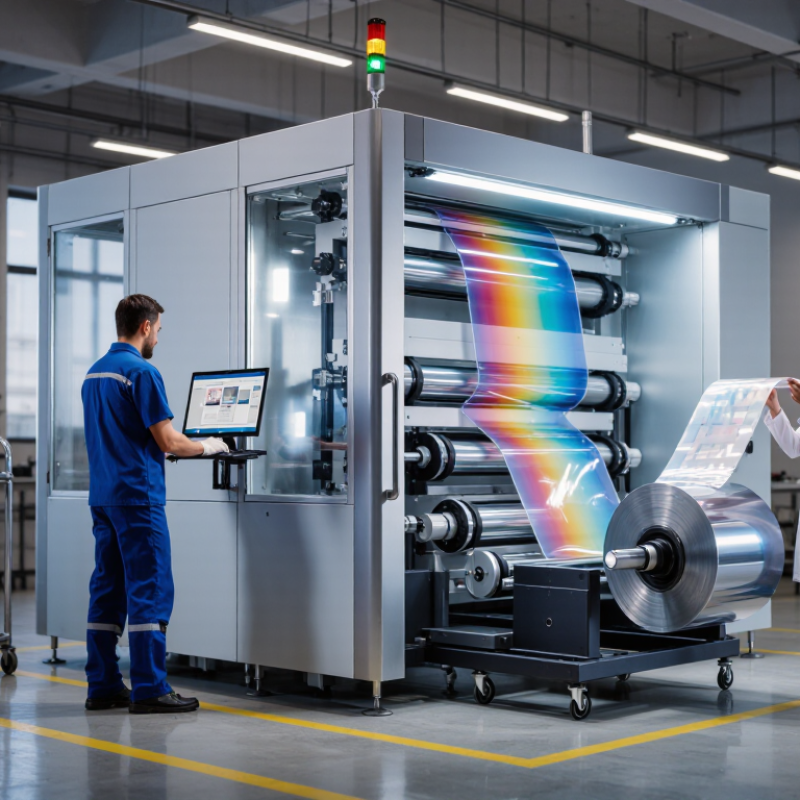
A holographic foil machine transfers a thin, patterned film onto paper, plastic, or coated board. The film contains microscopic diffraction structures. Light bends across these structures, creating movement, depth, or rainbow effects. The machine uses controlled heat, pressure, and dwell time. A heated die or roller activates the adhesive layer. Pressure then bonds the holographic pattern to the surface.
The process is more exact than it looks. Film tension must remain stable. Registration sensors align the pattern with printed graphics. Excess heat can distort fine details. Low pressure can cause weak adhesion. In production trials, I would inspect edges under angled light, not only under normal lighting. That small check often reveals missing patches and uneven transfer.
Market data supports careful equipment selection. Smithers forecasts the global packaging market will rise from about US$1.17 trillion in 2023 to US$1.38 trillion by 2028. PMMI reported US packaging machinery shipments of approximately US$10.2 billion in 2023. These figures suggest continued investment, but they do not guarantee a suitable machine. Definitions vary between reports. That matters. For 2026, compare sheet or roll operation, substrate range, maximum speed, foil-saving controls, and registration accuracy. Request samples using your actual material. A machine that performs well on coated paper may struggle with textured board. Efficiency claims can also look impressive before setup waste is measured.
Which Holographic Foil Applications Match Your Production Needs?
Choosing a holographic foil machine starts with the product, not the machine’s maximum speed. A narrow label line may need sharp registration around tiny text and curved corners. Folding cartons require stable coverage across broad panels, embossed areas, and coated stocks. For greeting cards or premium covers, changing patterns quickly may matter more than hourly output. Sample the exact substrate before purchasing. Foil can look brilliant on smooth board, yet appear broken on porous paper.
Match the application to the transfer process. Hot foil systems suit controlled sheets, detailed lettering, and repeatable decorative panels. Cold foil setups can fit high-volume web production, especially when inline printing reduces extra handling. Digital foil equipment may help short runs, variable designs, and frequent artwork changes. The right choice depends on waste, setup time, curing conditions, and operator skill. Ask for registration tolerance, temperature range, pressure control, and foil-width limits. These figures affect production more than a brochure’s headline speed.
During a trial, inspect the first and last sheets, not only the perfect middle sample. Check edge lift, pinholes, color shift, and cleanup time. Leave room for mistakes. Test it twice. A beautiful sample can hide costly adjustments. Record run speed, rejected pieces, and changeover minutes. Then compare those results with your normal order size. A machine that excels on long runs may frustrate a workshop producing 300 mixed designs. Maintenance access matters too. If rollers are awkward to reach, small delays become weekly losses. Choose the application your team can repeat reliably, not the effect that looks impressive once.
How to Compare Machine Types, Foil Materials, and Finishing Methods?
Choosing a holographic foil machine in 2026 requires more than comparing purchase prices. Match the machine type to your production pattern. Hot-stamping systems suit sharp metallic details and moderate volumes. Cold-foil units support faster web production, but need precise adhesive control. Digital foiling reduces setup waste for short, variable jobs. Smithers’ 2024 print embellishment research identifies digital finishing as a growing investment area, driven by shorter runs and customized packaging.
Foil material changes the result.
Polyester carrier foil usually gives stable feeding, while thinner films can reduce material use but demand better tension control. Select metallic, transparent, diffractive, or matte foil according to viewing distance and substrate texture. A rough carton may need stronger adhesion and pressure. A coated label may show cleaner detail. Grand View Research reports continued expansion in the holographic film market, with packaging and security applications supporting demand. However, market forecasts vary by definition, so treat projected growth carefully.
Tips: Request a live sample on your actual substrate. Measure registration error, waste percentage, running speed, and changeover time. Ask for test data, not only showroom claims. In my experience, the fastest machine is not always the most productive. A slow setup can quietly erase its advertised speed advantage. Check foil compatibility, temperature range, maintenance access, and operator training. Record results across three runs. One successful sample proves very little.
Which Technical Specifications Affect Quality, Speed, and Efficiency?
How to Choose a Holographic Foil Machine in 2026?
Choosing a holographic foil machine requires more than comparing maximum speed. In production, image quality depends on registration accuracy, embossing resolution, temperature stability, and pressure control. A servo-driven feeding system can reduce foil drift during long runs. Ask for a stated registration tolerance, not a vague promise. Resolution matters greatly. Fine patterns may blur when rollers lack consistent pressure. I once tested a machine that produced sharp samples but uneven edges after several hours. That mistake was expensive.
Speed figures need careful reading. Check whether the rated speed applies to your material, foil width, and pattern complexity. Stable web tension prevents wrinkles and broken holographic effects. For narrow labels, a machine running at 80 meters per minute may outperform a faster model that requires frequent stops. Temperature control should remain consistent across the working width. Uneven heat creates dull patches. Adjustable pressure and cooling time also influence adhesion, especially on coated paper or synthetic films.
Efficiency begins with practical automation. Automatic foil feeding, waste rewinding, and registration correction can reduce operator intervention. A responsive control system helps technicians adjust settings without lengthy stoppages. Energy use matters too, but low consumption means little if warm-up takes an hour. Maintenance access should be simple. Ask how quickly rollers, sensors, and heating parts can be inspected. Request trial samples using your actual substrate and foil. Laboratory results can mislead. Your production floor is less forgiving.
How to Choose a Holographic Foil Machine in 2026?
Technical specifications directly influence holographic quality, production speed, and operating efficiency. The chart compares representative machine configurations without using company or brand data.
How to read the chart: Higher maximum line speed supports greater output, while a lower registration tolerance indicates more precise holographic positioning. Rated power normally increases with machine speed, but efficiency improves when the machine delivers more production per kilowatt. For demanding applications, prioritize stable web tension, precise registration control, rapid heating response, and consistent temperature regulation rather than speed alone.
Values shown are representative engineering specification ranges for preliminary equipment comparison. Actual performance depends on foil type, substrate, pattern complexity, material width, and operating conditions.