China Best Quick Connector Manufacturers for Global Buyers
China’s Quick Connector industry is moving from low-cost supply toward documented engineering and dependable global service. According to Grand View Research, the global fluid handling systems market continues to expand with industrial automation, energy projects, and process manufacturing. Quick connectors support these systems by reducing assembly time and simplifying maintenance. Small parts can create major downtime.
The International Fluid Power Society and the National Fluid Power Association emphasize correct sizing, pressure control, contamination prevention, and routine testing. These principles matter when buyers compare Chinese manufacturers. A connector may look identical on a catalog page, yet seal materials, thread accuracy, cycle life, and burst performance can differ sharply. Practical checks should include ISO 7241 or ISO 14541 compatibility, pressure-test records, material certificates, and traceable batch identification. Safety comes before price.
Current market reports from MarketsandMarkets also show continued investment in industrial automation and connected equipment. That trend increases demand for reliable fluid and pneumatic connections. China offers broad production capacity, CNC machining, automated assembly, and competitive tooling costs. However, scale alone proves nothing. That is an uncomfortable truth.
The strongest suppliers explain tolerances clearly. They share sample data, inspection methods, and realistic lead times. They also discuss weaknesses instead of hiding them. Buyers should request prototypes, test repeated coupling cycles, and verify performance under heat, vibration, and pressure. No supplier ranking is permanently correct. Factory capability changes, and public claims require independent checking. This guide evaluates China’s leading Quick Connector manufacturers through engineering depth, quality evidence, customization ability, export experience, and after-sales reliability.
Types of Quick Connectors Used in Global Industrial Applications
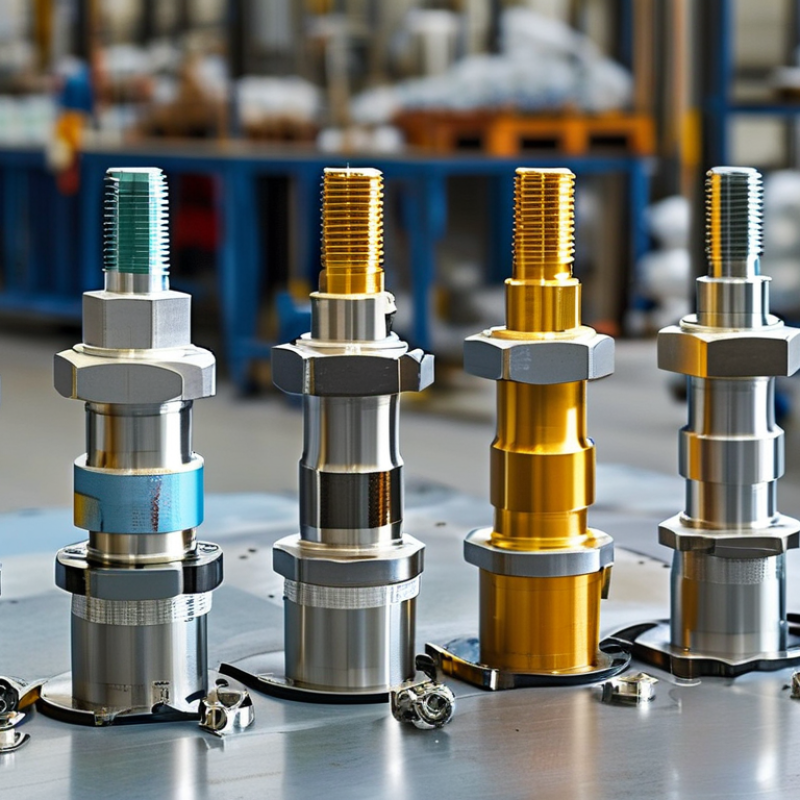
Quick connectors support fast, repeatable connections across factories, energy systems, mobile equipment, and process lines. Their designs vary by pressure, media, temperature, and maintenance frequency. Hydraulic applications commonly use ball-lock, screw-to-connect, and flat-face couplings. Flat-face models reduce fluid loss and contamination during frequent servicing. ISO 7241 covers hydraulic quick-action couplings, while ISO 16028 addresses flat-face designs.
Pneumatic systems often use push-in fittings, one-touch couplings, and multi-line connectors. They suit automation tools, assembly equipment, and compressed-air circuits. Electrical quick connectors support sensors, motors, control cabinets, and outdoor equipment. Fiber-optic connectors serve data links where electromagnetic interference creates operational risks. Dry-break couplings are useful for chemical, fuel, and hygienic process transfer. They limit spills, but seal selection remains critical.
The global fluid connectors market was valued at about USD 15.1 billion in 2023, according to Grand View Research’s 2024 industry analysis. The report projects continued growth through 2030, driven by automation, fluid handling, and equipment modernization. Estimates differ between reports. That matters when comparing suppliers.
Tips: Match the connector to working pressure, peak temperature, fluid chemistry, and cycle count. Check ISO compliance and test certificates. Inspect seals after repeated connection cycles. A connector can fit perfectly and still fail early. Avoid choosing only by thread size. Preventive checks are often cheaper than downtime.
Key Features of Leading Chinese Quick Connector Manufacturers
Leading Chinese quick connector manufacturers compete through measurable engineering, not low prices alone. Grand View Research valued the global quick disconnects market at about USD 1.5 billion in 2023 and forecasts steady growth through 2030. This demand raises expectations for stable sealing, fast coupling, and repeatable production.
Strong manufacturers select brass, stainless steel, engineering plastics, and elastomers for specific media. They verify pressure, temperature, flow, corrosion resistance, and cycle life before shipment. Clear dimensional drawings matter. So does lot-level traceability. Factories using ISO 9001 systems usually control incoming materials, machining, cleaning, assembly, and final inspection. According to the 2023 ASME B16.5 process equipment survey, leakage prevention remains a central reliability concern in fluid systems, making seal design and testing essential.
Good suppliers also provide application engineering for pneumatic, hydraulic, cooling, medical, and industrial equipment. They can adjust thread standards, valve structures, port sizes, and packaging for overseas buyers. Interchangeability should be tested, not assumed. A connector may fit visually but fail under vibration or repeated thermal changes. No supplier is perfect. Even an approved sample can hide production variation. Buyers should request test records, material certificates, inspection plans, and replacement support before placing large orders. Factory audits and small pilot orders reveal more than polished catalogs.
How to Evaluate Quality, Standards, and Manufacturing Capabilities
China Best Quick Connector Manufacturers for Global Buyers
Evaluating a quick connector supplier requires more than checking catalog photos. MarketsandMarkets estimated the global electrical connectors market at about US$84 billion in 2023, with continued growth driven by automation and electric equipment. This demand attracts capable factories, but also inconsistent suppliers. Ask for traceable material certificates, controlled drawings, and batch-level inspection records. A reliable manufacturer should explain contact resistance, mating cycles, temperature limits, and locking performance with test evidence.
Tips: Request three samples from different production batches. Inspect plating thickness, terminal crimp height, housing flash, and insertion force. Test connectors after vibration and temperature cycling. The result may disappoint you. That is useful evidence.
Standards show manufacturing discipline. IEC 61984 addresses connector safety requirements, while IEC 60529 helps verify enclosure protection when an IP rating applies. ISO 9001 certification supports process control, but it does not guarantee excellent connectors. For automotive projects, IATF 16949 may provide stronger evidence of quality planning. Ask whether testing uses calibrated equipment and defined acceptance limits. Factory audits should review mold maintenance, incoming inspection, automated assembly, and failure analysis. In practice, a clean showroom can hide weak crimp control. I would also compare first-pass yield, corrective-action records, and change-control procedures before approving mass production.
China Best Quick Connector Manufacturers for Global Buyers
How to Evaluate Quality, Standards, and Manufacturing Capabilities
This reference framework assigns practical evaluation weights to the factors global buyers commonly review when sourcing quick connectors. Material traceability, dimensional accuracy, pressure and leak testing, quality-management evidence, process capability, and lot traceability should be verified through technical documents, inspection records, and production audits. ISO 9001 certification supports quality-system evaluation, while product-specific pressure, temperature, sealing, and material requirements must be checked against the applicable industry standards.
Production, Customization, and Export Services for International Buyers
For global buyers, a quick connector supplier must offer more than a catalog. Experienced production begins with application details: medium, pressure, temperature, flow, mating frequency, and installation space. Engineers select stainless steel, brass, aluminum, or engineered polymer according to service conditions. Each production lot should pass dimensional checks, leak testing, and functional mating tests. Critical surfaces need clean machining and controlled finishing. Small errors matter. A connector that fits on a bench may fail after vibration, heat cycles, or repeated use.
Customization can include thread standards, tube sizes, sealing materials, locking sleeves, colors, markings, and packaging. A reliable factory reviews drawings before tooling and confirms tolerances with the buyer. Prototype samples help reveal difficult issues, such as a seal that swells in the chosen fluid or a sleeve that is hard to grip with gloves. Not every request deserves a custom mold. Sometimes, a tested standard configuration is safer and faster. Rushed approvals can create avoidable rework, so honest technical feedback should come before production.
Export service should be practical and traceable. Suppliers can prepare commercial invoices, packing lists, inspection records, certificates, and shipping documents for international orders. Clear carton labels reduce warehouse mistakes. Export teams should confirm destination requirements, pallet conditions, lead times, and preferred trade terms. Before shipment, buyers need photographs, quantity checks, and test results linked to the order. Communication is not always perfect across time zones. Written confirmation prevents expensive assumptions.
Selecting the Right China-Based Quick Connector Supplier
Selecting the right China-based quick connector supplier requires more than comparing unit prices. Grand View Research valued the global electrical connectors market at about USD 84.3 billion in 2023, with continued growth expected through 2030. That expansion attracts capable factories and inconsistent traders. Verify the production site, not only the website.
Ask for material certificates, dimensional inspection records, and batch traceability. A reliable supplier should explain contact plating thickness, sealing materials, temperature limits, and mating-cycle results. Request samples from normal production, then test them under vibration, moisture, and repeated connection. IEC 60529 ratings matter for outdoor assemblies, but an IP claim should match an actual test report. Paperwork is not performance.
China’s manufacturing depth can support custom tooling and short replenishment cycles. However, tooling ownership and revision control need written terms. Check whether the supplier uses incoming inspection, first-article approval, and corrective-action records. ISO 9001 certification is useful evidence, not proof of every process. The 2024 Interact Analysis manufacturing report highlights continuing pressure on supply-chain resilience and lead-time visibility; your supplier should therefore provide capacity data, safety-stock options, and realistic delivery records. I would also audit communication quality. Slow answers often become expensive engineering changes. No supplier is perfect. The real question is whether weaknesses are visible, measured, and corrected.