





In the world of manufacturing, choosing the right equipment is crucial. A prominent voice in this industry, Dr. Samuel Reed, an expert in machinery design, once said, "Selecting the right wire mesh weaving machine can significantly impact production efficiency." This statement resonates deeply in today’s competitive market.
wire mesh weaving machines are essential for producing high-quality mesh products. These machines come in various types, tailored to different manufacturing needs. Yet, not all machines are created equal. Some may not meet specific production requirements, causing delays. Inadequate machinery can lead to increased operational costs and diminished quality.
Investing in the best wire mesh weaving machine is a vital step. Manufacturers should assess their specific needs before making a decision. With a clear understanding of production goals, businesses can avoid the pitfalls of subpar equipment. A careful choice can elevate efficiency and quality in production processes.
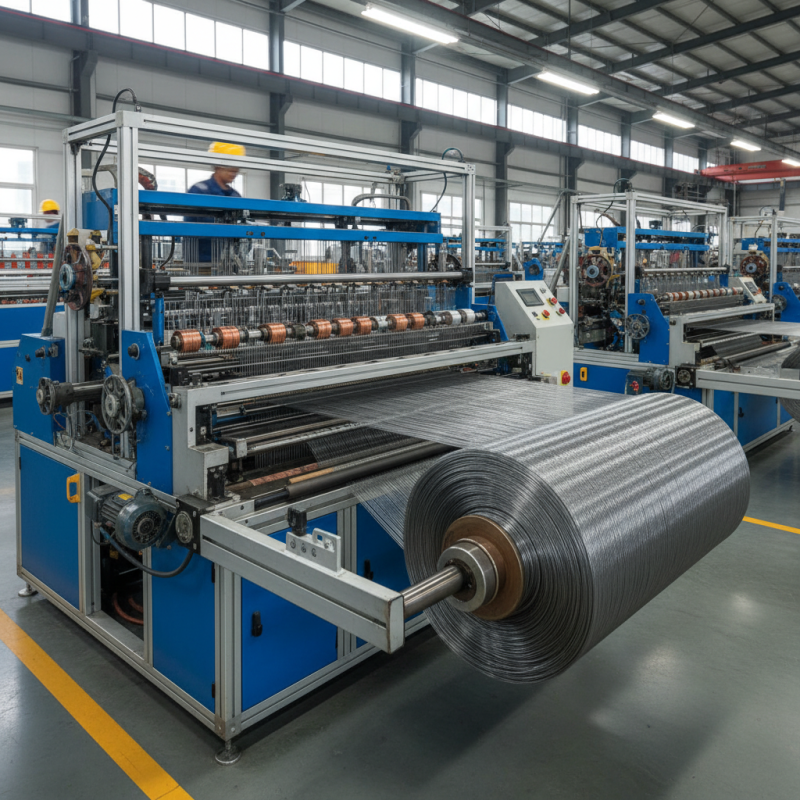
When it comes to wire mesh weaving, selecting the right machine is crucial. Various models cater to different manufacturing needs. Some machines focus on high speed and efficiency, while others prioritize precision and flexibility. Each of these features can significantly impact production quality and overall cost.
For instance, certain machines are designed to weave fine meshes for intricate applications. These can be slower, yet they deliver exceptional accuracy. On the other hand, heavy-duty models are available for large-scale operations. They can handle thicker wires and are built to last. However, their initial cost might be higher. Balancing speed and quality is essential for any manufacturer.
It's not uncommon for facilities to face challenges in maintenance and operation. Regular upkeep ensures longevity but can be overlooked during busy periods. Operators must be well-trained to maximize the machine's capabilities. Investing in reliable training can mitigate risks and enhance productivity. Evaluating your specific needs will lead to better decision-making in choosing a wire mesh weaving machine.
When selecting wire mesh weaving machines, key features matter greatly. Assess the machine's weaving capacity. This includes the size of mesh it can produce. Different projects require various mesh dimensions. Consider the machine's speed too. A faster machine boosts productivity but may reduce quality. Balance both aspects to meet your needs.
Material compatibility is another crucial element. Ensure the machine can handle the types of wire you plan to use. This affects not only quality but also the overall durability of the mesh. A versatile machine can save you time and costs. Not every machine will perform well under every condition. Experiment with a few materials before finalizing your choice.
Tips: Always check for user reviews before buying. Practical feedback can uncover issues that specs may not reveal. It’s also wise to consult with operators who have experience. They can provide insights on machine performance in real-world applications. Keep track of your production goals and adjust your equipment choices based on those needs.
Wire mesh products play a vital role in many manufacturing sectors. Their applications range from construction to agriculture, enhancing functionality and safety. According to industry reports, the global wire mesh market is expected to grow significantly, projected to reach $10.5 billion by 2025. This growth reflects diverse uses.
In construction, wire mesh is essential for reinforcing concrete. It increases durability while reducing tension. Manufacturers often face challenges in producing consistent mesh quality. Variance in wire diameter can affect the strength of the final product. In agriculture, wire mesh secures crops and livestock against predators. This use highlights the need for reliable weaving machines that ensure uniformity.
Additionally, wire mesh is used in filtration systems and HVAC installations. These applications require precise specifications to perform effectively. Yet, achieving that precision can be tricky. Machinery must be adaptable to different wire sizes and types. Attention to detail is crucial. Despite advancements, some manufacturers still overlook the importance of quality controls. This leads to subpar products and wasted resources. Continuous improvement is needed to meet industry standards.
In the manufacturing sector, the efficiency of weaving machines greatly impacts overall productivity. Recent industry reports indicate that high-speed weaving machines can achieve an output of 600 meters per minute, significantly reducing production time. This is crucial for businesses that rely on just-in-time manufacturing. Companies have found that optimizing their machine settings can further enhance efficiency.
However, it’s important to note that not all machines are created equal. Some models may experience downtime due to minor mechanical failures. A study highlighted that maintenance practices directly affect output rates. Regular checks can prevent a drop in productivity, as a machine that operates optimally is likely to meet or exceed the expected output. With 20% of machines reported to fail without adequate upkeep, businesses must prioritize regular servicing to maintain efficiency.
Additionally, the material used in weaving plays a critical role in determining speed and output quality. Choosing the right raw material is vital. Poor quality materials can slow down the weaving process, leading to defects. This highlights the need for a comprehensive approach in machine selection and material sourcing to optimize manufacturing results. Hence, manufacturing professionals must navigate these challenges to ensure their weaving operations are both efficient and productive.
The wire mesh weaving industry is rapidly evolving. Automation is becoming a key trend. Many manufacturers are adopting advanced technologies to increase efficiency and reduce labor costs. According to a report by Industry Research, the global mesh weaving machine market is expected to grow by over 5% annually in the next five years. This shift towards automated weaving technologies hints at a more streamlined future.
Smart technology integration is a focal point. Machines equipped with IoT capabilities allow manufacturers to monitor production in real-time. This brings about a significant improvement in quality control. Yet, challenges remain. Not all companies have the resources to implement these technologies effectively. Skilled labor shortages also pose a risk, as automation requires workers with specialized training.
In addition, sustainability is gaining traction in this sector. More companies are exploring eco-friendly materials and processes. The move towards greener practices aligns with global sustainability goals. However, this transition is complex. It often requires substantial investment and a shift in corporate mindset. The future of wire mesh weaving holds promise, but only if the industry can address current hurdles.
| Machine Model | Max Wire Diameter (mm) | Weaving Speed (m/min) | Automation Level | Key Features |
|---|---|---|---|---|
| Model A | 2.5 | 30 | Fully Automated | Energy-efficient, User-friendly interface |
| Model B | 3.0 | 25 | Semi-Automated | Versatile production capabilities |
| Model C | 1.5 | 35 | Manual | Compact design, Low cost |
| Model D | 4.0 | 20 | Fully Automated | High production efficiency, Advanced technology |
Hein Minnie
Cell nr: +27 (0) 82 564 6501
Email: sale@thecirclemachine.com
Hein Minnie Jnr
Cell nr: +27 (0) 84 284 7234
Email: sale@thecirclemachine.com
Address:
10 Apsey Street,
Heidelberg,
Gauteng,
1441
Bendet Engineering Services (PTY) LTD was established in 1987. Our team of engineers and draughtsman are ready to deliver a complete turnkey solution, from the design phase to commissioning. A dedicated team that consists of electrical, mechanical and industrial engineers, we are able to offer a comprehensive service to our clients.