5 Best Tipper Vehicles for Global Buyers?
Choosing the best Tipper Vehicle for global work requires more than comparing payload figures. Buyers must examine terrain, body design, axle configuration, service access, fuel use, and local operator skills. A truck that performs confidently on European highways may struggle on rough African construction routes or remote Asian mining roads. Context matters.
Industry data supports this practical approach. ACEA’s Vehicles on European Roads 2024 report places the average age of European trucks at approximately 14.2 years. That figure highlights the importance of durability, parts availability, and repair simplicity. OICA’s 2023 production statistics also show the continuing importance of commercial vehicles across global transport markets. Meanwhile, the World Bank’s Logistics Performance Index 2023 connects reliable transport with stronger supply-chain performance. These findings make uptime a commercial priority, not merely a technical preference.
This guide reviews five leading Tipper Vehicle options for international buyers. The comparison considers payload capacity, chassis strength, engine performance, tipping mechanism, cabin comfort, safety equipment, and total operating cost. Fuel efficiency also deserves closer attention. The International Energy Agency continues to identify heavy-duty vehicles as major fuel consumers and emissions sources. Small efficiency gains can become substantial savings across thousands of operating hours.
No ranking fits every market. Some impressive specifications may hide expensive maintenance. A cheaper purchase may become costly after one difficult season. Real ownership evidence matters. By combining manufacturer information, industry reports, and practical fleet considerations, this guide offers a balanced starting point for selecting a dependable tipper vehicle. Field conditions remain the final test.
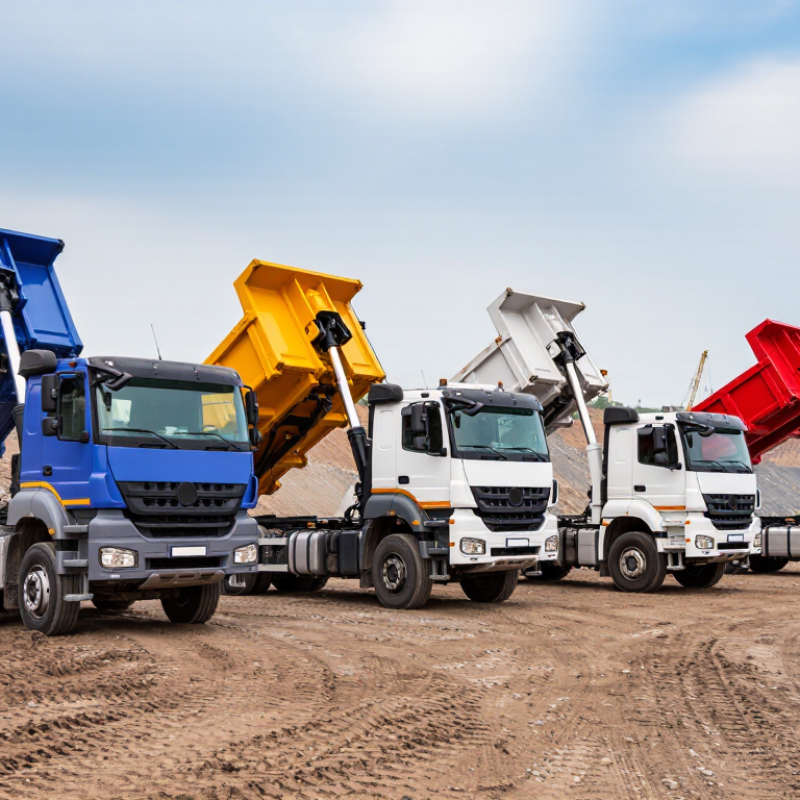
What Makes a Tipper Vehicle Suitable for Global Buyers
5 Best Tipper Vehicles for Global Buyers?
A suitable tipper vehicle must match the worksite, road quality, climate, and local servicing capacity. A light-duty 4x2 tipper suits urban construction and smaller aggregate deliveries. It offers easier parking, lower fuel use, and simpler maintenance. A medium-duty 6x2 model provides more payload without becoming difficult to operate on paved roads. Payload matters most.
For quarries, rural roads, and uneven ground, a heavy-duty 6x4 tipper is often the safer choice. Its driven axles improve traction when mud covers the loading area. An 8x4 configuration carries heavier loads, but it needs stronger roads, wider turning space, and higher operating discipline. Articulated tippers work well on large mining or infrastructure sites, where rough terrain and high volume justify their size. They are not practical everywhere.
Global buyers should inspect more than engine power. Check left- or right-hand drive compatibility, corrosion protection, hydraulic cylinder quality, tire availability, and cabin ventilation. A vehicle may perform well in a brochure but struggle in extreme heat or dusty conditions. Parts access is equally important. A common filter available locally can prevent days of downtime. Safety also depends on stable body design, reliable braking, clear visibility, and accurate overload control.
No choice is perfect. I would rather select a slightly smaller tipper with dependable local support than a larger vehicle that waits weeks for parts. Conditions change. A careful trial load, service review, and route assessment can reveal problems before purchase.
Comparing Payload, Durability, Safety, and Operating Costs
Global buyers should compare tipper vehicles by working conditions, not brochure size. A compact 4x2 tipper suits urban repairs, with payloads often near 3–7 tonnes. A rigid 6x4 model usually carries about 10–18 tonnes for aggregates and construction waste. Articulated tippers can exceed 25 tonnes, but they demand wider roads and stronger maintenance support.
Payload is only useful when the chassis survives repeated loading. High-strength frames, protected hydraulic lines, and corrosion-resistant bodies matter in wet or coastal regions. Off-road rigid tippers offer greater ground clearance and axle articulation. They also consume more fuel.
According to the International Transport Forum’s 2024 Transport Outlook, freight activity continues growing, increasing pressure on efficiency and infrastructure. That pressure makes a lighter urban electric tipper attractive for short routes. The IEA’s Global EV Outlook 2024 reports strong growth in electric truck sales, although charging access remains uneven.
Safety deserves equal weight. The WHO Global Status Report on Road Safety 2023 records approximately 1.19 million annual road deaths worldwide. Buyers should require stability controls, reverse cameras, blind-spot detection, and rollover-resistant cabins. These features cost more upfront. They may reduce downtime and collision exposure.
Diesel power still offers longer range in remote areas, while electric drivetrains can reduce local noise and energy costs. The U.S. Department of Energy’s Alternative Fuels Data Center notes that operating savings depend heavily on duty cycle and electricity prices.
Real-world calculations are imperfect. Dust, driver habits, payload density, and local repairs can change the ranking completely.
How Regional Conditions Affect Tipper Vehicle Selection
5 Best Tipper Vehicles for Global Buyers?
How Regional Conditions Affect Tipper Vehicle Selection
Choosing a tipper vehicle starts with the worksite, not the brochure. In dry, paved regions, a light-duty 4x2 tipper often offers lower fuel use and easier maintenance. It suits urban construction and moderate payloads. For rough quarry roads, a rigid 6x4 vehicle provides stronger traction and better load stability. Its wider turning path can become a problem in crowded streets. In wet tropical areas, corrosion protection and sealed electrical connections deserve close attention. Small details matter.
Mountainous regions may require an all-terrain tipper with controlled engine braking and a reinforced chassis. Steep gradients punish weak cooling systems. In large mining zones, an articulated tipper can handle uneven ground and high payloads, but it needs trained operators and specialized servicing. For farms or narrow village roads, a compact tipper is often more practical than a larger model. Local axle limits, bridge ratings, road width, and spare-parts access must be checked before purchase. I have seen buyers focus on payload figures while ignoring tire availability. That mistake becomes expensive quickly. No option is perfect. Climate changes performance, and local mechanics may influence uptime more than advanced equipment.
5 Best Tipper Vehicle Types for Global Buyers
How payload capacity and regional conditions affect tipper vehicle selection
Light-duty tipper
Best for urban deliveries, narrow roads and lower operating costs. Typical payload: 2–4 tonnes.
Medium-duty tipper
Suitable for mixed urban and rural construction work with moderate payload requirements. Typical payload: 6–10 tonnes.
Heavy rigid tipper
Effective on paved highways and established quarry routes. Typical payload: 14–20 tonnes.
Articulated tipper
Designed for large mines, major earthworks and long-haul bulk transport. Typical payload: 22–35 tonnes.
Off-road articulated tipper
Preferred for soft ground, steep gradients and rough haul roads. Typical payload: 30–45 tonnes.
Payload figures are representative operating ranges for common vehicle classes. Actual capacity depends on gross vehicle weight limits, axle regulations, body design, terrain and local road conditions.
Key Buying Factors for Importers and Fleet Operators
For global buyers, the five strongest tipper choices are 4x2 light-duty, 6x4 rigid, 8x4 rigid, articulated off-road, and battery-electric models. Each suits a different working envelope. A 4x2 fits urban deliveries and narrow sites, while an 8x4 carries heavier aggregate on prepared roads. Articulated vehicles handle mud, gradients, and uneven quarry tracks better. Electric tippers can reduce local noise and exhaust emissions, but charging access remains a serious constraint.
Payload is only one buying factor. Check legal axle limits, body volume, turning radius, ground clearance, and tyre availability in the destination market. The International Energy Agency reports that trucks create about 25% of road-transport carbon dioxide emissions, despite representing a small share of vehicles. Fuel efficiency therefore affects both operating cost and procurement credibility. Ask for verified fuel data under comparable loads, not only laboratory figures. Real sites are messier.
Importer checks should include corrosion protection, hydraulic-cylinder quality, frame repair access, and parts supply within the first 72 hours of a breakdown. The World Bank’s Logistics Performance Index 2023 shows wide differences in infrastructure and border efficiency across economies; after-sales planning cannot be identical everywhere. Battery-electric options deserve a careful duty-cycle test. The IEA’s Global EV Outlook 2024 indicates electric truck adoption is growing, but heavy-duty charging networks remain uneven. A short test route may flatter any vehicle. Insist on loaded trials, cold starts, incline performance, and documented total-cost estimates before ordering.