2026 Top Carbide Stator Types for Global Buyers
Global buyers are reassessing carbide stator performance as equipment faces higher loads, abrasive media, and longer operating cycles. A carbide stator is not a single standardized product. Its behavior depends on carbide grade, binder content, surface finish, geometry, and assembly accuracy.
The U.S. Geological Survey’s Mineral Commodity Summaries 2025 identifies tungsten as a strategically important material with highly concentrated global supply. This concentration can affect pricing, lead times, and supplier risk. MarketsandMarkets’ recent tungsten carbide market analysis also points to continued demand from wear-resistant components, mining equipment, and industrial manufacturing. These findings give buyers useful context, but they do not replace component-level testing.
Real service conditions matter.
This 2026 guide compares major carbide stator types for international purchasing teams. It examines solid carbide, carbide-lined, sintered, brazed, and modular designs. Each type suits different pressure levels, temperatures, fluids, and maintenance strategies. Buyers should review hardness, fracture toughness, corrosion resistance, dimensional tolerance, and traceability before comparing unit prices.
The details can be surprisingly practical. A rough bore may increase leakage. An unsuitable binder may corrode in aggressive fluid. Poor alignment can damage an otherwise premium stator. These risks are often missed in catalog comparisons.
The analysis references technical guidance from USGS, ISO manufacturing principles, and current industrial market research. However, published market data rarely captures every regional specification or application difference. That limitation deserves attention. Supplier claims should be checked against drawings, inspection records, material certificates, and sample testing before volume orders begin.
Carbide Stators: Definition, Function, and Key Advantages
2026 Top Carbide Stator Types for Global Buyers
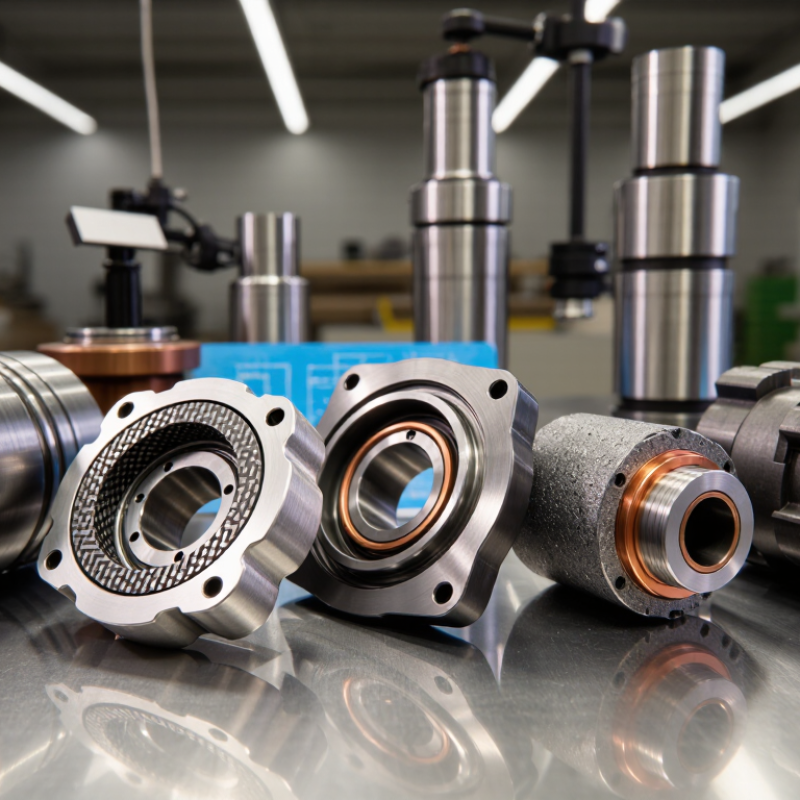
Carbide stators are stationary, precision-machined components that work with rotating parts in pumps, mixers, and fluid equipment. They help maintain a controlled gap, guide material flow, and reduce contact during operation. Common types include solid carbide stators, carbide-lined stators, and steel bodies with replaceable carbide inserts. Each design suits different loads, temperatures, and maintenance plans.
Their main advantage is wear resistance. Tungsten carbide handles abrasive particles, while selected ceramic carbide grades can perform well in corrosive environments. A properly matched stator can protect dimensional accuracy and extend service intervals. However, carbide is hard and brittle. Sudden impact, poor alignment, or thermal shock may cause chipping. Harder is not always better. That assumption deserves review.
Tips: Check the fluid composition, particle size, pressure, temperature, and shaft speed before selecting a type. Ask suppliers for hardness data, corrosion testing, dimensional tolerances, and inspection records. Global buyers should also confirm material traceability and compatible international specifications. Small details matter. A low-cost stator may create higher downtime if its grade or fit is unsuitable. Evaluate the complete operating condition, not only the material label.
Main Carbide Stator Types Available in 2026
2026 Top Carbide Stator Types for Global Buyers
Main Carbide Stator Types Available in 2026
Carbide stators in 2026 are available in several practical designs. Solid carbide stators offer excellent resistance against abrasion, especially in systems handling sand, mineral slurry, or fine particles. However, their high hardness can increase brittleness under sudden impact. Carbide-lined steel stators provide a more balanced option. A steel body absorbs mechanical shock, while the carbide liner protects the working surface. This design often suits continuous-duty pumps and rotary equipment.
Segmented carbide stators use replaceable inserts or sections. Maintenance teams can change damaged areas instead of replacing the full assembly. That detail can reduce downtime.
Coated stators add a thin carbide layer to a steel substrate. They are usually lighter and more economical, but coating adhesion deserves careful inspection.
Some manufacturers also supply helical or lobed carbide stators for specialized fluid-handling equipment. Geometry must match the rotor precisely.
Material Selection Considerations
Material selection requires more than checking hardness. Buyers should review carbide grain size, binder composition, surface finish, and operating temperature.
Request dimensional inspection reports, material certificates, and wear-test data. I have seen overly hard grades perform poorly when vibration was ignored. That is an easy mistake.
Corrosion resistance also matters when fluids contain salts or aggressive chemicals. A small mismatch in clearance can cause heat, leakage, and premature wear. Test results from the actual operating fluid remain more useful than a generic catalog rating.
Carbide Grades and Performance Factors for Different Applications
For global buyers, carbide stator selection starts with the working environment, not the catalog title. Common types include wear-ring stators, flow-control stators, and high-load rotary stators. Each demands a different balance between hardness, toughness, friction, and corrosion resistance. ISO 513 application groups provide a useful starting framework, but they do not replace operating data.
Tungsten carbide with a cobalt binder suits abrasive fluids and repeated contact. Fine-grain grades usually deliver higher hardness, often around 1,600–2,000 HV30, while coarser grades can provide better impact resistance. Nickel-binder grades may perform better in corrosive media, although they can sacrifice some toughness. A harder grade is not automatically better. Brittle edges may chip under vibration.
The 2025 U.S. Geological Survey Mineral Commodity Summaries estimated global tungsten mine production at roughly 81,000 metric tons in 2024. The 2023 U.S. Department of Energy Critical Materials Assessment also identified tungsten as a material with notable supply risk. Buyers should therefore verify recycled content, powder origin, binder chemistry, and batch traceability. Dimensional tolerance matters too, especially where a stator runs with a narrow clearance. In field reviews, I have seen excellent hardness fail because the clearance was wrong. That part deserves more attention. Performance testing should include pressure, temperature, slurry concentration, runout, and start-stop cycles, not hardness alone.
2026 Top Carbide Stator Types for Global Buyers
Carbide grades and representative performance factors for different applications
How to read the chart: Lower ISO K-number grades generally provide higher hardness and better abrasion resistance, making them suitable for fine-particle wear environments. Higher K-number grades normally provide greater toughness and transverse rupture strength, which is preferred for impact, vibration, and intermittent loading. Values shown are representative midpoints of common WC-Co cemented-carbide ranges; actual performance depends on cobalt content, WC grain size, porosity, surface finish, operating temperature, lubrication, and the mating rotor or component.
Global Standards, Manufacturing Methods, and Quality Requirements
Global buyers now compare carbide stators by more than alloy grade. They examine standards, process control, and field reliability. ISO 9001 supports consistent quality systems, while application-specific drawings define fits, runout, and surface finish. ISO 286 can guide tolerance selection for mating components. However, the drawing must remain the controlling document.
Most carbide stators begin with powder preparation, pressing, sintering, and precision grinding. Tungsten carbide with a cobalt binder offers strong wear resistance, but binder content changes toughness and corrosion behavior. Some designs use solid carbide bodies. Others use brazed or replaceable carbide inserts. Each type demands different inspection methods. Inspectors should check density, hardness, porosity, cracks, insert alignment, and grinding marks. Keep every batch traceable.
Small details matter. A 0.02 mm runout may cause uneven contact during high-speed operation. A rough edge can damage a seal or accelerate particle buildup. Experienced buyers request dimensional reports, material certificates, process records, and sample testing before approval. Visual inspection alone is not enough. It can miss internal porosity. No inspection plan is flawless. Even a clean report may overlook real service conditions, such as contaminated fluid, vibration, or thermal cycling. Buyers should review failures openly and adjust specifications when evidence demands it.
How International Buyers Can Compare and Select Carbide Stators
International buyers comparing carbide stators should begin with operating conditions, not catalog labels. A stator for abrasive slurry needs different protection from one used with clean hydraulic fluid. Review pressure, speed, temperature, particle size, and fluid chemistry together. These factors often decide service life more than hardness alone.
Carbide stators may use carbide inserts, a bonded carbide lining, or a replaceable wear section. Each design affects repair time, balance, and purchasing cost. Ask for carbide grade, binder composition, dimensional tolerances, surface finish, and inspection records. A polished bore can reduce friction, but poor alignment may still cause rapid wear. Request test data under conditions close to your own equipment. Laboratory results can look impressive. They may not predict field performance.
Check compatibility with the rotor, seals, bearings, and housing. Confirm whether the stated pressure is continuous or only a short-term limit. International buyers should also compare packaging, traceability, spare-part availability, and technical support across borders. A lower unit price may become expensive after customs delays or repeated replacements. Sample testing is wise, although one sample cannot represent every production batch. Record operating hours, leakage, vibration, and wear during the trial. Some selection decisions remain uncertain until real material enters the stator.