2026 How to Choose the Best Portable Spray Booth?
Choosing the best portable spray booth in 2026 requires more than comparing prices and product photos. A suitable booth should control overspray, manage airflow, and create a cleaner working area. It should also fit your materials, project size, and available workspace. A booth that looks professional online may feel cramped beside a workbench.
Practical evaluation starts with measurable details. Check the booth’s internal dimensions, fan performance, filter availability, noise level, lighting, and folding mechanism. Stronger airflow is not automatically better. Poorly balanced ventilation can disturb delicate finishes or create uneven results. Look for clear technical data, replaceable filters, stable framing, and a manufacturer that explains maintenance requirements. These details reveal more than attractive marketing language.
Safety and reliability deserve careful attention. Follow the manufacturer’s instructions and all applicable local requirements for ventilation, electrical equipment, fire prevention, and coating use. When uncertain, consult a qualified professional. Never treat a portable spray booth as a complete safety system. It is only one part of a controlled workspace.
No booth is perfect.
This guide compares common booth designs, practical features, operating costs, and real workshop limitations. It also considers setup time, storage space, filter waste, and long-term durability. Some recommendations may depend on your budget and craft. That is worth admitting. A compact booth may suit small models but frustrate larger projects. A powerful unit may seem impressive but bring extra noise and maintenance. The best portable spray booth is not simply the strongest or cheapest option. It is the model that supports consistent work without creating new problems.
Define Your Portable Spray Booth Project and Operating Requirements
2026 How to Choose the Best Portable Spray Booth?
Define Your Portable Spray Booth Project and Operating Requirements
Before choosing a portable spray booth, define the work it must handle. Measure the largest object, including racks and operator movement. Note the coating type, expected overspray, daily workload, and available floor space. A booth for small panels differs greatly from one used for furniture or equipment parts. Consider power access, lighting, ventilation, filter changes, and storage between jobs. These details shape the required airflow and booth size.
Tips: Write the requirements down. Photos help. Leave room for mistakes.
From practical setup experience, operators often underestimate cleaning time. I once planned around spraying hours and ignored filter replacement. That made the schedule unrealistic. Record how many items you spray per session, how long each coating needs, and where wet parts will remain undisturbed. Check the booth’s airflow indicators and access points before installation. A clear maintenance routine supports consistent results and safer operation.
The operating location matters as much as the booth itself. Confirm stable flooring, suitable electrical service, emergency access, and adequate fresh-air movement. Review coating safety data and follow the manufacturer’s instructions for filters, respirators, and curing conditions. Local workplace and fire requirements may also apply. Do not rely on appearance alone. A quiet fan does not always mean effective airflow. Test the setup with trained personnel, document the readings, and revise the plan when actual use reveals weak points.
Compare Booth Types, Sizes, Materials, and Ventilation Designs
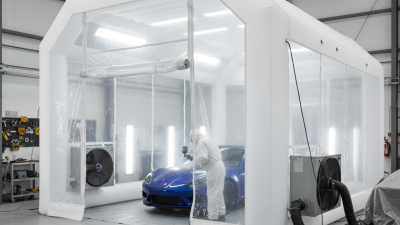
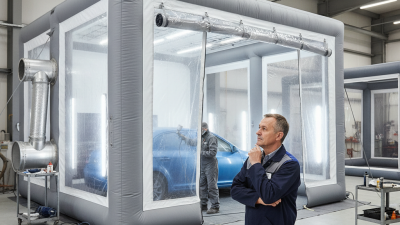
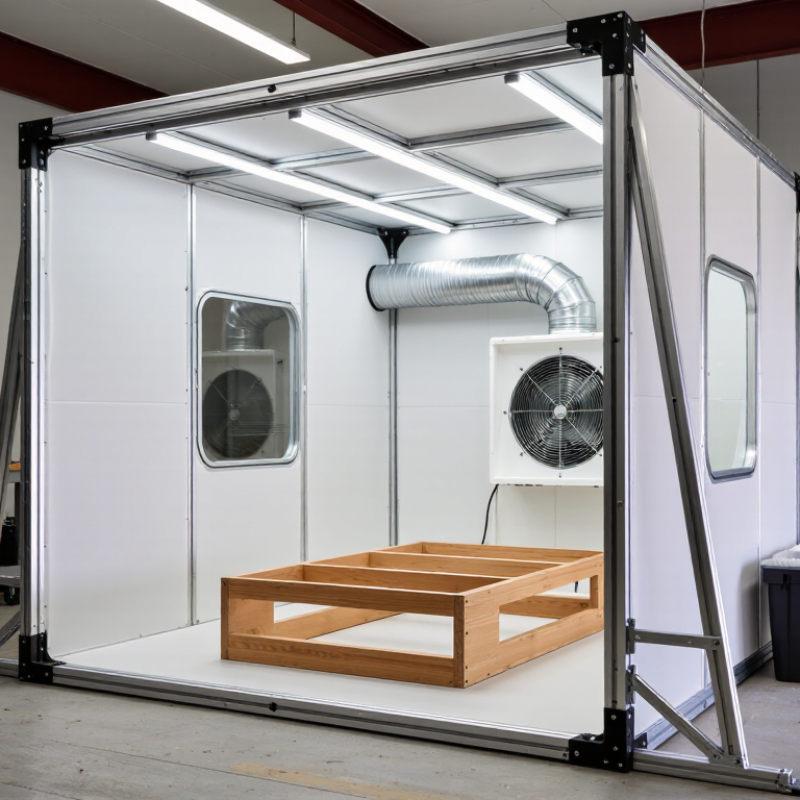
Choosing a portable spray booth starts with the workpiece, not the catalogue photo. Inflatable booths suit occasional, lightweight projects and fast setup. Framed soft-wall booths offer better shape stability and replaceable filter panels. Rigid folding booths provide stronger containment, but they need more storage space.
Size requires honest measurement. Add clearance for the spray gun, operator movement, lighting, and airflow. A booth only 10 centimeters wider than the object may feel unusable. My first selection was too small. That mistake is easy to repeat. Materials also change performance. PVC-coated polyester is light and flexible, while galvanized steel resists abrasion. Aluminum reduces weight, but can dent more easily. Polycarbonate viewing panels improve visibility without adding much mass.
Ventilation deserves the most attention. Crossdraft designs are usually simpler and less expensive. Downdraft systems can provide more consistent capture, but they need careful floor and exhaust planning. Filter loading matters. A blocked filter quietly reduces airflow. NFPA 33 identifies 100 feet per minute as a common design benchmark for many open-face spray booth configurations; actual requirements depend on the design and application. The U.S. Occupational Safety and Health Administration also stresses mechanical ventilation and maintained airflow in spray operations. Grand View Research’s 2024 Spray Booth Market report estimated the global market at approximately USD 1.1 billion in 2023, with continued growth through 2030. That growth does not make every portable booth suitable. Check measured airflow, filter access, noise, and replacement costs before choosing.
Evaluate Filtration, Airflow, Lighting, Noise, and Overspray Control
2026 How to Choose the Best Portable Spray Booth?
A portable spray booth should control contaminants before they settle on your work or floor. Start with filtration, not appearance. Look for a layered filter system that captures larger particles before finer media. Ask for airflow ratings at the filter’s working resistance, not only its empty rating. A powerful fan can perform poorly when filters become clogged. Check filter replacement access, too. If servicing feels awkward, maintenance will probably be delayed.
Airflow needs a clear path across the work area. Watch for dead zones behind panels, corners, and large objects. A simple smoke test can reveal uneven movement, although it is not a substitute for professional testing. Noise matters during long sessions. Compare the booth’s measured sound level, fan vibration, and control settings. Very quiet equipment may move less air than expected. That trade-off deserves attention.
Lighting should show surface texture without creating harsh glare. Use evenly distributed, enclosed fixtures rated for the booth’s environment. Shadows can hide runs, dry edges, or uneven coverage. Overspray control depends on airflow, filter placement, enclosure shape, and operator technique. Keep the spray direction aligned with the extraction path. I once trusted a compact booth because its filter looked substantial. It still left residue near the rear corners. That choice was not perfect. Leave working clearance around the object, replace loaded filters promptly, and verify the booth’s instructions against local ventilation requirements.
Check Safety Features, Compliance Needs, Portability, and Setup Time
Choosing a portable spray booth starts with safety, not wheel size.
HSE’s 2024 workplace health statistics report 1.7 million workers with work-related ill health in Great Britain. Overspray and solvent vapors deserve serious attention. Select a booth with mechanical exhaust, filtered intake, grounded components, and clearly rated electrical equipment. NFPA 33, 2024 edition, specifies 100 feet per minute airflow for many open-face spray applications. Confirm the exact requirement with a qualified safety professional and local authority.
Compliance needs can change by location, coating type, and daily volume. Check ventilation records, filter access, fire protection, and waste-handling procedures before purchase. A compact booth may fit through a doorway, but its exhaust duct can still require extra clearance. Measure the full route, including turns and elevator doors. Setup time also matters. Tool-free panels, locking casters, labeled connections, and preassembled duct sections can reduce delays. My own practical mistake would be trusting the product footprint alone.
Tips:
Ask for airflow test data, not vague “high-efficiency” claims. Time the first setup with two people. Keep a simple inspection log. If filters clog quickly, stop and investigate. Portability should never weaken containment, grounding, or ventilation. A lighter booth is not automatically safer.
Balance Performance, Maintenance, Warranty, and Total Ownership Cost
2026 How to Choose the Best Portable Spray Booth?
A portable spray booth should fit your actual workflow, not an idealized one. Measure the work area, doorway, ventilation path, and available power before comparing specifications. Strong airflow matters, but excessive airflow can waste energy and disturb finishes. Check capture efficiency, filter access, lighting, noise, and enclosure stability during normal use. A booth that performs well only in a showroom may disappoint in a crowded workshop.
Maintenance affects both safety and ownership cost. Choose washable or easily replaceable components when suitable, and inspect fan housings, seals, filters, and electrical connections regularly. Record cleaning dates and filter changes. This simple habit reveals rising resistance before performance drops. I once underestimated filter replacement frequency during a busy project, and the added downtime changed my cost calculation. That mistake was avoidable.
Warranty terms deserve careful reading. Confirm coverage periods, excluded parts, service procedures, and response times. A long warranty means little if shipping, labor, or consumables remain your responsibility. Calculate total ownership cost over several years, including electricity, filters, repairs, storage, setup labor, and eventual disposal. Do not judge value by purchase price alone. Portable equipment may reduce installation costs, yet frequent relocation can increase wear. Leave room for uncertainty. Workloads change, and early estimates are often too optimistic.