







Choosing the 2026 best Cut And Die Machine requires more than comparing speed, price, and brochure claims. Global buyers face different materials, power standards, labor conditions, and service expectations. A machine that performs beautifully in one factory may struggle elsewhere. That uncomfortable detail matters.
Jean-Pascal Bobst, CEO of BOBST, has stated, “We want to shape the future of the packaging world.” His view reflects a wider industry shift toward connected production, accurate tooling, energy efficiency, and shorter changeover times. However, advanced technology alone does not guarantee profitable output. Buyers should examine real production samples, waste rates, operator training, and local technical support.
The strongest Cut And Die Machine for 2026 should match the buyer’s actual workflow. Consider paperboard thickness, corrugated grades, labels, flexible materials, maximum sheet size, and daily production volume. Servo-driven feeding, automatic registration, quick-lock tooling, and inspection systems can improve consistency. Safety guarding and documented maintenance procedures remain essential.
Look closely at the details. A ten-minute setup reduction can save hours each week. A stable stripping station can reduce damaged blanks. Reliable spare-parts access may matter more than a slightly higher running speed. Ask suppliers for test cuts using your own material.
No single model is best for every market. That is the weakness in many buying guides. They simplify a complicated decision. A careful evaluation should include total ownership cost, installation conditions, operator skill, warranty coverage, and five-year service planning. Measure twice. Then invest with evidence, not excitement.
What Is a Cut and Die Machine and How Does It Work?
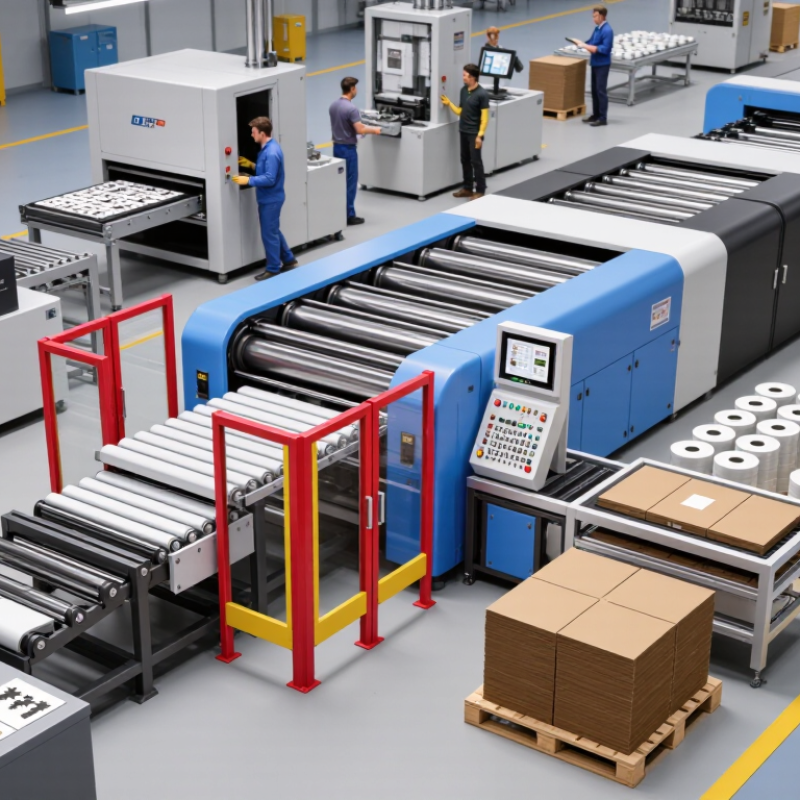
A cut and die machine converts paperboard, corrugated sheets, labels, foam, or flexible materials into precise shapes. It uses a shaped die, pressing force, and controlled feeding. The die acts like a steel cookie cutter, but with tighter tolerances. In flatbed systems, a platen presses the die downward. Rotary systems use a cylindrical die that turns continuously with the material. This difference affects speed, setup time, and suitable production volumes.
During operation, sensors guide each sheet into position. The machine then cuts, creases, embosses, or perforates the material in one cycle. Waste stripping removes unwanted pieces around the finished shape. Registration marks help maintain accuracy when printed graphics must align with the cut. Smithers estimates that global packaging value reached roughly 1.05 trillion US dollars in 2023, increasing pressure for faster and more efficient converting processes. PMMI’s 2024 packaging trends report also identifies automation and labor efficiency as important investment drivers.
In practice, the perfect cut is not automatic. Material moisture, die wear, and inconsistent feeding can create rough edges or registration errors. That assumption fails. Operators still inspect samples, adjust pressure, and monitor waste. For global buyers, machine performance should be tested with the actual substrate, thickness, artwork, and production speed. A machine cutting simple cartons may struggle with laminated labels. Technical support matters too, especially when local maintenance skills are limited.
The best cut and die machine in 2026 depends on material, volume, and required accuracy. Each machine type serves a different industrial purpose.
Flatbed die cutters suit folding cartons, foam inserts, rubber sheets, and thick board. They provide strong cutting pressure and stable registration for repeated packaging work. Rotary die cutters support high-volume labels, tapes, filters, and thin gaskets. Their continuous operation reduces waste when roll materials run for many hours. Speed matters.
Digital die cutters work well for prototypes, short production runs, and customized signs. They remove tooling costs and allow quick design changes. However, they may struggle with very thick materials or demanding 24-hour output. Laser die cutters are useful for intricate patterns, textile components, insulation, and sealed edges. Heat-sensitive materials need careful testing because laser exposure can discolor or deform them.
A practical buyer should inspect blade life, pressure control, feeding accuracy, dust protection, and operator training. A machine producing 8,000 pieces per hour may still perform poorly with uneven feeding. Sample trials are essential. Ask suppliers to test your actual board, film, leather, or gasket material. Production teams sometimes choose maximum speed too early. That decision can increase scrap, maintenance, and setup time. The most reliable choice balances throughput with repeatable quality, accessible service, and realistic factory conditions.
When comparing 2026 cut and die machines, buyers should inspect performance beyond advertised speed. Start with material range, cutting depth, repeatability, and maximum sheet size. Ask for test cuts using your actual board, film, gasket sheet, or flexible material. Measure edge quality under a loupe. Small defects matter.
Check how quickly operators can change dies and adjust pressure. Tool-free access, clear adjustment scales, and stored job settings can reduce setup errors. Servo-driven feeding should maintain registration across long production runs.
Request results from both short samples and continuous tests. Peak speed often looks impressive, but stable speed matters more.
Safety systems deserve close attention. Look for guarded moving parts, emergency stops, sensor checks, and readable operating instructions. A machine should also support regional voltage requirements and provide complete technical documents. Remote diagnostics can shorten downtime, but reliable local training remains valuable. Software compatibility is useful when importing common design files, though poorly organized interfaces still slow experienced operators.
Energy use, noise level, spare-part availability, and cleaning access can affect ownership costs. Ask how often blades, belts, sensors, and cutting surfaces need replacement. A perfect specification sheet may still disappoint in a busy workshop. I would leave space for operator feedback, because small daily frustrations are easy to miss during a showroom demonstration. Test with real workers, real materials, and realistic production pressure.
2026 Best Cut And Die Machine for Global Buyers?
Choosing a cut and die machine starts with the material, not the advertised speed. Test paperboard, film, foam, rubber, or layered sheets before making a decision. Each material demands different pressure, tooling, and waste control. Measure twice. A machine should match your largest sheet size and expected production volume. Leave enough working space for setup, maintenance, and safe material handling.
Global production adds practical concerns. Check voltage options, control languages, safety documentation, and operator training. Confirm whether replacement blades, dies, sensors, and belts can reach your facility quickly. A low purchase price may become expensive when one small component stops production. Ask for sample-cut results, tolerance data, noise levels, and energy use. These details reveal more than a speed claim. They also support reliable purchasing decisions across different factories.
Automation can reduce labor pressure, but it should not replace clear process checks. Inspect registration accuracy, cutting consistency, and waste removal during a real trial. I have seen projects focus heavily on hourly output and overlook changeover time. That mistake can weaken the whole investment. Climate also matters; dust, humidity, and temperature may affect feeding and die performance. Choose a machine with accessible service points and clear maintenance instructions. The ideal solution is not always the fastest model. It is the one that performs consistently with your materials, workforce, and production conditions.
| Machine Type | Typical Working Format | Typical Production Speed | Common Materials | Typical Cutting Method | Typical Cutting Tolerance | Best Fit for Global Production | Key Buying Checkpoints |
|---|---|---|---|---|---|---|---|
| Flatbed Die-Cutting Machine | Approx. 450 × 320 mm to 1,600 × 1,100 mm | About 1,500–8,000 sheets/hour, depending on format, material, and automation | Paperboard, corrugated board, labels, folding cartons, leather, gasket materials, and thin plastics | Reciprocating flatbed platen with a cutting die | Often approximately ±0.10–0.30 mm when properly set up | Short to medium runs, complex shapes, cartons, prototypes, and mixed job sizes | Maximum sheet size, stripping capability, die-change time, feeding stability, pressure adjustment, and local technical support |
| Rotary Die-Cutting Machine | Common web widths of approximately 200–1,500 mm | About 30–180 m/min, depending on material and converting process | Self-adhesive labels, flexible films, foils, paper webs, tapes, and thin laminates | Cylindrical rotary die or magnetic-cylinder tooling | Often approximately ±0.10–0.25 mm with stable web tension and registration | High-volume continuous production and roll-to-roll converting | Web-tension control, registration accuracy, tooling availability, waste removal, splicing system, and line integration |
| Digital Cutting Table | Typical cutting areas from approximately 1,600 × 1,200 mm to 3,200 × 2,000 mm | Material-dependent; commonly suitable for sampling and low-to-medium volume work rather than maximum throughput | Corrugated board, foam, honeycomb board, textiles, leather, rubber, plastics, and composite sheets | Computer-controlled oscillating knife, tangential knife, rotary knife, or milling tool | Often approximately ±0.20–0.50 mm, depending on material and tool condition | Rapid prototyping, customized orders, sample production, and frequent design changes | Software compatibility, tool-change options, vacuum table, camera registration, file formats, operator training, and service response |
| Laser Cutting and Die-Cutting System | Common working areas from approximately 600 × 400 mm to 1,600 × 1,000 mm | Highly dependent on material, power, pattern complexity, and cut length | Paper, film, textiles, wood-based sheets, acrylic, and selected non-metallic materials | Focused laser beam with computer-controlled motion | Often approximately ±0.05–0.20 mm under controlled operating conditions | Fine detail, non-contact processing, variable data, and tooling-free short runs | Laser power, exhaust and filtration, edge discoloration, material compatibility, fire protection, software, and electrical compliance |
| Steel-Rule Die Press | Common die areas from approximately 500 × 400 mm to 1,600 × 1,200 mm | Often about 500–3,000 cycles/hour, depending on product and press design | Gaskets, foam, rubber, insulation, leather, textiles, plastics, and packaging board | Steel-rule die pressed against a flat material stack or sheet | Typically approximately ±0.20–0.50 mm, depending on die quality and material compression | Thicker materials, industrial components, gaskets, and repeatable batch production | Press force, daylight opening, bed size, die height, safety guarding, material stack height, and replacement-die cost |
| Sheet-Fed Creasing and Die-Cutting Line | Common sheet formats from approximately 520 × 360 mm to 1,650 × 1,200 mm | About 3,000–9,000 sheets/hour, depending on board grade and finishing operations | Folding carton board, coated paperboard, micro-flute corrugated board, and laminated packaging stock | Flatbed die-cutting with integrated creasing, stripping, and delivery sections | Often approximately ±0.10–0.30 mm with accurate feeding and registration | Medium to large packaging runs requiring creasing, stripping, and consistent output | Feeder design, register control, stripping station, blanking system, automation level, compressed-air demand, and changeover time |
| Roll-to-Sheet Label Die-Cutting Line | Typical web widths of approximately 200–550 mm | About 20–100 m/min, depending on label size, waste matrix, and finishing configuration | Paper labels, film labels, adhesive stocks, laminate webs, and thermal materials | Rotary or semi-rotary die-cutting with slitting and waste matrix removal | Often approximately ±0.10–0.25 mm for print-to-cut registration | Label converters handling multiple SKUs and frequent roll changes | Print-mark sensor, web guide, adhesive handling, matrix-waste removal, rewind quality, roll diameter, and inspection system |
Selecting a cut and die machine requires more than comparing speed and price. Match the machine to material thickness, sheet size, cutting force, and expected production volume. A trial using your actual substrate can reveal feeding problems that brochures often hide. Ask for documented test results, electrical requirements, spare-part availability, and operator training. Reliable suppliers should provide installation drawings and clear service procedures. I have learned that a slightly slower machine can be more dependable when tolerances remain stable throughout long production runs.
Tips: Keep the installation area level, dry, and well lit. Confirm voltage before delivery. Leave space around access panels and emergency stops. During commissioning, check alignment with a calibrated gauge, not visual judgment alone. Record pressure, speed, and waste rates after each adjustment. Small records prevent expensive guesses later.
Maintenance should include daily cleaning around the die station and scheduled inspection of belts, bearings, sensors, and guarding. Remove dust before it reaches moving parts. Replace damaged components promptly, even when production pressure feels high. Operators need practical safety training, lockout procedures, protective equipment, and clear access to emergency controls. Never bypass an interlock to save time. That shortcut may seem harmless, but it creates a serious and avoidable risk. Local electrical and workplace rules also require verification before operation. Some assumptions will be wrong; review them after the first production week.
Hein Minnie
Cell nr: +27 (0) 82 564 6501
Email: sale@thecirclemachine.com
Hein Minnie Jnr
Cell nr: +27 (0) 84 284 7234
Email: sale@thecirclemachine.com
Address:
10 Apsey Street,
Heidelberg,
Gauteng,
1441
Bendet Engineering Services (PTY) LTD was established in 1987. Our team of engineers and draughtsman are ready to deliver a complete turnkey solution, from the design phase to commissioning. A dedicated team that consists of electrical, mechanical and industrial engineers, we are able to offer a comprehensive service to our clients.